It’s strange. I love figuring out where writers are going, and am so happy when I’m wrong because the writer has done their job. But I don’t read as many flat-out “mysteries” as I could. Today I’m talking with author (among other things) Conal O’Brien. Surely he’s tired of being asked if his first name is a typo but I digress…
Give us the Conal O’Brien story.

I’ve directed over 2,000 television episodes, produced two films, written a few plays, was once an actor, a photographer, a cab driver, a waiter, a short order cook, a school bus driver, a reupholster, and I shagged golf balls at a driving range. I got fired for catching golf balls hit at me – in my hat. Most of those things happened in the distant past. Throughout my life my one true love has always been writing, and for the last dozen years or so I have done only that. The Bookbinder Mysteries series is the result.
Let’s see, what else? Both of my parents were actors, and I am one of ten children. I grew up in a small town in northern New Jersey in a very noisy household, filled with singing, yelling, and a great deal of love.
So what is “What Ever Happened to Anna Canneli?” about?
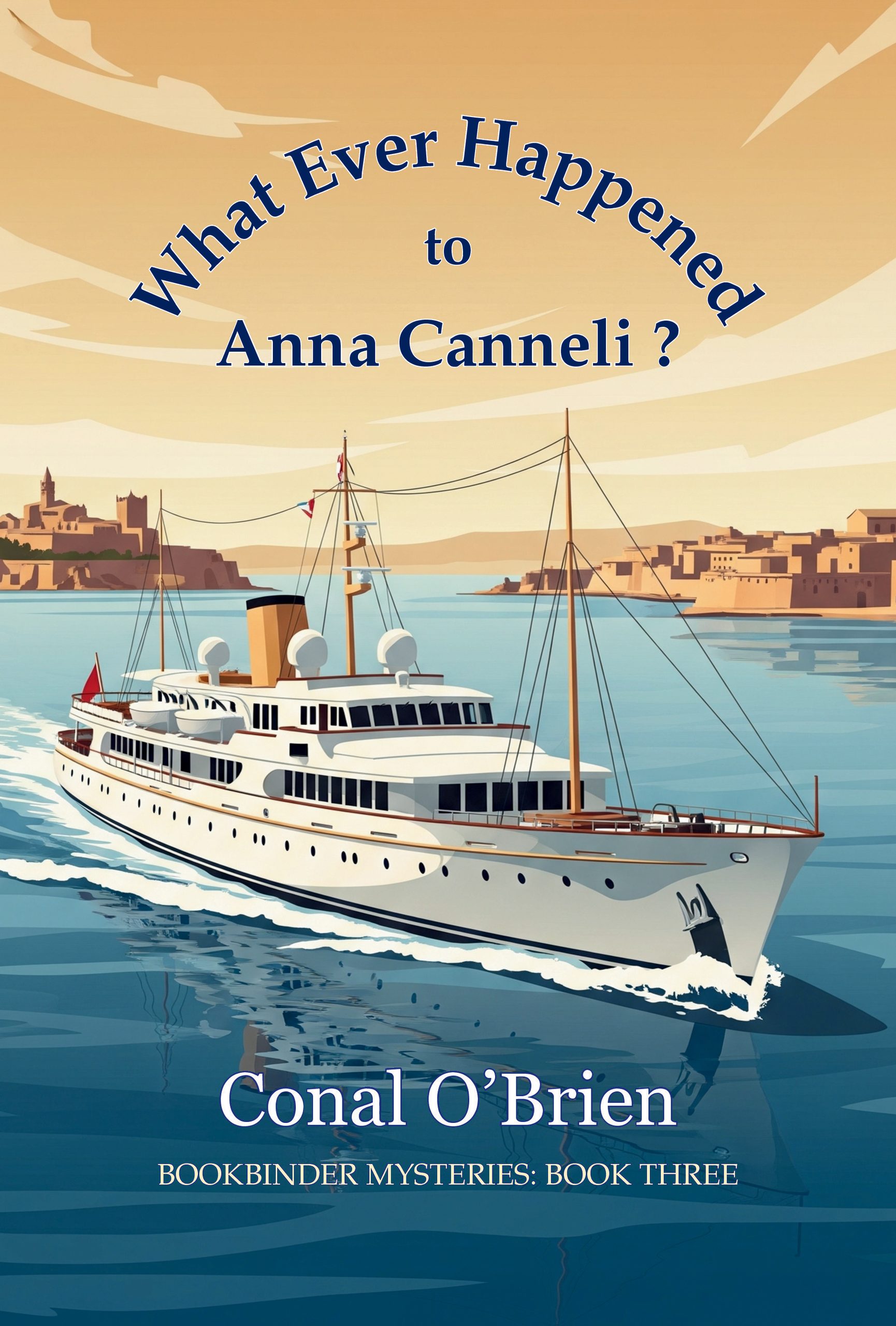
What Ever Happened to Anna Canneli? is a global mystery thriller. It’s a ‘standalone’ story (with many continuing characters) about a murder, a court-martial, a woman living under a false name in Sicily – and a document somebody very powerful doesn’t want anyone to read. It’s the kind of thriller that uses the genre as a vehicle for something bigger. The political conspiracy here isn’t the backdrop, it’s the whole point. And, there’s a pivotal (on-going) story that involves a real-life event – the famous robbery of the Gardner Museum in Boston.
(Readers, I told you there was a lot going on.) What are the roots of the story?
I like writing about the ‘now.’ For example, my first book in the series (Birth of the Angel) was set to be published just as the recent global pandemic broke out. My lead character, Artemis Bookbinder is, notably, a germophobe – and I realized that his struggle to exist in that difficult time was an important story to tell. So, I pulled the book back and rewrote it.
The roots of the story started quite some time ago, in 1999 – or so. I was on vacation, sitting on a beach, reading a novel by a bestselling writer. It was thriller involving terrorist trying to blow up Time Square, and it included a detailed description of how the ‘bad guys’ could build this bomb. And that bothered me so.
I have been a life-long fan of Agatha Christie. I’ve read her novels many times indeed. I’ve always admired the positive tone in her work (despite the usual murders and mayhem!). So, that day on the beach, I was gripped by the notion that I could write a story – certainly not as ‘cozy’ (or as good) as hers, but something new for our time.
Editor’s note- Cozy mysteries have always been a puzzle to me. Sure, there are no cursing or sex…. but there’s a dead body here! If somebody killed me, you can bet there’s be dirty words shouted. Back to Conal.)
And here we are in 2026, and I am so grateful that my book has won the American Book Fest, American Fiction Award in Mystery & Suspense. (And Wayne, congratulations on your win, too!)
Thanks, brother. What’s your favorite scene in the book?
Ah, Wayne, you know no writer can list just one!
I lived in New York City for many years and I love the famous and familiar locales. They are such fun to write about. There’s a scene in a (real-life) restaurant on the Upper West Side (complete with the owner ‘Mickey Piccatta’) that makes me smile. Or the scene between Ida Orsino and her sister sitting in the elegant bar/lounge of the Mark Hotel on the Upper East Side.
I love Lucille’s solitary moonlit hike up Elmore Mountain in Vermont. I love the danger implied in any scene with Leticia Rios. And, near the end of the story, there is a scene that can only be described as ‘High Noon.’ It involves lots of characters and was exhilarating to write.
Where can we learn more about you and your book?
The best place to learn more is at my website: conalobrien.com
All of my books are available (by request) in any bookstore in American, Canada, Great Britian. Also, on-line at Barnes and Noble, Amazon, and wherever books are sold. Titles in the series:
What Ever Happened to Anna Canneli?
Thank you, Wayne, for letting me be here with you!
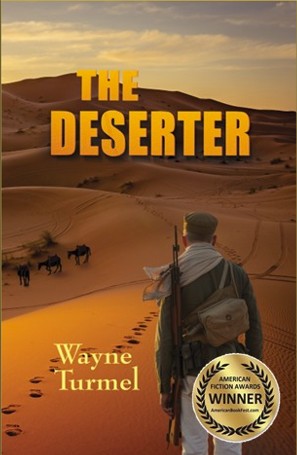
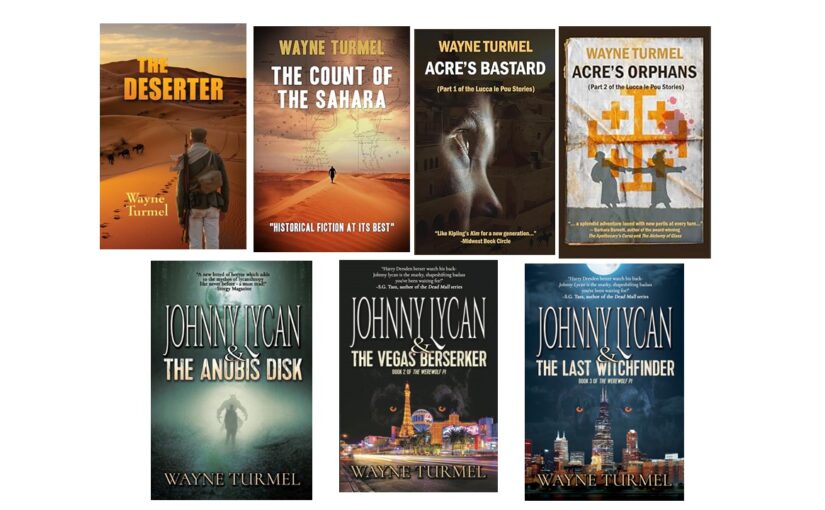
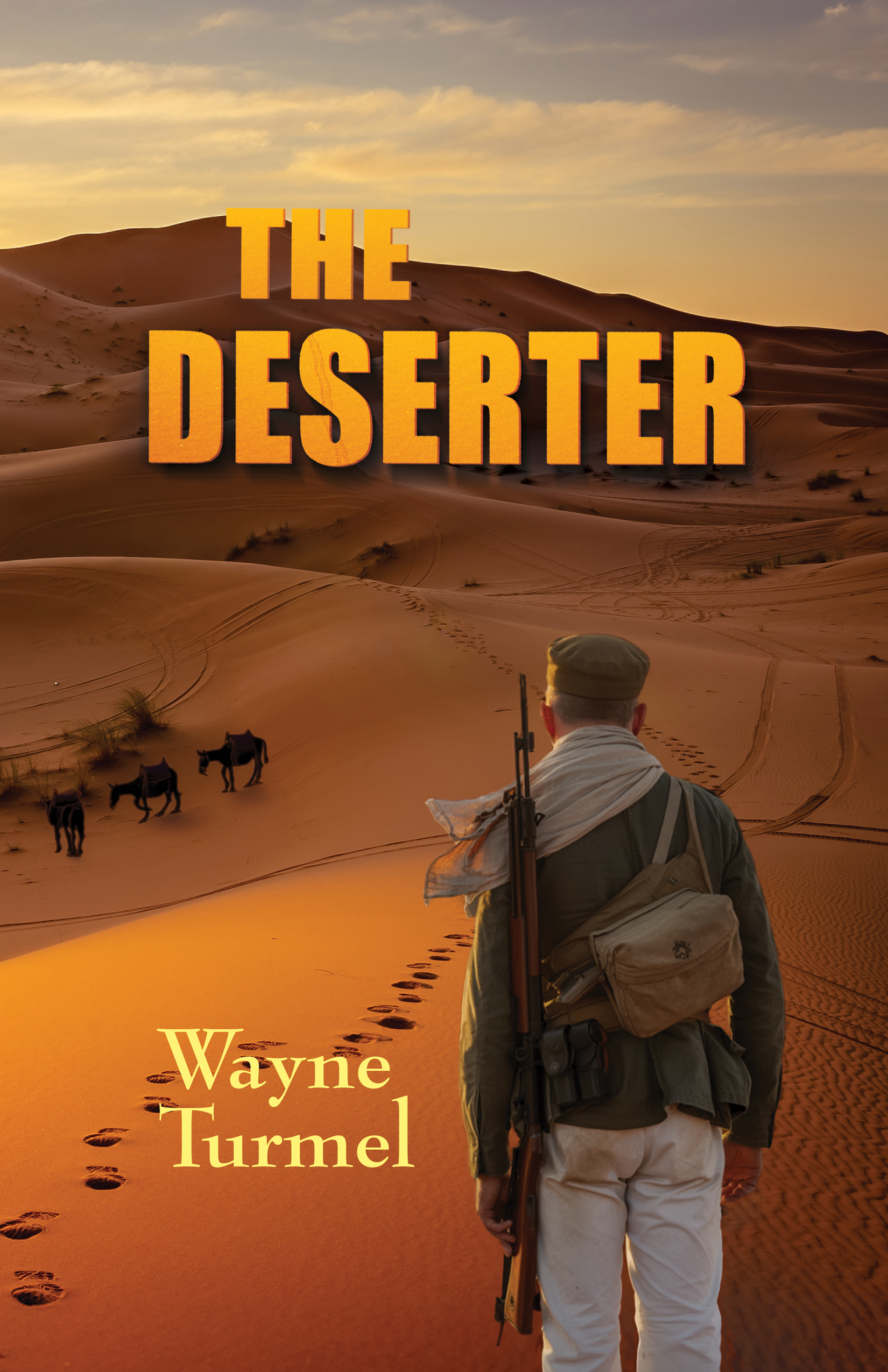
Check out The Deserter- a Tale of the Foreign Legion. “Wayne Turmel’s The Deserter manages to feel both old fashioned and strikingly original. While it possesses qualities of the adventure tales of old—whether that be those of daring from Scott and Cooper or stoical Hemingwayesque figures or most directly P.C. Wren of Beau Geste fame with even a bit of T.E. Lawrence. “– Michael Harnett, author, Windmill Bluff