“The author skillfully introduces characters that heighten the sense of foreboding, ” Historical Fiction Reviews
” …meticulous research and attention to detail. The descriptions of the Algerian towns, the forts, life in the French Foreign Legion drop the reader right into the action.” Jeanie B Roberts
” This story has a vividly authentic feel to it. It reads something akin to a novel by Alexander Dumas or Victor Hugo.” Mike Kerr
How does a Canadian guy from the rainy, green Pacific Northwest create a world of sand, heat, and the scents and sounds of men trapped together in quarters too close? Science Fiction, of course.
Historical fiction readers are a picky bunch, God love’em. They demand good stories, rich characters, and they also want to learn a little something about the time period in question. Even if it’s a genre or era they read a lot about, if you can’t give them something new about General Lee’s camp or the material of Lady Uppercrust’s pinafore, they are unlikely to be satisfied.
Just a warning to writers. Get the facts right, especially guns and horses. For some reason, weapon enthusiasts and horse people are the most likely to hunt you down and tell you in great detail how you screwed up. But put in too many details and the non-obsessives out there will tap out.
This makes it hard on those of us just trying to tell good stories. We need to do all the stuff other authors do while having to get the facts straight and keep the story moving. This is a tricky balancing act.
Not to brag (okay, a little. I’m proud of the book), but the kindest reviews of The Deserter talk about the details. They like the way you can almost feel your mouth go dry, or smell the bunkhouse (ick), or feel tallow sink into cuts on your hands as you prepare mule tack. (Just read the book, it’s a thing.) Many of my fellow writers ask how I get the details to be so evocative without sinking into a Tom Clancy technology porn data dump. The answer might surprise you.
I do not read a lot of Science Fiction. Much of it drives me crazy; I don’t understand most technology, and if a character name has two apostrophes in it, I’m out. But in my writers group, I am forced to read all kinds of work, and I found a lesson in sci-fi that has really helped my historical writing: world-building.
In science fiction, you take people somewhere they’ve never been and try to make them feel situated so the story can take place. It’s easy to either not explain enough, in which case the reader can be confused, or to data-dump details that no human can possibly remember a hundred pages later. The right amount of information, context and detail at the right time makes all the difference.
The same is true when writing history with one big exception. People know a lot about certain time periods. You can’t just give the Romans laser beams or the British East India Company oxen to ride. Even if most people aren’t overly familiar with the period, as in the case of the French Foreign Legion in Algeria, they know what the world was like in 1908, and most of us have met French people.
So you need to get the facts right. But how do you strike the right balance of detail and world-building? The balance is fairly simple. You simply ask, “Does the audience need to know this right now to understand the story?” That’s a surprisingly effective way to give them what they need. It’s also why a simple book has three boxes of research in my office- the author learns a lot that they never share with the reader. Buy me a beer sometime, I’ll be happy to tell you all about it.
The second, and maybe most important thing about historical world-building is creating a sensory experience. Someone once told me that people have five senses, but we only write with one or two. Clearly, we can visually describe something like a green car. But what does it sound like? Is the engine purring or is it chugging like it’s about to die? Does the interior smell like pine air freshener or week-old McDonalds?
Good science fiction gives us a world we may have never experienced, but can instantly understand. The same is true when writing history.
I hope that readers of The Deserter get a sense for what it’s like to be in the desert, or ride a mule, or get punched in the nose. When you read it let me know.
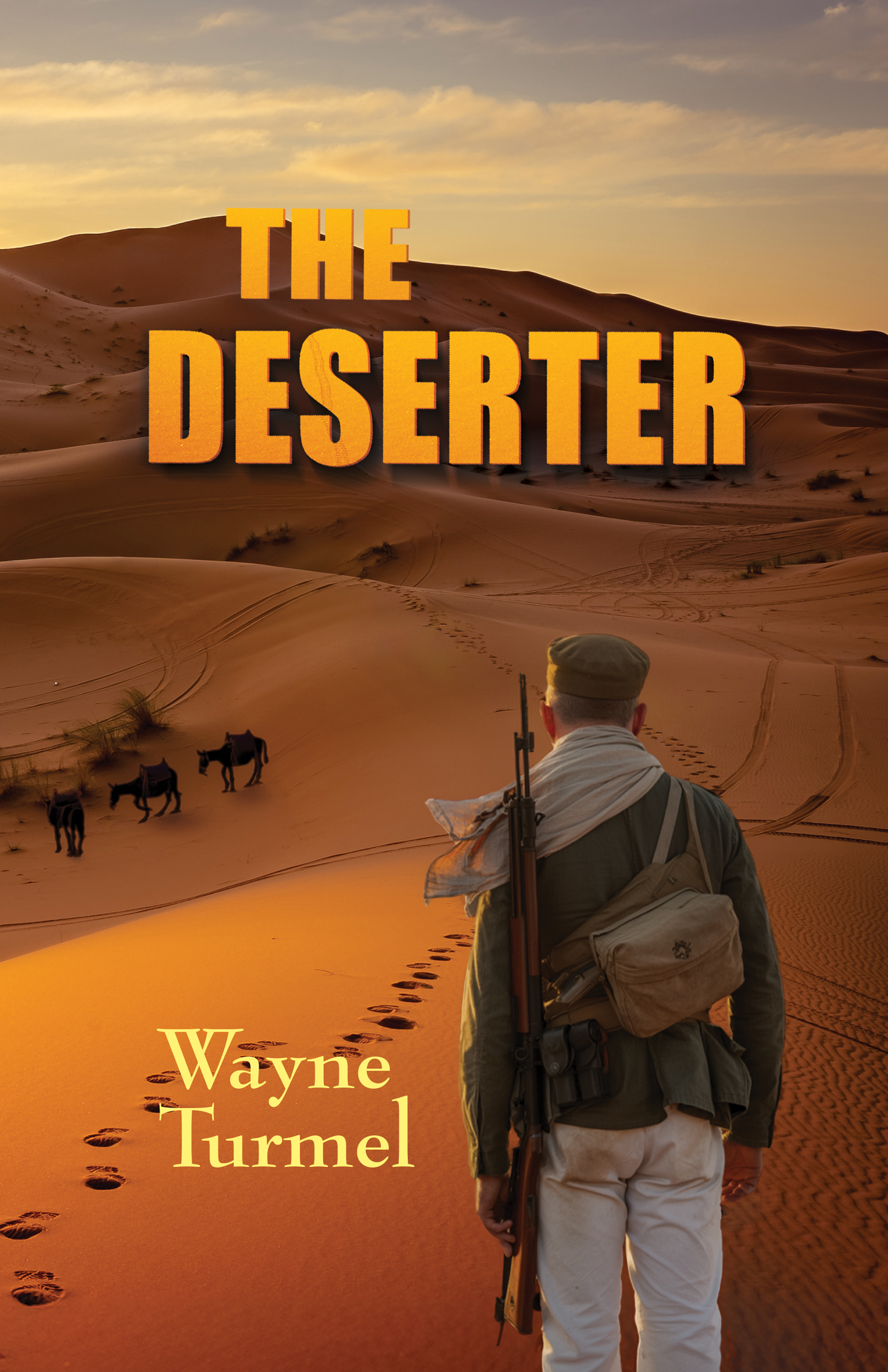
My addition to the Legion oeuvre is The Deserter- a Tale of the Foreign Legion. “A gritty, well-researched historical thriller that revives the classic Foreign Legion adventure with confidence and control.” Author Glow.
Cookie Consent
We use cookies to improve your experience on our site. By using our site, you consent to cookies.
Contains information related to marketing campaigns of the user. These are shared with Google AdWords / Google Ads when the Google Ads and Google Analytics accounts are linked together.
90 days
__utma
ID used to identify users and sessions
2 years after last activity
__utmt
Used to monitor number of Google Analytics server requests
10 minutes
__utmb
Used to distinguish new sessions and visits. This cookie is set when the GA.js javascript library is loaded and there is no existing __utmb cookie. The cookie is updated every time data is sent to the Google Analytics server.
30 minutes after last activity
__utmc
Used only with old Urchin versions of Google Analytics and not with GA.js. Was used to distinguish between new sessions and visits at the end of a session.
End of session (browser)
__utmz
Contains information about the traffic source or campaign that directed user to the website. The cookie is set when the GA.js javascript is loaded and updated when data is sent to the Google Anaytics server
6 months after last activity
__utmv
Contains custom information set by the web developer via the _setCustomVar method in Google Analytics. This cookie is updated every time new data is sent to the Google Analytics server.
2 years after last activity
__utmx
Used to determine whether a user is included in an A / B or Multivariate test.
18 months
_ga
ID used to identify users
2 years
_gali
Used by Google Analytics to determine which links on a page are being clicked
30 seconds
_ga_
ID used to identify users
2 years
_gid
ID used to identify users for 24 hours after last activity
24 hours
_gat
Used to monitor number of Google Analytics server requests when using Google Tag Manager