Romance in the Mohawk Valley- Lizzie Jenks

Those who know me know I may be a romantic but one wouldn’t know it from my writing. Other writers make romance the THING. Case in point, American Book Festival finalist for Historical Romance, Lizzie Jenks.

Lizzie, who are ya and what’s your story?

I am a multi-award-winning author of historical romance by night, and a historian by day. Needless to say, those two callings weave together delightfully. In grad school, I never paid much mind to any historians who poo-poo-ed historical fiction authors or re-enactors. Historians tend to be focused on how all the pieces fit together to create the big picture, but histfic authors and re-enactors are often much more attuned to the tiny details that bring the era to life. And believe me, I have been grilling re-enactors to get the details right for my current series.

How else are you going to learn about the good, the bad, and the ugly of running through the woods during a sticky summer heatwave in a wool breechcloth? That is NOT something they teach you in grad school!

What is the book about?

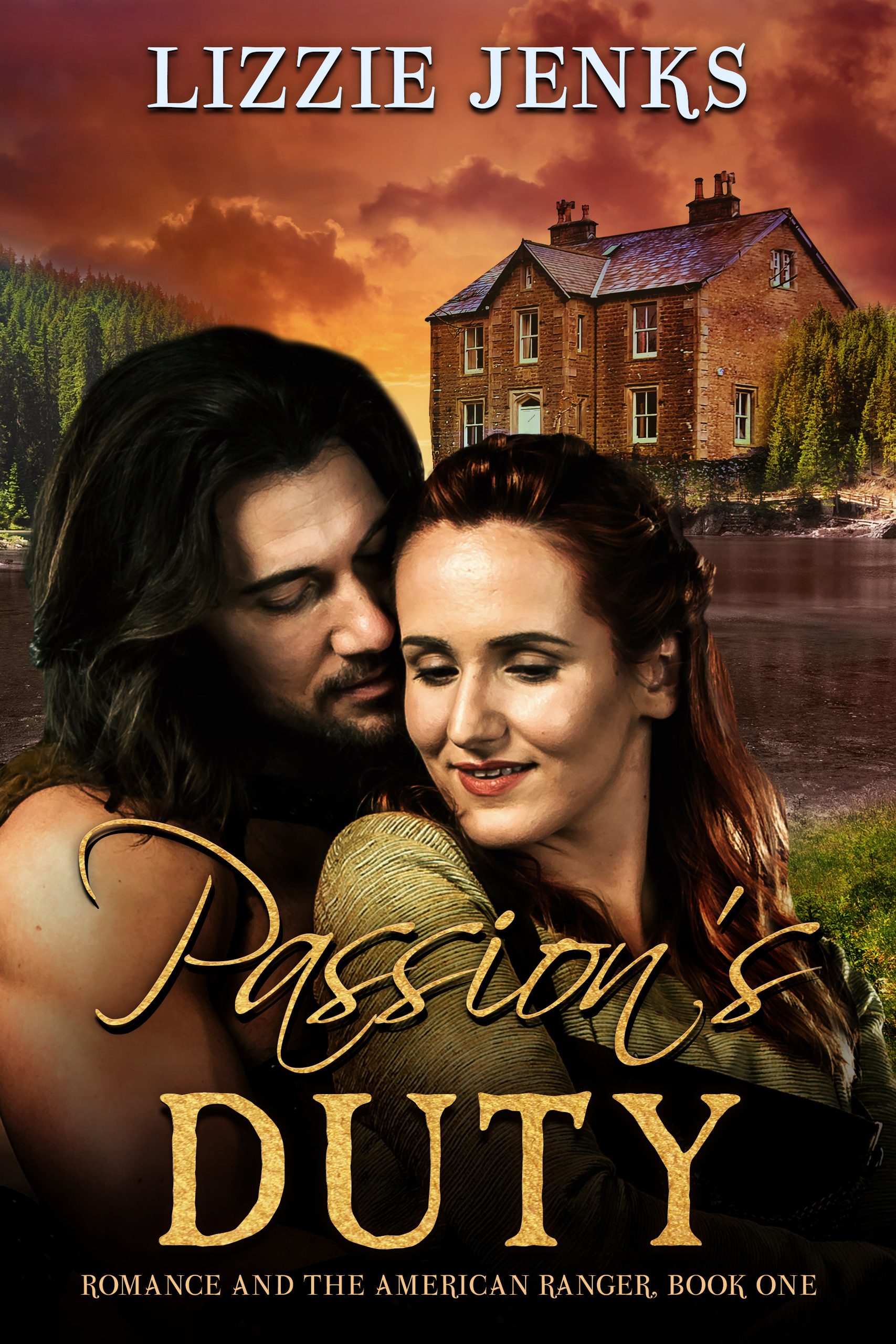
Passion’s Duty is the first book in a series about a group of New Yorkers from the Mohawk Valley during the French and Indian War. This first story belongs to James Carroll, a barely literate former indentured servant from Ireland, working for William Johnson, and Faith Richmond, the daughter of an English colonel, and expected to marry her father’s lieutenant in order to further her family’s fortunes. They are helping Johnson’s preparations during his grand conference with the Iroquois and get caught up in French raids before they can even join the army proper for the first Crown Point campaign. And it is a steamy romance, so they fall in love and into each other’s arms along the way.

What is it about that time period or character that appealed to you? What are the roots of the story?
This period has always been a favorite of mine because it is so much richer and more complex than we all learned in high school. As I was brainstorming the story, I attended an open-house at the home William Johnson lived in during the war. The museum caretaker let me go up into the attic of the house, even though it wasn’t technically open that day. As he was showing me around, and telling me about what was stored up there, and how it was defended—two-pounders on swivels in the attic, facing the river—I looked up at a rather unsteady ladder and envisioned myself falling off it (because I am a klutz), and I suddenly had my inciting incident and was off to the races.

What is your favorite scene in the book?

So many favorites! Here is one that is early enough not to contain any spoilers. James is on patrol with his best friend and encounters Faith and her father in the woods, so the couple first meets at gunpoint. Once they have sorted out that they are all on the same side in the coming war, her father becomes belatedly concerned for Faith’s safety and asks James to escort them back to the road and their hired carriage. In the process of doing so, they encounter some uniquely North American wildlife. The Richmonds can’t understand why James and his friend are so very intent on avoiding it when they learn it isn’t likely to injure them.

Where can we learn more about you and your book(s)   Goodreads, Amazon links, twitter, Facebook, website etc.

You can find me at LizzieJenks.com, on Amazon, and on Goodreads. I am also on Instagram and Facebook, but I am an absentminded professor, so I forget to check my notifications for months at a time. The best way to get in touch is via my website and my Readers’ List. And if you join my Readers’ List, you will receive a $0.00 copy of Passion’s Return, which is an award-winning six-chapter story that is part of this same French and Indian War series. And at roughly 30 pages, it is a smaller commitment to try out a new-to-you author. I hope you enjoy it!

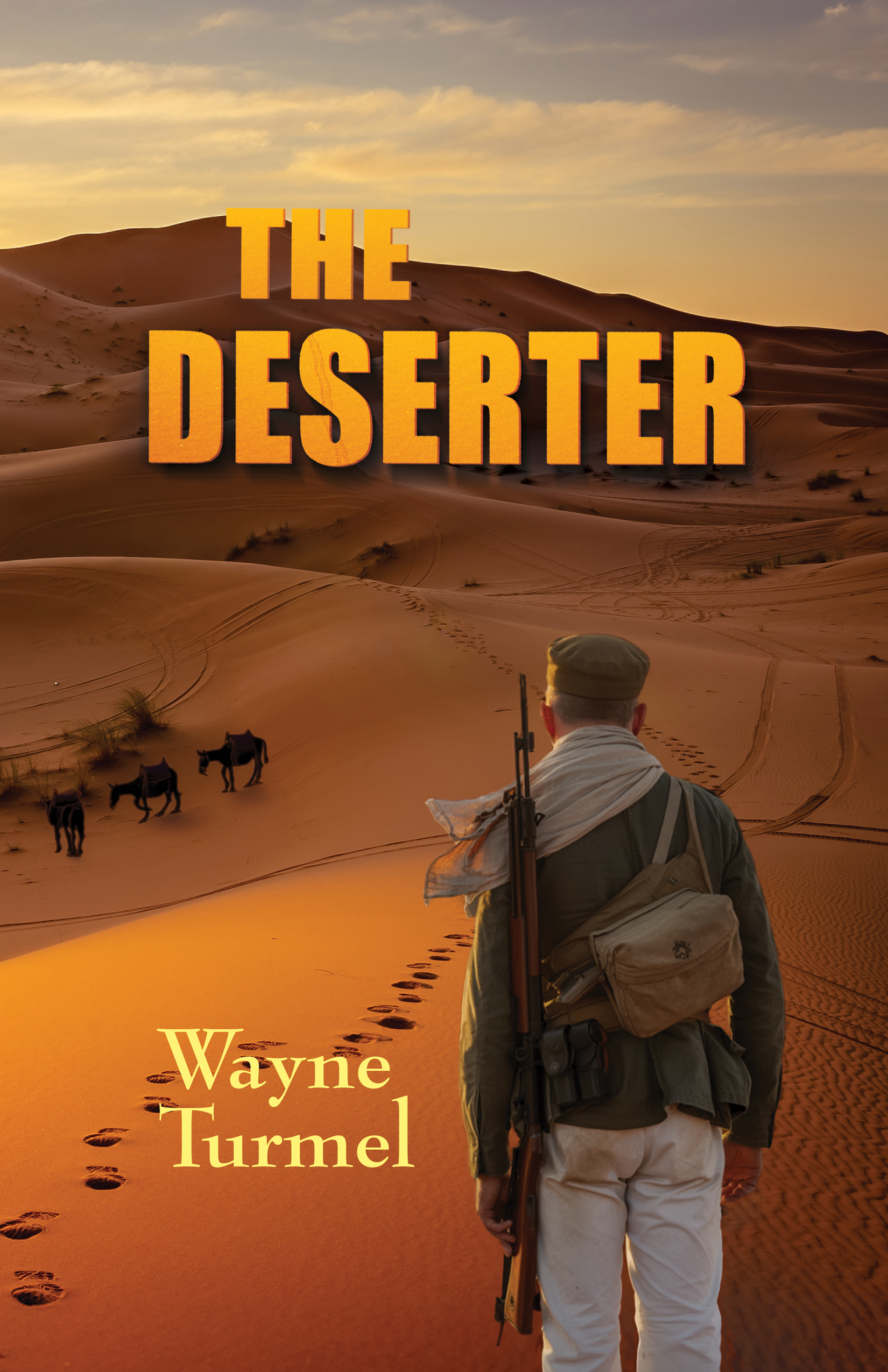
Check out The Deserter- a Tale of the Foreign Legion. “Wayne Turmel’s The Deserter manages to feel both old fashioned and strikingly original. While it possesses qualities of the adventure tales of old—whether that be those of daring from Scott and Cooper or stoical Hemingwayesque figures or most directly P.C. Wren of Beau Geste fame with even a bit of T.E. Lawrence. “– Michael Harnett, author, Windmill Bluff
It’s an American Book Festival 2026 Winner for Best Adventure/Historical Novel!

Join my newsletter and get a weird (sometimes icky) historical fact and an update on what’s going on in my world! Fill out the form on the right hand side.

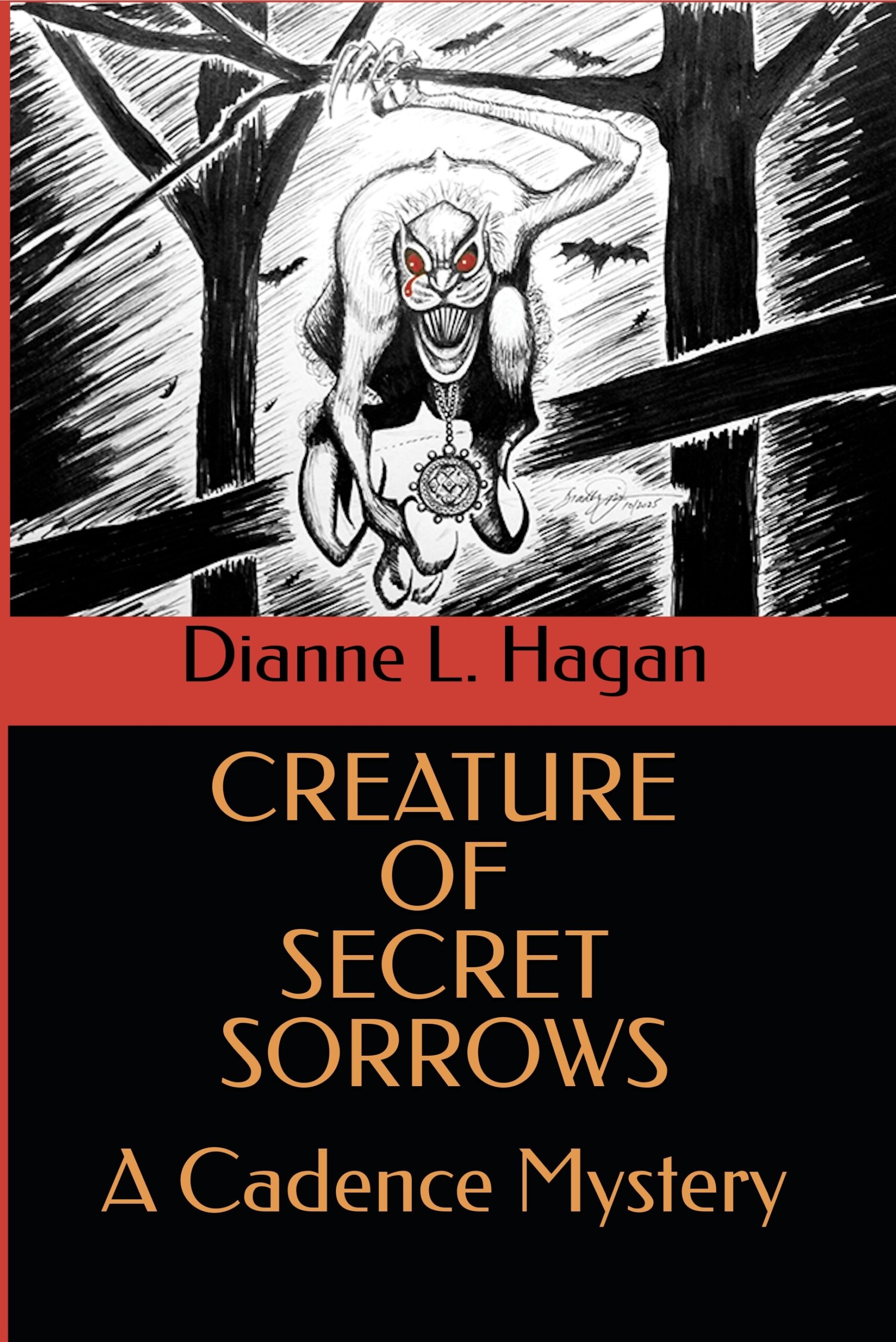
The Creature of Secret Sorrows with Dianne L Hagan

I have lived in America now for 35 (Jeez, really?) years. I do love this country but I’m not blind to history–it’s the curse of the writer and history nerd in me. Being white, male, of a certain age and generally benign, I have not suffered much unless you count having to watch the news without going all Howard Beale. That’s not the case for everyone. Enter Dianne L Hagan and her award winning novel, Creature of Secret Stories. She is a finalist in the American Book Festival awards, Horror: General and Mystery/Suspense: Multicultural and Diverse.

Dianne, you’ve been writing a while. Tell us your story, then tell us about your story. (You know what I mean.)

In January 1976, freshman year of college, I met Ronald Hagan and knew within five minutes that he was the man with whom I would share my life. Young and naïve, I was not prepared for how the world would view us as a couple. You see, I’m white and Ronald is Black. Our love for one another, and our determination to stay together, started me on a journey of learning about race in America from one of the most intimate seats in the country. It shaped who I became as an adult and as a writer who is willing to share our stories as testimony and as a way of understanding the long reach of our country’s history.

I’ve published two memoirs. The first, Another Day in Post Racial America: To the Mothers of the Black Lives Matter Movement, With Love, was named one of the best Black Lives Matter books of all time by BookAuthority and was a semi-finalist in the North Street Book Prize 2020. American Dreaming: A Memoir of Interracial Love, Estrangement, and Race Equality won an Honorable Mention in the 29th Annual Writer’s Digest Self-Published Book Awards. My multicultural mystery series, A Cadence Mystery, is the winner of six Literary Titan Book Awards, and seven finalist awards from the American Fiction Awards. Creature of Secret Sorrows (A Cadence Mystery, #7) the newest book in the series was named a finalist in two categories in the 2026 American Fiction Awards: Mystery/Suspense: Multicultural and Diverse and Horror: General. I’m currently working on book 8 of the series. The series focuses on the small town of Cadence, New York, where the past doesn’t stay buried. It awakens and demands justice.

So tell us about book #7

In Creature of Secret Sorrows (A Cadence Mystery #7), Randy Nichols, a retired geology professor, goes missing. While searching for him, Marian Greene stumbles upon a horrific murder scene reminiscent of a bygone dark era in American history. A family relic, twice stolen, is returned and found to be cursed, altering perceptions and causing suspicion among close friends. And then things turn really bad when a creature that should only exist in Ghanaian folklore taunts police officers.

When the FBI arrives and takes charge, Police Chief George Powless is more determined than ever to solve the case, even if it means using methods that are far outside the usual police procedures and protocols.

As with all the books in the series, Creature of Secret Sorrows blurs the line between a police procedural and the supernatural.

It’s pretty obvious, given your personal stake in it, but what about the story interested you?

All the books in the series explore how the past, if left unresolved, has a stranglehold on the present. This book is no different. The dark chapters in American history still have an impact on our identity as a country today.

Cadence, New York, a fictional town in the Finger Lakes region, founded in 1789 on sacred Seneca land, is a multicultural utopian community governed by the Onondaga principles of respect, collaboration, and equality. Since its founding, the town has been besieged by haters, and after a race massacre in 1921, went into hiding for 100 years with the hope that the rest of the country would evolve. The series opens in 2021 at the close of that 100 years of waiting. A running theme of A Cadence Mystery is that long-buried secrets aren’t truly buried. They are simply waiting for the right convergence of people and events to reveal themselves. And once revealed, they demand acknowledgement, reclamation, and reparative justice. And the final theme is that the strength of community, found family, and human resilience can carry us through the worst of times. Readers who like mysteries that go beyond police procedurals, are character-driven, and that deal with both historical and current social justice themes and/or supernatural influences will enjoy the series.

What’s your favorite scene?

Toward the end of the book, Junee, a root worker (a spiritual practitioner) from New Orleans, and Wilson Woodrow, one of the series regulars, goes to one of the Cadence family cemeteries to gather soil for use in a spell to break the curse of the family relic. Wilson has only recently settled in Cadence after a life of wandering because he has always been haunted by his best friend Joey’s death during a drunk driving accident when they were teens. Junee nearly floats through the cemetery, joyfully greeting spirits, while Wilson is weighed down by guilt and regret. That is, until Joey appears. I loved writing this scene, bringing the visual and sensory details of the cemetery to the page and the difference between Junee’s and Wilson’s response to this sacred place where the line between life and death is blurred

Where can we learn more about you and your work?

Goodreads

Facebook

The Cadence series on Amazon

DiannelHaganauthor.com

Speaking of the American Book Festival Awards:

 The Deserter- a Tale of the Foreign Legion is the 2026 American Book Fest winner for Adventure/Historical books. You can read about it here.

If you haven’t read it yet, what’s keeping you?

The Deserter- a Tale of the Foreign Legion, is “a remarkable, thoroughly researched, gripping tale. A two-fisted adventure set in the African desert.” Available in paperback anywhere, and on Kindle.

A Thirteenth Century Bad@#$ Woman with Rachel Elwiss Joyce

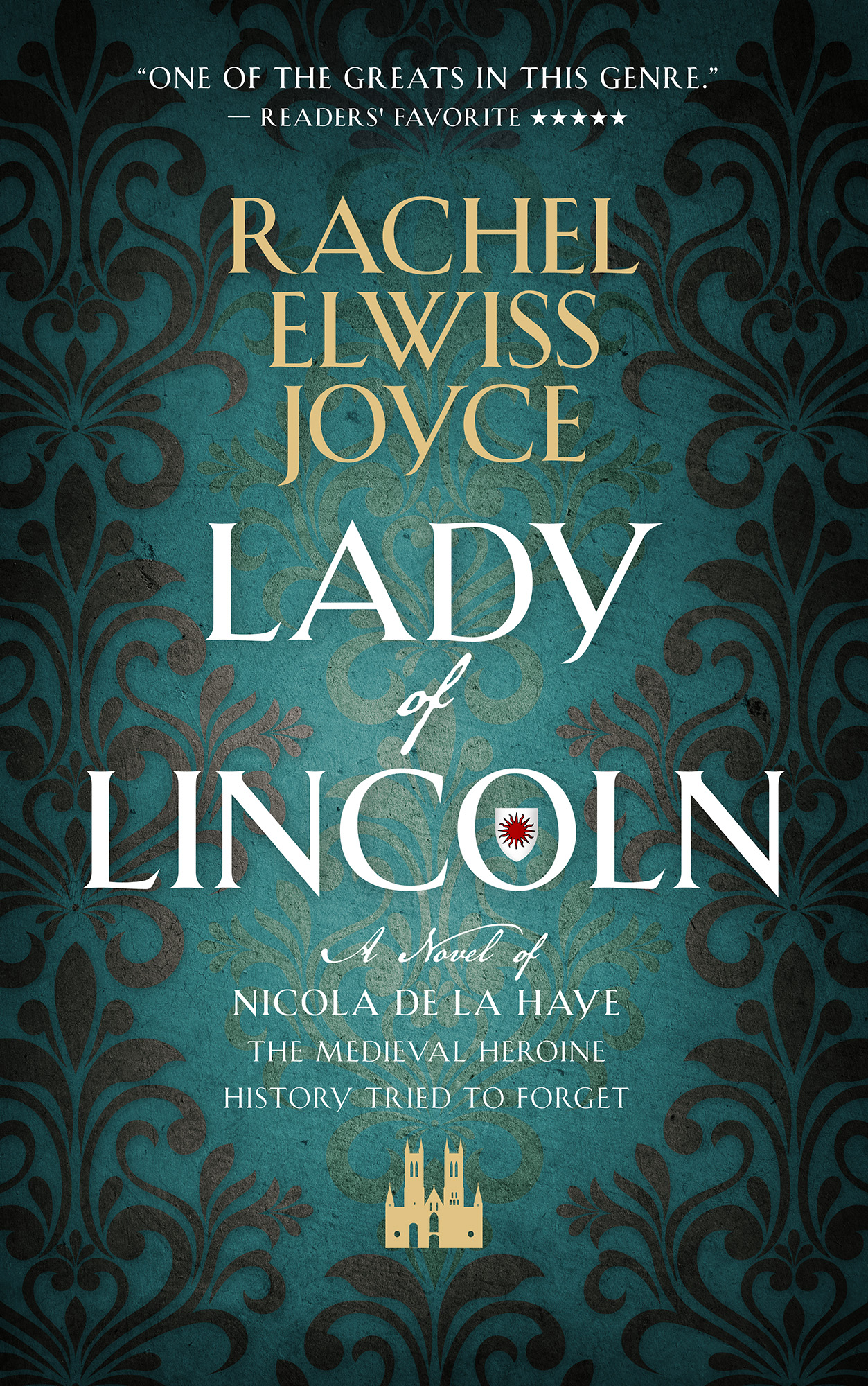
In promoting a book, you come across a lot of great writers. Some are begging you to help them, some are the beggars. You know what I mean. When promoting The Deserter, I was graciously hosted by Rachel Elwiss Joyce, who is an excellent author in her own right. Because Mama raised me right, I’m returning the favor and talking about her excellent book, The Lady of Lincoln.

So, Rachel. Tell us about yourself.

I’m Rachel (Elwiss) Joyce, a newly retired scientist and newbie British historical fiction author who, following the type of fiction I’ve loved since I was a teenager, seems to have fallen down a very deep medieval rabbit hole and isn’t quite sure she’ll ever crawl out again (although I do plan to expand the conventional definition of medieval/ middle ages to include the Saxon and Tudor eras).

My current obsession is the formidable twelfth- and thirteenth-century noblewoman Nicola de la Haye, who defended Lincoln Castle during two wars and held the position of castellan for nearly forty years. I first heard about her when visiting Lincoln Castle’s Magna Carta exhibition during a COVID-19 enforced ‘staycation’. I’d never heard of her, but I should have, because if it hadn’t been for her, we (the English) may well have ended up with a French King.  Chroniclers barely mentioned her (she was a woman, so it was amazing they mentioned her at all!), yet she played a crucial role, on more than one occasion, in the survival of the English crown. Discovering her story felt a bit like finding a missing piece of history that had been hiding in plain sight.

When I’m not writing, I’m usually researching for my novels, wandering around old castles, cathedrals, and ruined abbeys (and dragging my husband and two adult children with me), walking my dog, Griffin, or catching up with stories in novels, TV and film.

What is the book about?

Lady of Lincoln is the first novel in a trilogy about Nicola de la Haye, the woman who held Lincoln Castle for the Angevin kings during one of the most turbulent periods in English history.

The story begins when Nicola is a young woman whose father refuses to believe a daughter can inherit and defend his lands without a husband. Through two marriages, political intrigue, rebellion, and war, Nicola learns to survive, and unusually to thrive and command in a world where power belongs almost entirely to men.

In the second book, due out in the autumn, she will play a pivotal role during the time when Richard the Lionheart goes on crusade, and the kingdom starts to fall apart.

Decades later, during the period of Magna Carta and the great rebellion against King John, she defends Lincoln Castle against rebel barons and a French invasion army. By then she is nearly seventy years old—but still refusing to surrender. That period is covered in the third nove in the series—Lady of England—that is due out in early 2027.

Hers is a story about resilience, power, loyalty, and what it means to hold your ground when the world expects you to step aside.

What was it about the period and this character that drew you (although I can guess)?

The late twelfth and early thirteenth centuries are one of the most dramatic periods in English history—rebellions, crusades, Magna Carta, and a full-scale French invasion. Yet when you look closely, you find women quietly shaping events in ways that are rarely acknowledged.

Nicola fascinated me because she wasn’t simply a noblewoman watching history happen. She commanded a major royal fortress, negotiated with kings, and was trusted with enormous responsibility at a time when women were rarely allowed any formal power.

Once I started digging into the history, Nicola’s story practically demanded to be told.

Totally unfair question, but what’s your favorite (or favourite) scene in the book?

One of my favourite scenes comes near the beginning of the story, when Nicola secretly trains a young squire to ride in close formation with a lance.

It completely captures her character. He was being bullied because he hadn’t mastered all the skills, and she wants to put it right. She’s grown up watching the world of knights and warfare from the sidelines, and although she’s not expected to take part, she understands it well, and in that scene she steps across the boundary that society has placed around her.

It’s also the moment when you realise Nicola isn’t going to accept the limits other people place on her life.

Where can we learn more?

Readers can find Lady of Lincoln on:

Amazon: https://www.amazon.com/dp/B0DQQKQ87L

Universal Booklink: https://books2read.com/u/4980nW
Goodreads: https://www.goodreads.com/book/show/213742243-lady-of-lincoln

Website: https://rachelelwissjoyce.com
Twitter/X: https://x.com/RachelElwJoyce
Instagram: https://www.instagram.com/racheljoycehello/
Facebook: https://www.facebook.com/RachelElwissJoyceAuthor

The Deserter- a Tale of the Foreign Legion, is “a remarkable, thoroughly researched, gripping tale. A two-fisted adventure set in the African desert.” Available in paperback anywhere, and on Kindle.

How A Genre I Don’t Read Made Me a Better Historical Fiction Writer

“The author skillfully introduces characters that heighten the sense of foreboding, ” Historical Fiction Reviews

” …meticulous research and attention to detail. The descriptions of the Algerian towns, the forts, life in the French Foreign Legion drop the reader right into the action.” Jeanie B Roberts

” This story has a vividly authentic feel to it. It reads something akin to a novel by Alexander Dumas or Victor Hugo.” Mike Kerr

How does a Canadian guy from the rainy, green Pacific Northwest create a world of sand, heat, and the scents and sounds of men trapped together in quarters too close? Science Fiction, of course.

Admittedly, that’s a leap! Let me explain. I recently posted an interview on the Archaeolibrarian blog about this, so if you want to read the original version, you can find it here.

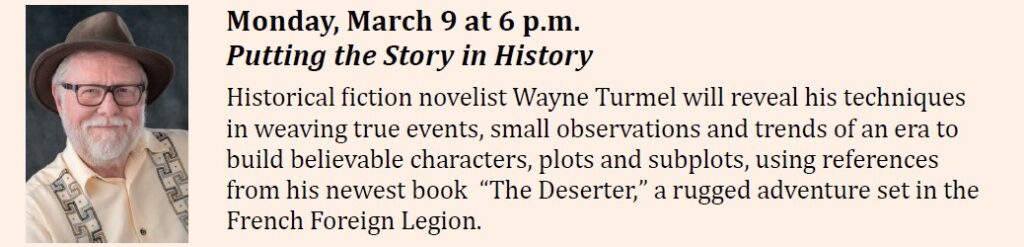
If you’re interested in hearing me talk more about this, I’ll be at the Clark County Library on March 9 at 630 PM to talk about “Putting the STORY in History- How Writers Turn Dry Facts into Compelling Fiction.”

And so it begins:

Historical fiction readers are a picky bunch, God love’em. They demand good stories, rich characters, and they also want to learn a little something about the time period in question. Even if it’s a genre or era they read a lot about, if you can’t give them something new about General Lee’s camp or the material of Lady Uppercrust’s pinafore, they are unlikely to be satisfied.

Just a warning to writers. Get the facts right, especially guns and horses. For some reason, weapon enthusiasts and horse people are the most likely to hunt you down and tell you in great detail how you screwed up. But put in too many details and the non-obsessives out there will tap out.

This makes it hard on those of us just trying to tell good stories. We need to do all the stuff other authors do while having to get the facts straight and keep the story moving. This is a tricky balancing act.

Not to brag (okay, a little. I’m proud of the book), but the kindest reviews of The Deserter talk about the details. They like the way you can almost feel your mouth go dry, or smell the bunkhouse (ick), or feel tallow sink into cuts on your hands as you prepare mule tack. (Just read the book, it’s a thing.) Many of my fellow writers ask how I get the details to be so evocative without sinking into a Tom Clancy technology porn data dump. The answer might surprise you.

I do not read a lot of Science Fiction. Much of it drives me crazy; I don’t understand most technology, and if a character name has two apostrophes in it, I’m out. But in my writers group, I am forced to read all kinds of work, and I found a lesson in sci-fi that has really helped my historical writing: world-building.

In science fiction, you take people somewhere they’ve never been and try to make them feel situated so the story can take place. It’s easy to either not explain enough, in which case the reader can be confused, or to data-dump details that no human can possibly remember a hundred pages later. The right amount of information, context and detail at the right time makes all the difference.

The same is true when writing history with one big exception. People know a lot about certain time periods. You can’t just give the Romans laser beams or the British East India Company oxen to ride. Even if most people aren’t overly familiar with the period, as in the case of the French Foreign Legion in Algeria, they know what the world was like in 1908, and most of us have met French people.

So you need to get the facts right. But how do you strike the right balance of detail and world-building?  The balance is fairly simple. You simply ask, “Does the audience need to know this right now to understand the story?” That’s a surprisingly effective way to give them what they need. It’s also why a simple book has three boxes of research in my office- the author learns a lot that they never share with the reader. Buy me a beer sometime, I’ll be happy to tell you all about it.

The second, and maybe most important thing about historical world-building is creating a sensory experience. Someone once told me that people have five senses, but we only write with one or two. Clearly, we can visually describe something like a green car. But what does it sound like? Is the engine purring or is it chugging like it’s about to die? Does the interior smell like pine air freshener or week-old McDonalds?

Good science fiction gives us a world we may have never experienced, but can instantly understand. The same is true when writing history.

I hope that readers of The Deserter get a sense for what it’s like to be in the desert, or ride a mule, or get punched in the nose. When you read it let me know.

My addition to the Legion oeuvre is The Deserter- a Tale of the Foreign Legion. “A gritty, well-researched historical thriller that revives the classic Foreign Legion adventure with confidence and control.” Author Glow.

The Mack Daddy of all Foreign Legion Films- Frank Thompson

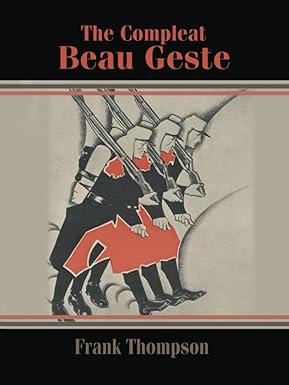
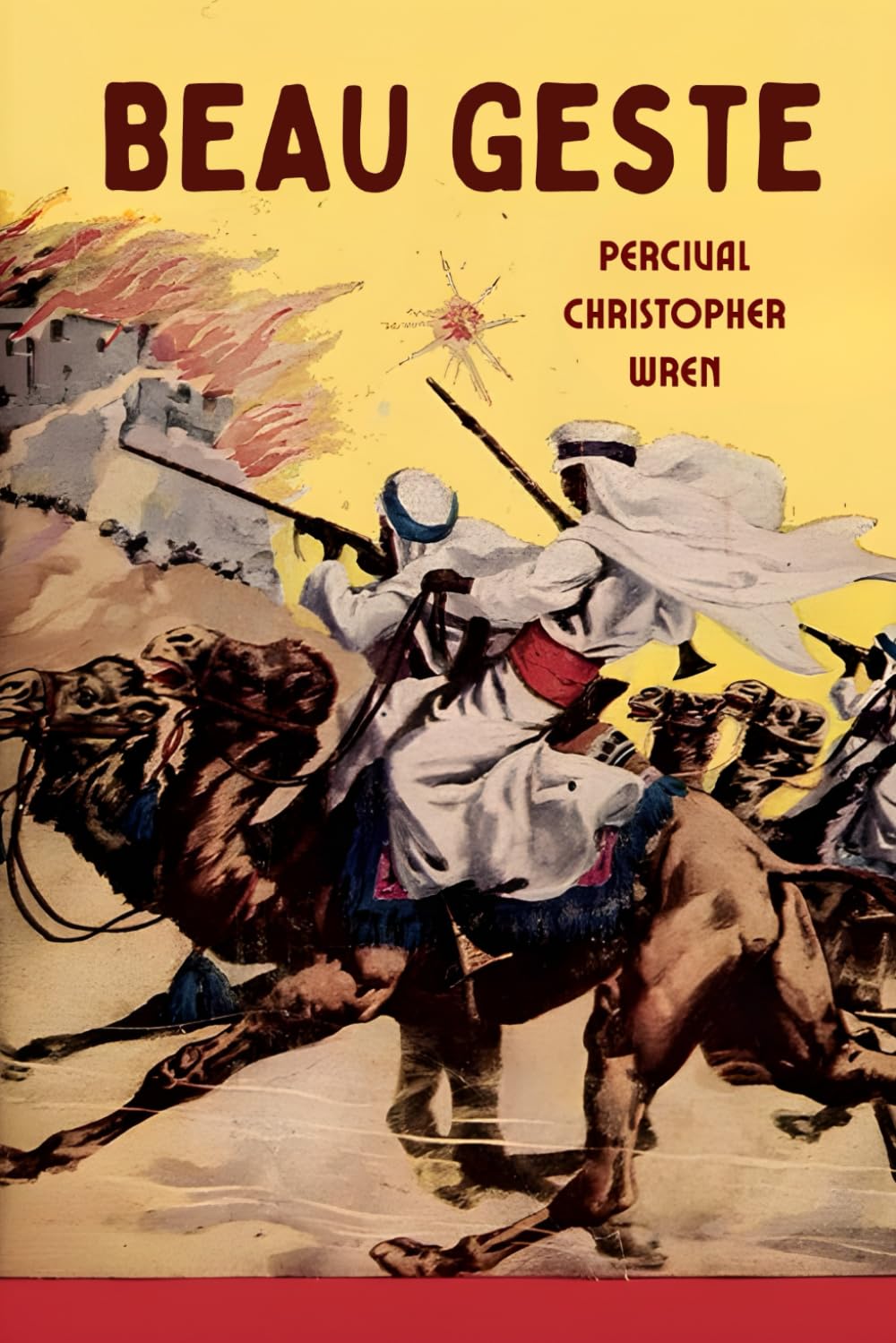
As you know, The Deserter is my latest novel, and it’s set in the French Foreign Legion. It’s hard to remember that there was a time the Legion was at the forefront of pop culture- books, and especially movies. The Mack Daddy of all of them was Beau Geste. In doing research, I came across someone whose fascination with film, and Beau Geste in particular, led to The Compleat Beau Geste. To thank him for his kind support of my book, and to let you know a bit more about him, I give you Frank Thompson.

Okay, Frank, who are you?

I now identify myself primarily as an author and film historian. I’m currently finishing up my 47th book, most of which have been about movies. I’ve written about directors – two books on William A. Wellman, one on Robert Wise, one on Henry King – and a couple on what were then new films, such as The Nightmare Before Christmas (1993) and The Alamo (2004). In fact, for my sins, I’ve written five books about the Alamo and have produced, written, or been otherwise connected with several documentaries on the subject. I also have a close-up in the 2004 film, although claims that this is why the film didn’t do well at the box office are just hurtful.

But, like many people, I guess, I could have ended up going in several other directions. I studied arranging and composition at Boston’s Berklee College of Music, was in a comedy/improv troupe for 4 years in Chicago, worked in non-theatrical film distribution (when there was such a thing) in Chicago and Atlanta, and performed as a singer-songwriter for a while. Moving to Los Angeles in 1992, I worked for several years on television, including ten happy years writing for American Movie Classics – again, when there was such a thing.

Yes, AMC was about movies like MTV used to be about music. Why would you write a whole book about Beau Geste and its offspring?

Beau Geste constitutes my origin story as a film historian. When I was 12 years old, I happened to see the last half of Wellman’s 1939 film version on TV. I was enthralled by it and my mother told me it was based on a book. The next day, I went to the school library and, sure enough, there was the novel by P. C. Wren. Even better, it was illustrated with movie stills – but not from the movie I had just seen. These were photos from the 1926 version starring Ronald Colman. I then read every book I could find on silent film – which, in South Carolina in 1965 was not easy – mostly hoping only to find more pictures from Beau Geste. But along the way, I became fascinated by all aspects of silent cinema, even though I had literally no access to the films themselves.

That changed when I got to Boston to attend Berklee. At that time, the city had – I was told – half a million college students. There were not only great repertory and classic film theaters everywhere, but every college had movie screenings pretty much every day of the week. I finally got to see 35mm and 16mm screenings of silent films, foreign films, and experimental cinema. A whole new world of movies opened up to me.

Following the Beau Geste trail led me to start researching Wild Bill Wellman and he was the subject of my first book, published in 1983. In 2018, my late friend John Andrew Gallagher and I published a mammoth, lavishly illustrated limited edition book about him: Nothing Sacred: The Cinema of William Wellman.

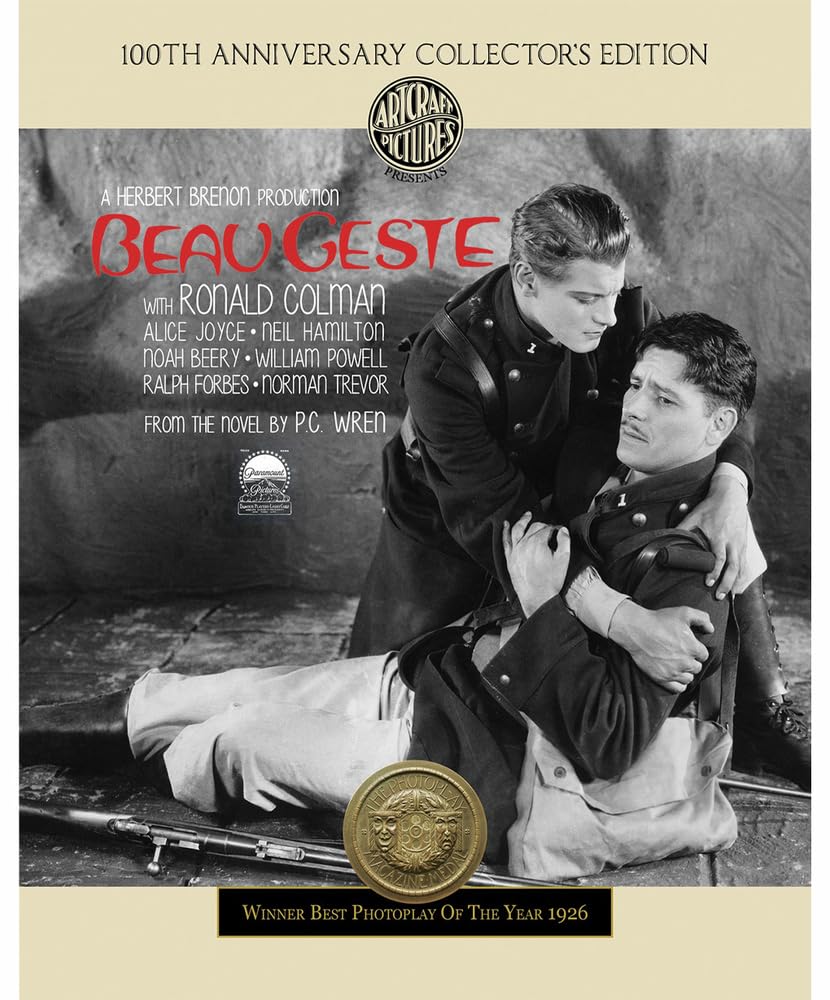
In 2020, just a couple of weeks before COVID lockdown, I went to L.A. to record audio commentary for the new Blu-ray of the 1939 version with William Wellman Jr. Then, in 2026, I recorded a commentary track for the Blu-ray of the restored 1926 film. I was flown to L.A. to attend the premiere of the restoration on the last night of the TCM Festival. TCM’s Jacqueline Stewart and James Mockoski – who, with Robert A. Harris, restored the film – introduced it. James asked me to stand up for a round of applause and said, “What Kevin Brownlow is to Napoleon, Frank is to Beau Geste.” Not even remotely true but gratifying in the extreme.

It was during lockdown, when I couldn’t leave the house, that I decided to pull together my considerable research on all things Beau Geste and write a book about all of it – not only movies but stage, television, comic books, toys, and so much more. Although I had a pretty vast archive, it still took another two years of research and writing before I completed The Compleat Beau Geste. Available, if I may be crassly commercial, at Amazon.

What do you think the fascination is with the Legion? Why do the stories still resonate?

Version 1.0.0

I don’t know if I can answer that. I do have a few friends who have a deep interest in the Legion and there seem to be pockets of enthusiasts around the world, for example, the terrific blog Mon Legionnaire which highlights fiction about the Legion, primarily the great stories from the pulp magazines. And, of course, I know of a wonderful new novel, The Deserter, which I read with genuine delight although the author’s name escapes me.

I love all versions of the story but was excited to hear about the restoration of the original silent film.

I provided no real assistance to the restoration of the 1926 Beau Geste, although Harris and Mockoski were kind and generous enough to keep me in the loop throughout the process. They would send me scenes as they completed them, and I don’t have to tell you how excited and grateful I was throughout. For decades, I have been pleading with archivists to restore this important film. For some reason, the general belief was that it was protected and in good shape. It was neither. Harris and Mockoski pulled prints from all over the place to make a complete version – or as complete as possible – and the result is beautiful. I guarantee you that no one under the age of 100 has ever seen it look like this.

Version 1.0.0

I was honored to write an essay on the film for the San Francisco Silent Film Festival’s program book. That piece was turned into a booklet which is enclosed with the new Blu-ray. Sixty years after my journey to Fort Zinderneuf began, this is a happier destination than I ever expected.

What’s next?

My latest book is on the filming of Thunder Road (1958). I have a fascination with movie locations – did I tell you that I made seven trips to the California desert where the first four Beau Gestes were filmed? – so when my wife and I moved to Asheville, North Carolina in 2015, I immediately began researching the film history of the area. In 2017, I published Asheville Movies Vol. I: The Silent Era and I have other related books planned. I decided to ignore chronology and go straight to Thunder Road because I live within a few miles of every place where it was filmed and there are still local people who remember the filming and who have given me priceless information.

So, that random viewing of the last half of Beau Geste in 1965 continues to lead me down unexplored roads and it will until, I guess, I’m propped up in my embrasure, awaiting my Viking’s Funeral.

My own addition to the Legion oeuvre is The Deserter- a Tale of the Foreign Legion. “A gritty, well-researched historical thriller that revives the classic Foreign Legion adventure with confidence and control.” Author Glow.

An AI Thriller from a Pair of Actual Writers

It should be obvious I’m a big fan of switching up genres in my writing. Turns out I’m not the only one. Deb Heim and Ross Hightower usually write excellent epic fantasy like The Spirit Song Trilogy, so it was a bit of a surprise to see their latest work is a Sci-fi, urban fantasy mashup called Descartes’ Demon (available February 7). It’s hard enough to make a switch like that when it’s just you. But when there are two of you???? I don’t even get along with myself when writing.

Okay, you two. Tell the folks who you are.

Deb: I used to call myself a guerilla gardener/almost a writer, but now I am willing to call myself a writer. At first glance, my life followed the pattern of our generation – school, (grad school), marriage, house, family, work, more work, moving, more moving, and now retirement with a pension. (I am quite distressed that our two children don’t even have the option of that pattern.) One day Ross talked about how thrilling his life was, especially his torrid love affair. It took me a beat to realize he was talking about me. And now we are on our next great adventure as writing partners.

Ross: It may seem odd that I ended up becoming a writer late in life. After all, I was a chemical engineer (briefly) and a professor of information technology for many years. Neither of those professions seems especially compatible with writing fantasy. But, in fact, I find one of the things I like most about my technical jobs is the same thing I enjoy about writing. Writing is about solving puzzles. Putting the pieces of a plot together. Deciding how characters with different personalities respond to one another. It makes my mind purr. I feel fortunate for many reasons. Having a partner in Deb who I swear I’ve known in previous lives, is the most important. But finding my passion in writing is right up there.

Lord, you two are adorable. So what’s the book about?

When cybersecurity wiz Nik breathes life into Nicola—a deepfake AI sculpted in the image of Alix, his favorite person in the world – it was just a little cyber experiment. When one of his contractors is found dead and intern Kate goes missing, the stakes turn deadly.

A black hat cracker styling himself “The Technician” hacks into his cyber-security company.  Shadowy cyberpunk icon “The Vulture” sends cryptic messages to his best programmer. A ruthless oligarch schemes with his partners to wrest control of the company he started. Supernatural figments occupying NYC like paranormal vagabonds seem to know what’s going on but are no help at all. And big thugs with Russian accents keep turning up like bad pennies.

With everyone scrambling to gain control of his creation, Nik and Alix set out to contain what he unwittingly unleashed. When one of his contractors is found dead and intern Kate goes missing, the stakes turn deadly. Of course, the only police detective who believes them has been forced to resign, but her cyber-sleuth girlfriend “The Bloodhound” is on the case. Can they find Kate before The Technician finishes her off?  Will they ever get rid of those lurking Russians? And can Nik put the cybernetic genie Nicola back in the virtual bottle or will she escape into the digital wild?

It takes a lot to switch genres. What are the roots of this story?

Ross is a retired IT professor who ran a large data center and did his early academic work exploring AI, so this felt like a great space to explore as an author. He started out trying to write a basic, snappy thriller that was easier to market, but once the characters in the book started asking questions about the nature of reality and consciousness, all bets were off. He has an artist’s soul, so he had to let the story go where it was going to go. At some point, a paranormal/supernatural element of the story popped in and then became a focal point of the plot. And to be perfectly honest we wanted to write a contemporary series as an excuse to travel around the world for research.

I’m guessing that, like me, you read in many categories and genres. Who do you enjoy?

Ross and Deb both lean toward classic epic fantasy (Rothfuss, Sullivan, Wexler, Tolkien), but since we started a “Firkins and Fantasy” book club at our local brewery, we’ve had the pleasure of reading authors we wouldn’t have found otherwise – NK Jemison, Roanhouse, Choo, Novik, El-Mohtar. Urban fantasy, re-imagined fables, historical fantasy. Having spent too many years in Florida, we are both big fans of Carl Hiaasen and Tim Dorsey. AND we are actually big Wayne Turmel fans – Deb has read all the books in the Werewolf PI series. The snappy dialogue and surprising, poignant moments between the characters were some of the elements that inspired us for our first foray into urban fantasy.

Sucking up is unnecessary, and I’m not taking responsibility for your cynical foray into urban fantasy! Where can folks learn more about the two of you?

Website https://rosshightower.com/

Contact/newsletter page https://rosshightower.com/contact/

Ross’ Goodreads page  Amazon page Bookbub page

Deb’s Amazon page Bookbub page

Our FB page https://www.facebook.com/QuizzicalSpirit/

Instagram @quizzicalllc https://www.instagram.com/quizzicalllc/

BlueSky https://bsky.app/profile/quizzicalllc.bsky.social

And speaking of genre-hopping, my return to historical fiction is available now.

The Deserter- a Tale of the Foreign Legion, is “Beau Geste if it were directed by Sam Peckinpah”, a two-fisted adventure set in the African desert. Available in paperback anywhere, and on Kindle.

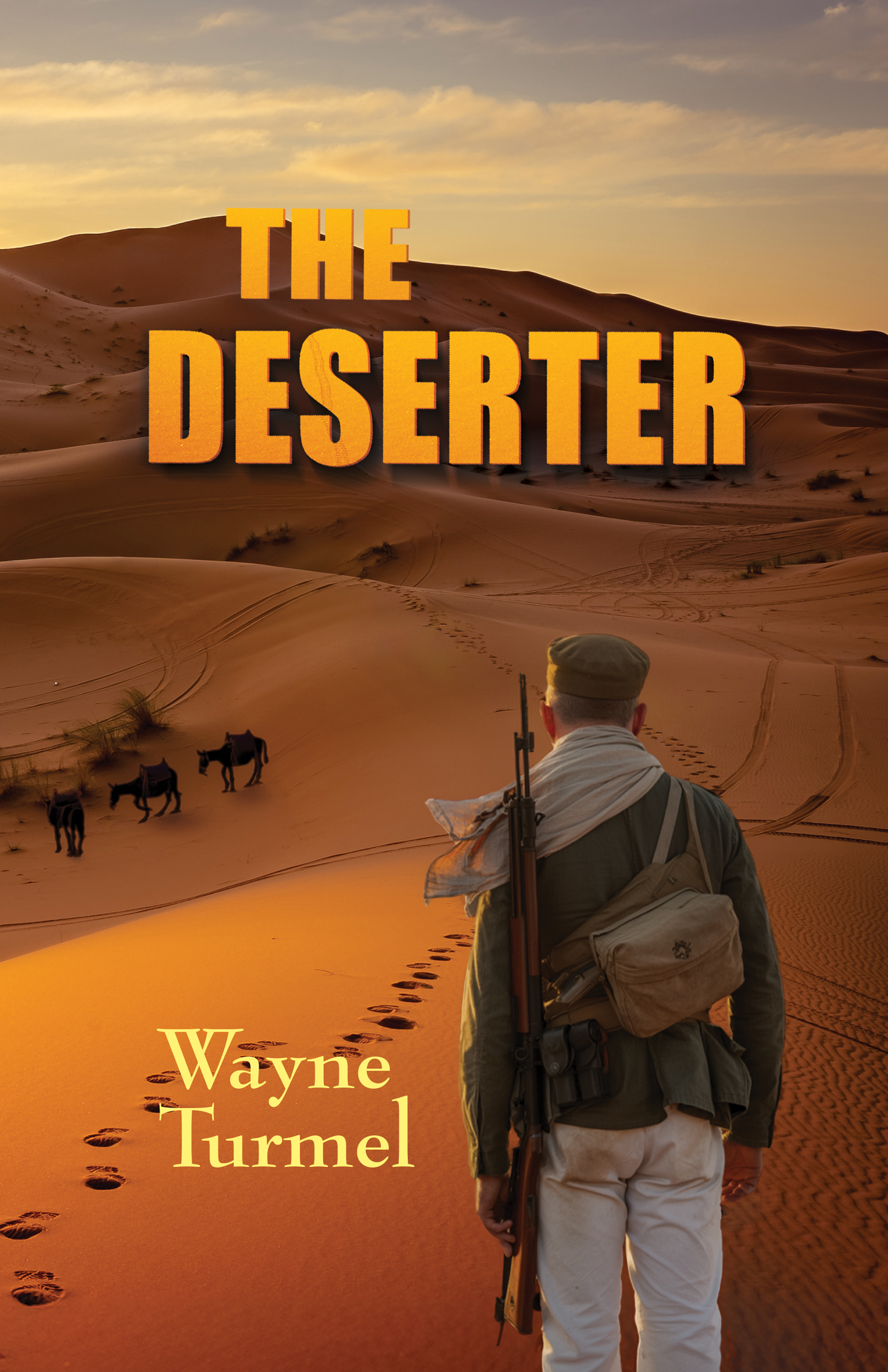
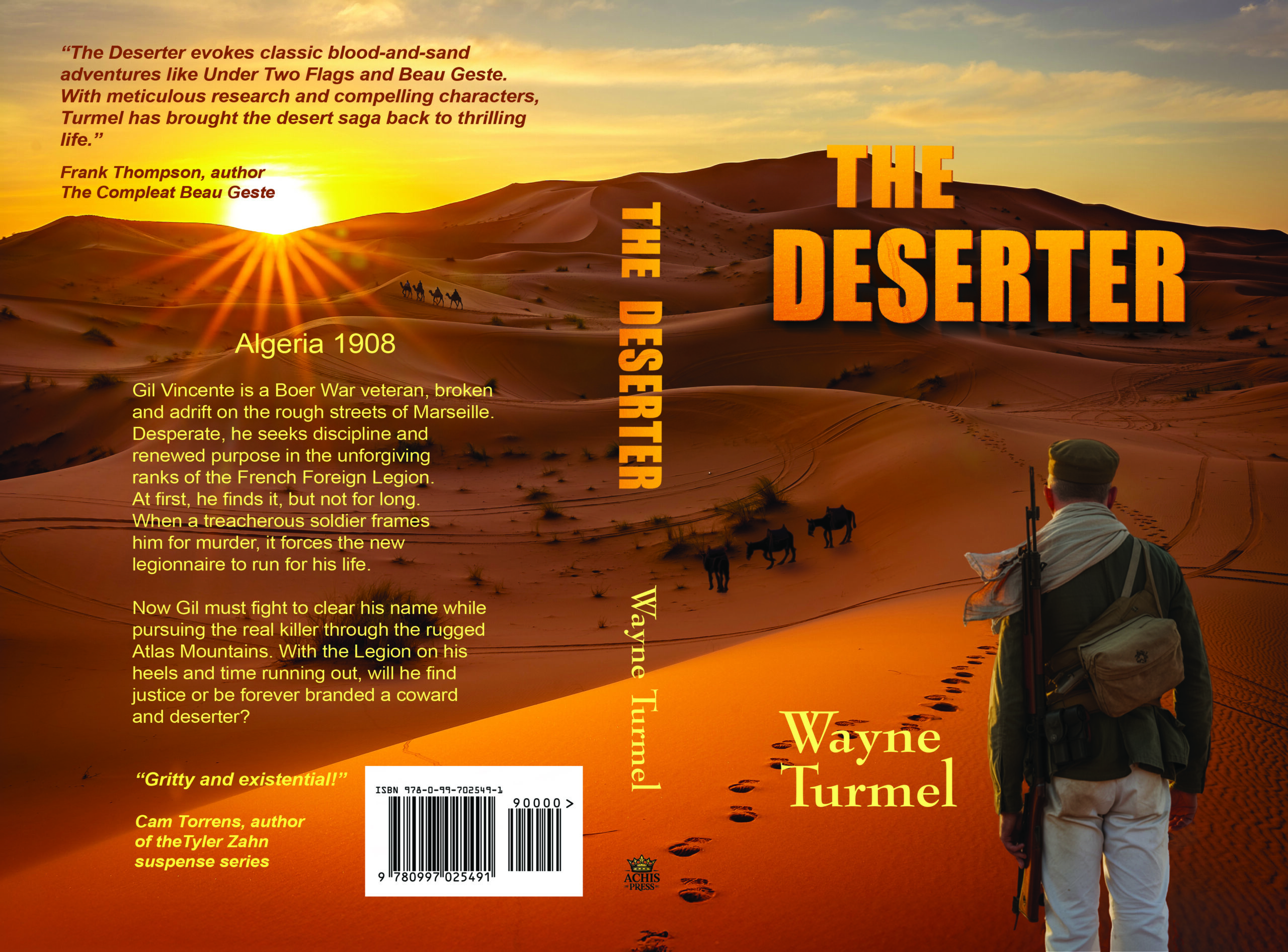
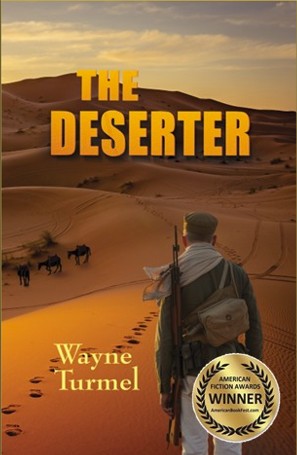
Here it is: The Cover for The Deserter

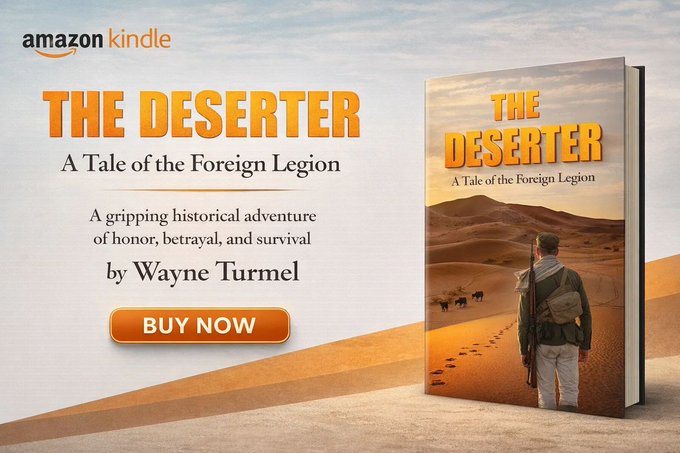
My newest novel, The Deserter- a Tale of the Foreign Legion, is coming January 15. It’s available for Pre-order on Amazon in both Kindle and Paperback version internationally (or you can buy a signed paperback from me!)

Here’s the cover, and some of what people are saying.

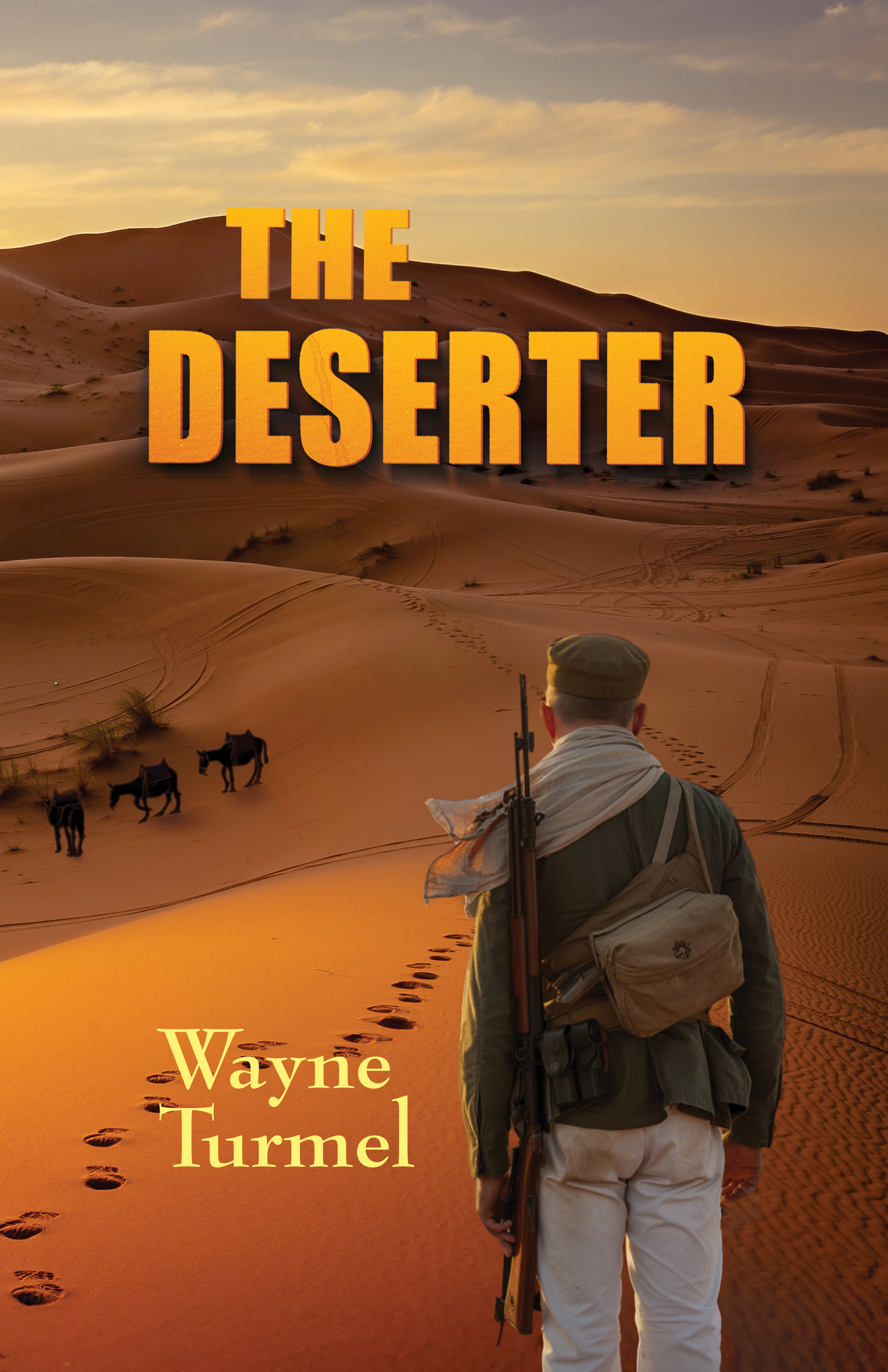
First, the Front cover, and the cover for the eBook:

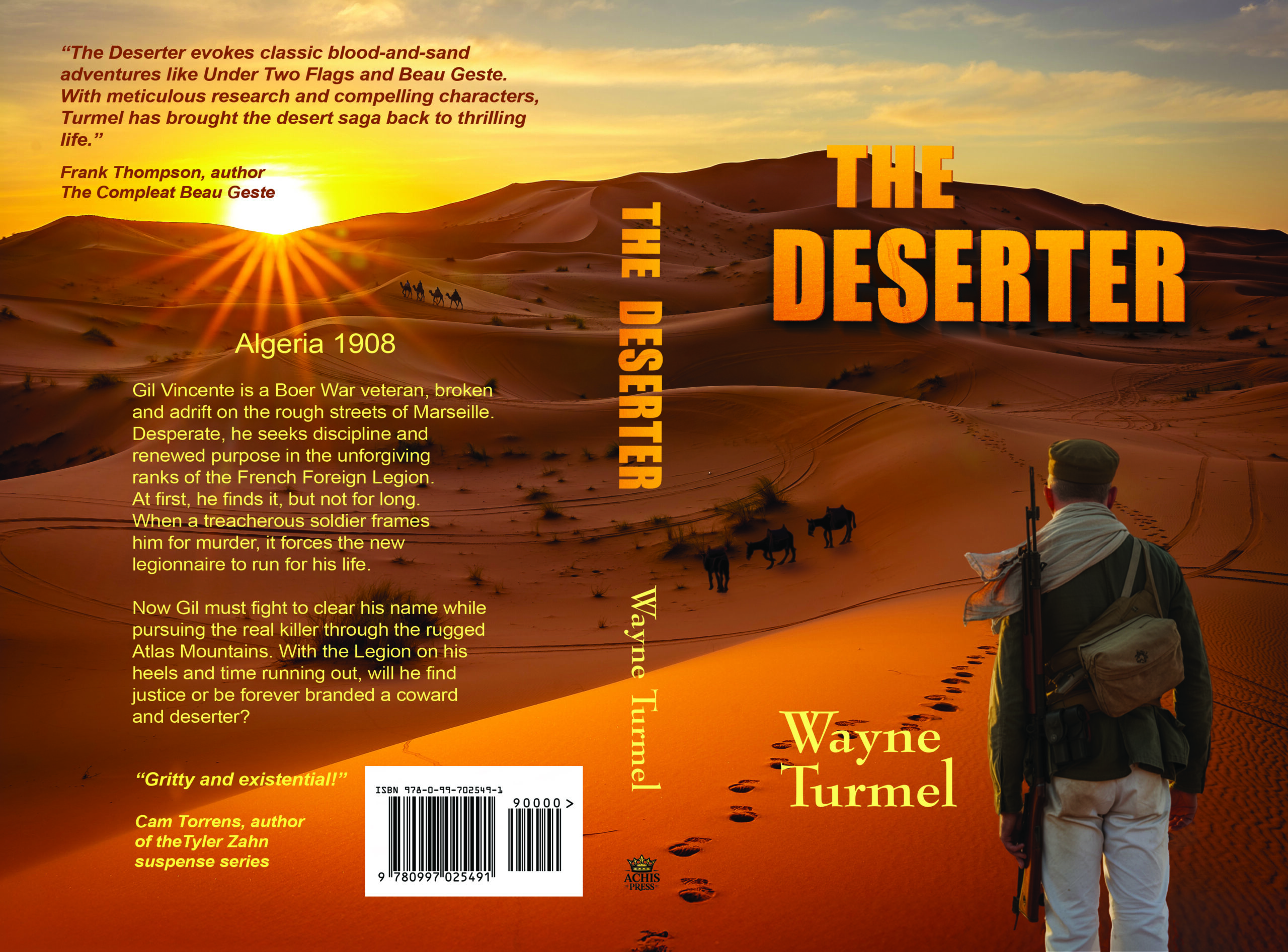
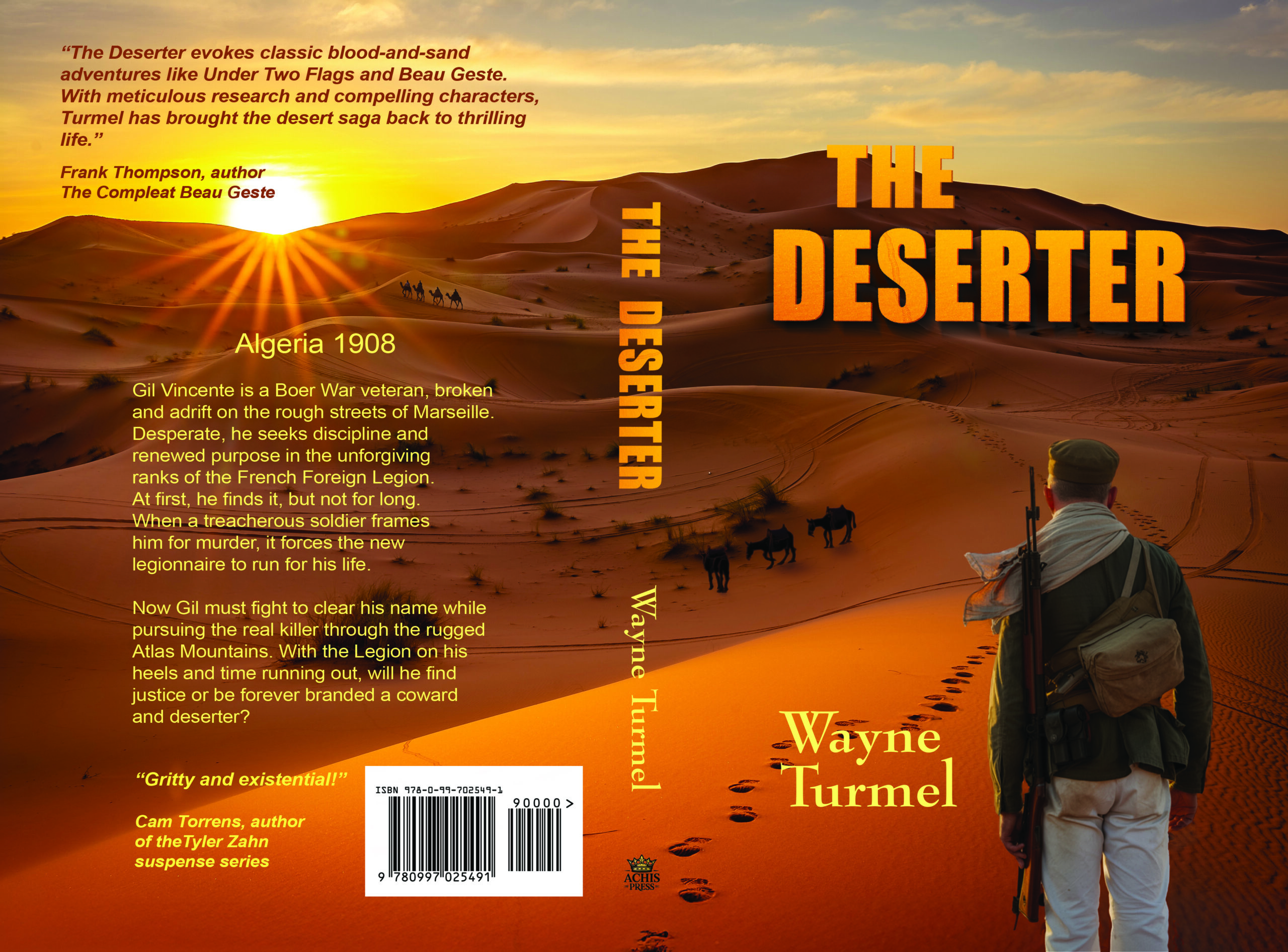
And then the full cover:

Thanks to Ruth Zakarian, a fellow Sin City Writers member for her amazing, evocative cover art.

Gritty and existential! – author Cam Torrens

…a powerful tale of loyalty, survival, and second chances. Perfect for fans of Bernard Cornwell and classic adventure fiction.- KJ Fieler

Coming January 15, 2028

How to Leave Reviews on Amazon (Especially for New Indie Books)

8 Tips for Reviewing Advanced Copies on Amazon and Goodreads

If you’ve beta-read a book, been part of a street team, or just read a great book by an indie author, the best way to help them is to leave a review on Amazon and/or Goodreads. Thank you—readers like you are a godsend.

This process can feel intimidating and frustrating. When and how you post can determine whether your good intentions get seen or are buried by the algorithm.

Here are 8 crucial tips for helping your favorite indie author. Authors, share these tips with your ARC readers. If you want to give me a little credit, it’s appreciated.


1. Prioritize & Know the Rules for Each Platform

Amazon and Goodreads are by far the most-read and most influential sites for launching new books. Even though Amazon owns Goodreads, they have very different rules:

PlatformTimingPurchase RequirementKey Rules
GoodreadsPost as soon as the book is listed (pre-pub reviews help build momentum).None.You can occasionally mention the author’s social media links.
AmazonPost on or shortly after the official publication date.Must have spent $50/year on Amazon to post reviews (Prime/KU subscribers are usually fine).DO NOT include any external links; the review will be rejected.

Important for readers: Always honor any specific date or platform request given by the author or publisher. More reviews in the first few days post-launch mean greater promotion by the Amazon algorithm. For example, i plan to send a note to ARC readers and early reviewers a week before the publication date so it is on their radar.

2. Check Amazon’s Review Timing Rules

Amazon is strict about timing.

  • Schedule your review to be posted on or shortly after the book’s official launch date.
  • The book must be published for you to post a review on Amazon.

Pro Tip for KU Subscribers/ARCs: If you read an ARC but have Kindle Unlimited, you can preorder and download the book on the publication date, flip through all the pages, and then post your review. This gives the author certified page reads and may help your review appear as a “Verified Purchase.”

3. Disclose How You Acquired the Book (Crucial for Compliance)

This is vital for FTC and Amazon compliance (transparency). Always state how you acquired the book:

  • For an ARC/E-Galley: “I received an advanced reader copy (ARC) of this book in exchange for an honest review.”
  • For a Direct Purchase: “I purchased this copy directly from the author/publisher. My review is voluntary and honest.”

Note: If you received a free ARC, your review will not have the “Verified Purchase” badge. This is normal, and your disclosure covers it.

4. Focus on the Book’s Final Quality

Your role is to be a reader, not a proofreader.

  • ARCs might contain minor typos. Ignore minor errors unless they seriously impact the story.
  • The bulk of your review should focus on the story, characters, plot, and overall reading experience.

5. Write Unique Reviews for Both Sites

Tailor the review slightly for each audience:

  • Goodreads: Can be more conversational and include comparisons to similar titles.
  • Amazon: Be concise and focus on how the book delivers on its genre promise (e.g., “A thrilling fantasy read”).

6. Use Star Ratings Consistently

  • Maintain a consistent star rating between Goodreads and Amazon for the same book to avoid sending mixed signals to readers and algorithms.

7. Avoid Spoilers Unless Clearly Marked

The goal is to help prospective readers decide to buy the book.

  • If you must discuss a major plot point, use a clear [SPOILER ALERT] tag at the very beginning of the spoiler section.

8. Use Links Sparingly (Goodreads Only)

  • Goodreads: You may sparingly mention the author’s social media or website.
  • Amazon: Do NOT include any external links on Amazon. Reviews with external links will be rejected.

Now the shamefully self-promoting part. If you’d like to be part of the ARC reader team for The Deserter, drop me a line. There’s still time before publication day.

What smart people are saying about The Deserter

Next week, I’ll reveal the cover of my new novel, The Deserter. Until then, I thought you might want to know what people are saying about it… These are smart people, excellent writers, and people who don’t tolerate poor story-telling. If you are unaware of their work, check them out.

“The Deserter evokes classic blood-and-sand adventures like Under Two Flags and Beau Geste.      With meticulous research and compelling characters, Turmel has brought the desert saga back to thrilling life.” Frank Thompson- author of The Compleat Beau Geste

“The Deserter evokes classic blood-and-sand adventures like Under Two Flags and Beau Geste.      With meticulous research and compelling characters, Turmel has brought the desert saga back to thrilling life.” Cam Torres, author of the Tyler Zahn thrillers

“The Deserter is a great read from beginning to end. Rousing adventure, multifaceted characters, and the near mythical setting of life in the French Foreign Legion add up to a thrilling page turner. If you haven’t read Wayne Turmel’s work, you’re missing out. – Thom Reese, author of the HUNTINGTON ADVENTURES series.

“The Deserter is a thrilling tale of desert adventure in the classic tradition of Beau Geste and the Flawed Blades novels of P.C. Wren.     Enlisting in the French Foreign Legion seems like the answer to Gil’s prayers, but he soon learns that safety is a mirage.”  Jill Hand,  author of the Trapnell thrillers, White Oaks, Black Willows and Red Pines

“I love historical novels, and the best of them meet three requirements. They must be good novels with believable characters and a protagonist I can get inside the head of. They must be historically accurate in small details. And, ideally, they tie to an actual historical event. The Deserter meets all those requirements.” Wally Bock, The Well-Read Author Newsletter

“A two-fisted historical adventure that weaves visceral action, rugged landscapes, and raw emotional depth into a haunting tale of honor, betrayal, and the elusive hope of redemption.” — David Buzan, bestselling author of IN THE LAIR OF LEGENDS    


Look for the cover reveal and more good stuff on Wednesday, October 22

Okay, Here is the Formal Announcement- The Deserter Comes Out January 15th!

After a lot of false starts and hemming and hawing, “The Deserter, a Tale of the Foreign Legion,” will be out January 16, 2026.

Gritty and existential! A British veteran’s stint in the French Foreign Legion turns ugly as he suffers from the brutal cost of good intentions and the indifferent machinery of war.—Cam Torrens, award-winning author of the Tyler Zahn suspense series
.

This book marks the return to my historical fiction roots. It’s different than anything you’ve read from me. It’s dark, violent, and decidedly not cute or funny. But it IS a thrilling story of desperation and one man’s desire to overcome his worst impulses.

Here’s the synopsis:

Marseille, 1908.

A Boer War veteran, broken and adrift, seeks discipline and renewed purpose in the unforgiving ranks of the French Foreign Legion. He finds it, but not for long. When a payroll guard is murdered, a treacherous soldier blames him, forcing Gil Vincente to run for his life.

Chasing his nemesis through the rugged mountains of North Africa, Gil must fight to clear his name. But with the Legion on his heels and a ruthless killer on the loose, will he find justice or be forever branded a coward and deserter?

Think Beau Geste, directed by Sam Peckinpah, and you’re on the right track.

If you’d like an early review copy, want to be on my launch team, or just want to know more details as launch day draws near, Get on my mailing list.

More to come. Stay tuned