“The author skillfully introduces characters that heighten the sense of foreboding, ” Historical Fiction Reviews
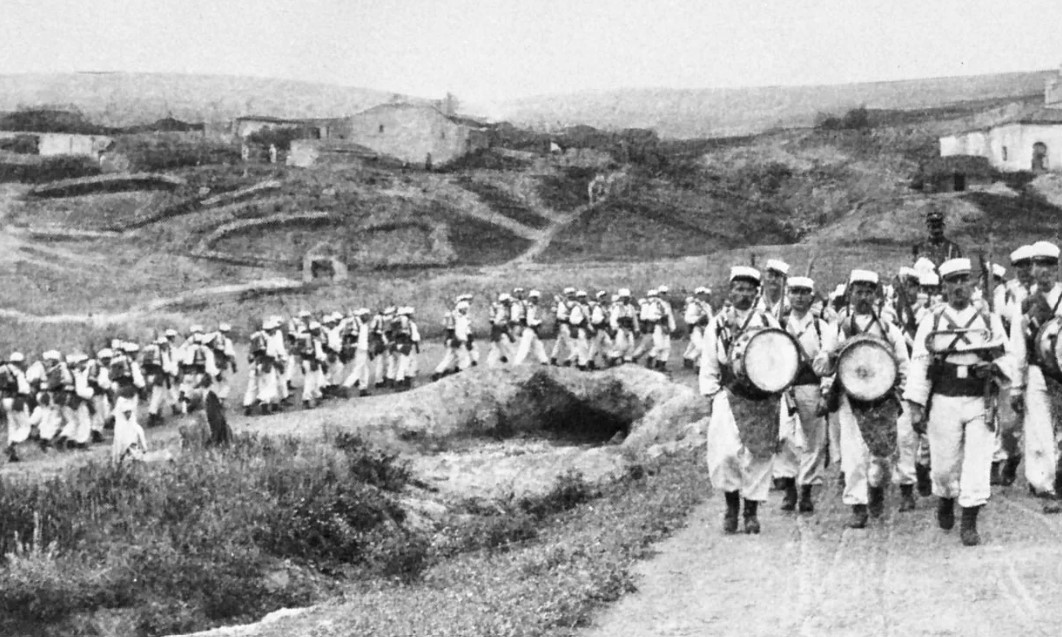
” …meticulous research and attention to detail. The descriptions of the Algerian towns, the forts, life in the French Foreign Legion drop the reader right into the action.” Jeanie B Roberts
” This story has a vividly authentic feel to it. It reads something akin to a novel by Alexander Dumas or Victor Hugo.” Mike Kerr
How does a Canadian guy from the rainy, green Pacific Northwest create a world of sand, heat, and the scents and sounds of men trapped together in quarters too close? Science Fiction, of course.
Historical fiction readers are a picky bunch, God love’em. They demand good stories, rich characters, and they also want to learn a little something about the time period in question. Even if it’s a genre or era they read a lot about, if you can’t give them something new about General Lee’s camp or the material of Lady Uppercrust’s pinafore, they are unlikely to be satisfied.
Just a warning to writers. Get the facts right, especially guns and horses. For some reason, weapon enthusiasts and horse people are the most likely to hunt you down and tell you in great detail how you screwed up. But put in too many details and the non-obsessives out there will tap out.
This makes it hard on those of us just trying to tell good stories. We need to do all the stuff other authors do while having to get the facts straight and keep the story moving. This is a tricky balancing act.
Not to brag (okay, a little. I’m proud of the book), but the kindest reviews of The Deserter talk about the details. They like the way you can almost feel your mouth go dry, or smell the bunkhouse (ick), or feel tallow sink into cuts on your hands as you prepare mule tack. (Just read the book, it’s a thing.) Many of my fellow writers ask how I get the details to be so evocative without sinking into a Tom Clancy technology porn data dump. The answer might surprise you.
I do not read a lot of Science Fiction. Much of it drives me crazy; I don’t understand most technology, and if a character name has two apostrophes in it, I’m out. But in my writers group, I am forced to read all kinds of work, and I found a lesson in sci-fi that has really helped my historical writing: world-building.
In science fiction, you take people somewhere they’ve never been and try to make them feel situated so the story can take place. It’s easy to either not explain enough, in which case the reader can be confused, or to data-dump details that no human can possibly remember a hundred pages later. The right amount of information, context and detail at the right time makes all the difference.
The same is true when writing history with one big exception. People know a lot about certain time periods. You can’t just give the Romans laser beams or the British East India Company oxen to ride. Even if most people aren’t overly familiar with the period, as in the case of the French Foreign Legion in Algeria, they know what the world was like in 1908, and most of us have met French people.
So you need to get the facts right. But how do you strike the right balance of detail and world-building? The balance is fairly simple. You simply ask, “Does the audience need to know this right now to understand the story?” That’s a surprisingly effective way to give them what they need. It’s also why a simple book has three boxes of research in my office- the author learns a lot that they never share with the reader. Buy me a beer sometime, I’ll be happy to tell you all about it.
The second, and maybe most important thing about historical world-building is creating a sensory experience. Someone once told me that people have five senses, but we only write with one or two. Clearly, we can visually describe something like a green car. But what does it sound like? Is the engine purring or is it chugging like it’s about to die? Does the interior smell like pine air freshener or week-old McDonalds?
Good science fiction gives us a world we may have never experienced, but can instantly understand. The same is true when writing history.
I hope that readers of The Deserter get a sense for what it’s like to be in the desert, or ride a mule, or get punched in the nose. When you read it let me know.
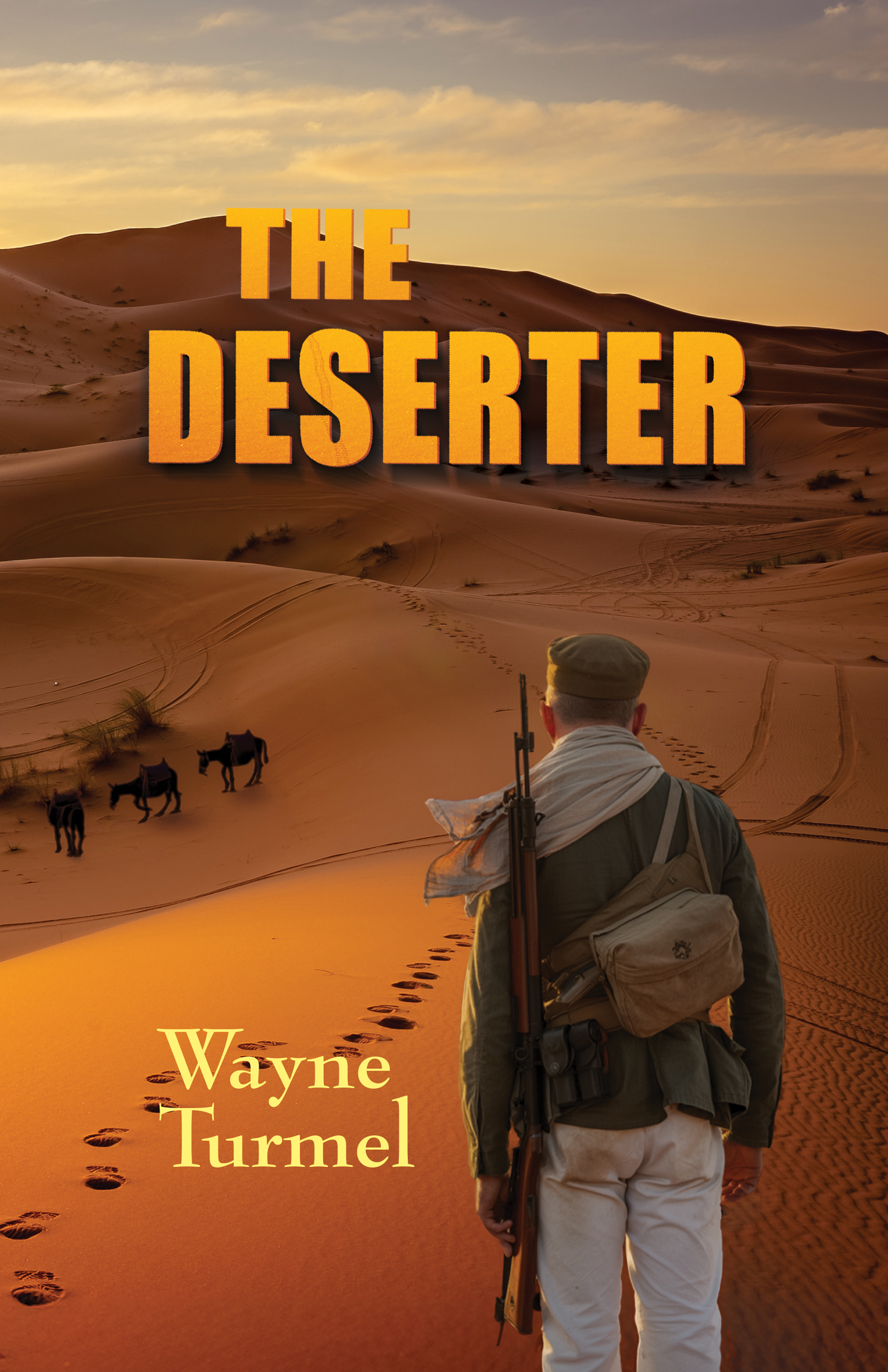
My addition to the Legion oeuvre is The Deserter- a Tale of the Foreign Legion. “A gritty, well-researched historical thriller that revives the classic Foreign Legion adventure with confidence and control.” Author Glow.
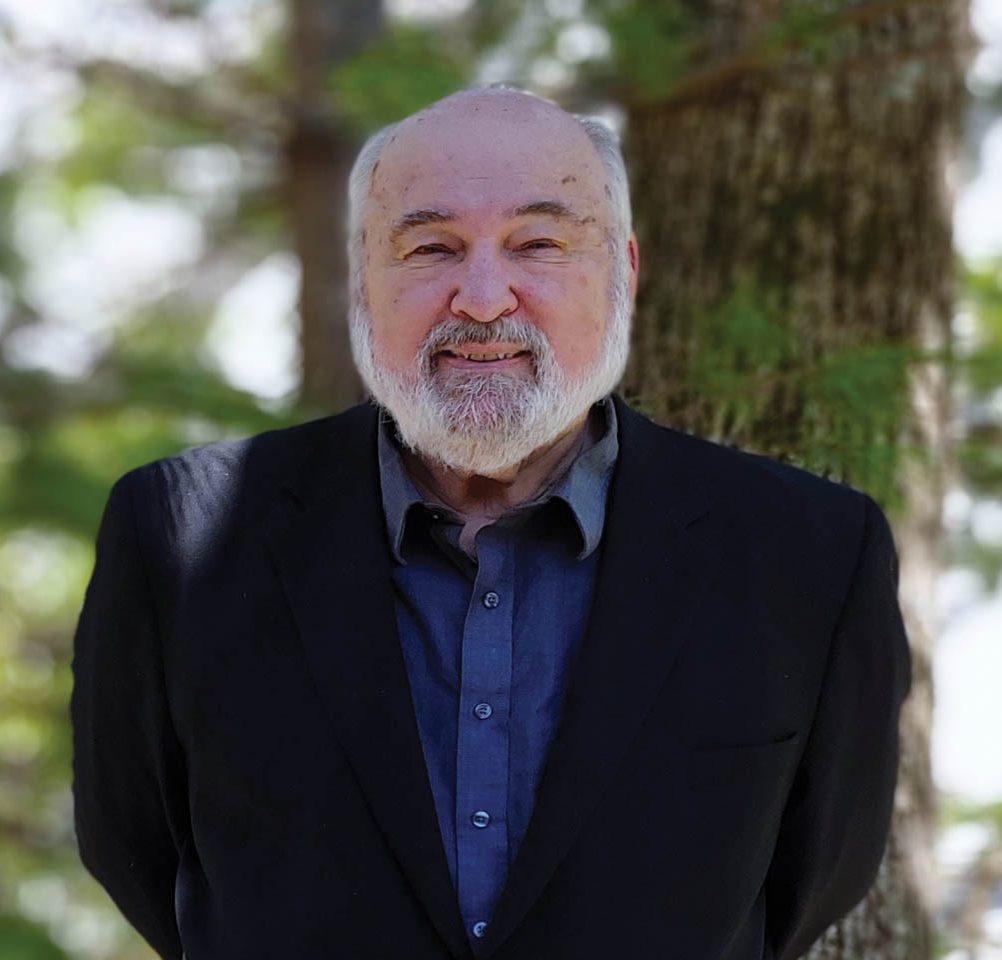
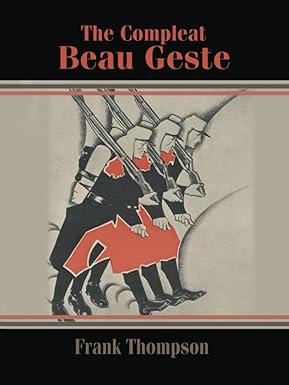
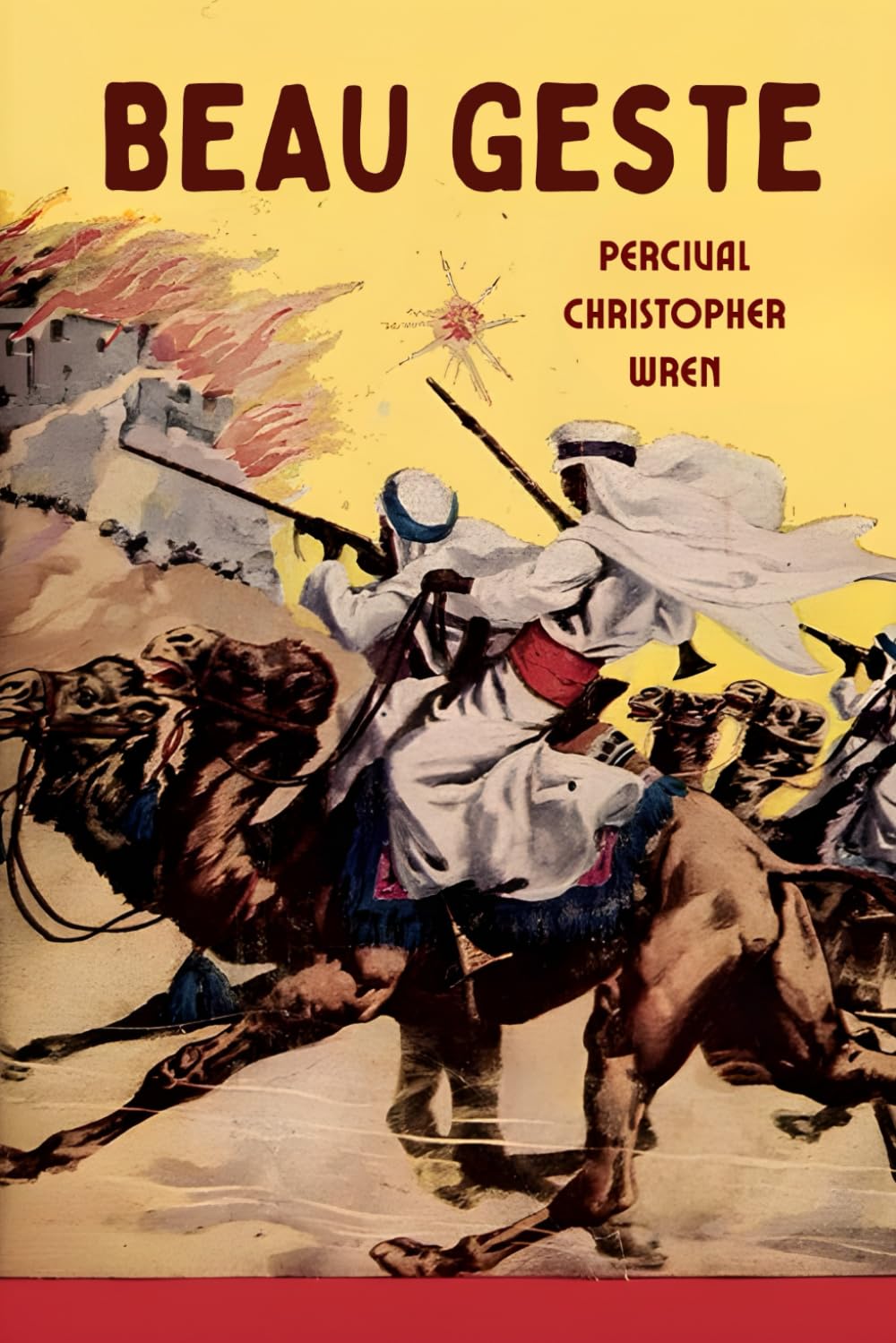
As you know, The Deserter is my latest novel, and it’s set in the French Foreign Legion. It’s hard to remember that there was a time the Legion was at the forefront of pop culture- books, and especially movies. The Mack Daddy of all of them was Beau Geste. In doing research, I came across someone whose fascination with film, and Beau Geste in particular, led to The Compleat Beau Geste. To thank him for his kind support of my book, and to let you know a bit more about him, I give you Frank Thompson.
Okay, Frank, who are you?
I now identify myself primarily as an author and film historian. I’m currently finishing up my 47th book, most of which have been about movies. I’ve written about directors – two books on William A. Wellman, one on Robert Wise, one on Henry King – and a couple on what were then new films, such as The Nightmare Before Christmas (1993) and The Alamo (2004). In fact, for my sins, I’ve written five books about the Alamo and have produced, written, or been otherwise connected with several documentaries on the subject. I also have a close-up in the 2004 film, although claims that this is why the film didn’t do well at the box office are just hurtful.
But, like many people, I guess, I could have ended up going in several other directions. I studied arranging and composition at Boston’s Berklee College of Music, was in a comedy/improv troupe for 4 years in Chicago, worked in non-theatrical film distribution (when there was such a thing) in Chicago and Atlanta, and performed as a singer-songwriter for a while. Moving to Los Angeles in 1992, I worked for several years on television, including ten happy years writing for American Movie Classics – again, when there was such a thing.
Yes, AMC was about movies like MTV used to be about music. Why would you write a whole book about Beau Geste and its offspring?
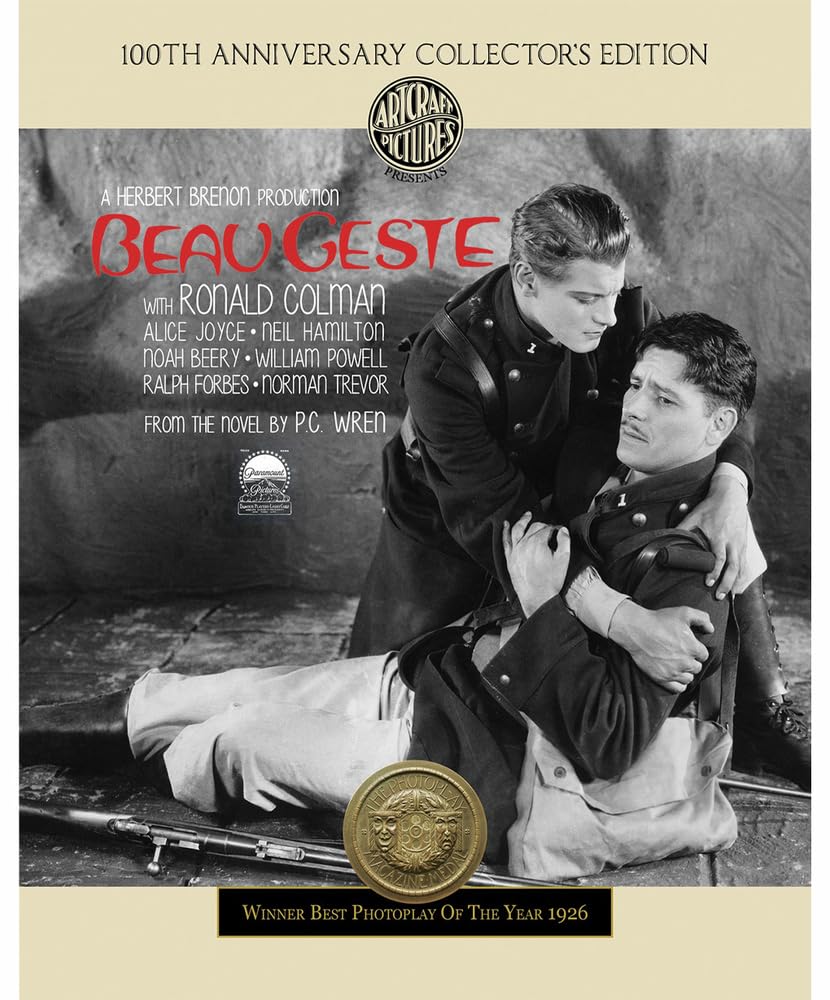
Beau Gesteconstitutes my origin story as a film historian. When I was 12 years old, I happened to see the last half of Wellman’s 1939 film version on TV. I was enthralled by it and my mother told me it was based on a book. The next day, I went to the school library and, sure enough, there was the novel by P. C. Wren. Even better, it was illustrated with movie stills – but not from the movie I had just seen. These were photos from the 1926 version starring Ronald Colman. I then read every book I could find on silent film – which, in South Carolina in 1965 was not easy – mostly hoping only to find more pictures from Beau Geste. But along the way, I became fascinated by all aspects of silent cinema, even though I had literally no access to the films themselves.
That changed when I got to Boston to attend Berklee. At that time, the city had – I was told – half a million college students. There were not only great repertory and classic film theaters everywhere, but every college had movie screenings pretty much every day of the week. I finally got to see 35mm and 16mm screenings of silent films, foreign films, and experimental cinema. A whole new world of movies opened up to me.
Following the Beau Geste trail led me to start researching Wild Bill Wellman and he was the subject of my first book, published in 1983. In 2018, my late friend John Andrew Gallagher and I published a mammoth, lavishly illustrated limited edition book about him: Nothing Sacred: The Cinema of William Wellman.
In 2020, just a couple of weeks before COVID lockdown, I went to L.A. to record audio commentary for the new Blu-ray of the 1939 version with William Wellman Jr. Then, in 2026, I recorded a commentary track for the Blu-ray of the restored 1926 film. I was flown to L.A. to attend the premiere of the restoration on the last night of the TCM Festival. TCM’s Jacqueline Stewart and James Mockoski – who, with Robert A. Harris, restored the film – introduced it. James asked me to stand up for a round of applause and said, “What Kevin Brownlow is to Napoleon, Frank is to Beau Geste.” Not even remotely true but gratifying in the extreme.
It was during lockdown, when I couldn’t leave the house, that I decided to pull together my considerable research on all things Beau Geste and write a book about all of it – not only movies but stage, television, comic books, toys, and so much more. Although I had a pretty vast archive, it still took another two years of research and writing before I completed The Compleat Beau Geste. Available, if I may be crassly commercial, at Amazon.
What do you think the fascination is with the Legion? Why do the stories still resonate?
Version 1.0.0
I don’t know if I can answer that. I do have a few friends who have a deep interest in the Legion and there seem to be pockets of enthusiasts around the world, for example, the terrific blog Mon Legionnaire which highlights fiction about the Legion, primarily the great stories from the pulp magazines. And, of course, I know of a wonderful new novel, The Deserter, which I read with genuine delight although the author’s name escapes me.
I love all versions of the story but was excited to hear about the restoration of the original silent film.
I provided no real assistance to the restoration of the 1926 Beau Geste, although Harris and Mockoski were kind and generous enough to keep me in the loop throughout the process. They would send me scenes as they completed them, and I don’t have to tell you how excited and grateful I was throughout. For decades, I have been pleading with archivists to restore this important film. For some reason, the general belief was that it was protected and in good shape. It was neither. Harris and Mockoski pulled prints from all over the place to make a complete version – or as complete as possible – and the result is beautiful. I guarantee you that no one under the age of 100 has ever seen it look like this.
Version 1.0.0
I was honored to write an essay on the film for the San Francisco Silent Film Festival’s program book. That piece was turned into a booklet which is enclosed with the new Blu-ray. Sixty years after my journey to Fort Zinderneuf began, this is a happier destination than I ever expected.
What’s next?
My latest book is on the filming of Thunder Road (1958). I have a fascination with movie locations – did I tell you that I made seven trips to the California desert where the first four Beau Gestes were filmed? – so when my wife and I moved to Asheville, North Carolina in 2015, I immediately began researching the film history of the area. In 2017, I published Asheville Movies Vol. I: The Silent Era and I have other related books planned. I decided to ignore chronology and go straight to Thunder Road because I live within a few miles of every place where it was filmed and there are still local people who remember the filming and who have given me priceless information.
So, that random viewing of the last half of Beau Geste in 1965 continues to lead me down unexplored roads and it will until, I guess, I’m propped up in my embrasure, awaiting my Viking’s Funeral.
My own addition to the Legion oeuvre is The Deserter- a Tale of the Foreign Legion. “A gritty, well-researched historical thriller that revives the classic Foreign Legion adventure with confidence and control.” Author Glow.
After a lot of false starts and hemming and hawing, “The Deserter, a Tale of the Foreign Legion,” will be out January 16, 2026.
Gritty and existential! A British veteran’s stint in the French Foreign Legion turns ugly as he suffers from the brutal cost of good intentions and the indifferent machinery of war.—Cam Torrens, award-winning author of the Tyler Zahn suspense series .
This book marks the return to my historical fiction roots. It’s different than anything you’ve read from me. It’s dark, violent, and decidedly not cute or funny. But it IS a thrilling story of desperation and one man’s desire to overcome his worst impulses.
Here’s the synopsis:
Marseille, 1908.
A Boer War veteran, broken and adrift, seeks discipline and renewed purpose in the unforgiving ranks of the French Foreign Legion. He finds it, but not for long. When a payroll guard is murdered, a treacherous soldier blames him, forcing Gil Vincente to run for his life.
Chasing his nemesis through the rugged mountains of North Africa, Gil must fight to clear his name. But with the Legion on his heels and a ruthless killer on the loose, will he find justice or be forever branded a coward and deserter?
Think Beau Geste, directed by Sam Peckinpah, and you’re on the right track.
If you’d like an early review copy, want to be on my launch team, or just want to know more details as launch day draws near, Get on my mailing list.
More to come. Stay tuned
Cookie Consent
We use cookies to improve your experience on our site. By using our site, you consent to cookies.
Contains information related to marketing campaigns of the user. These are shared with Google AdWords / Google Ads when the Google Ads and Google Analytics accounts are linked together.
90 days
__utma
ID used to identify users and sessions
2 years after last activity
__utmt
Used to monitor number of Google Analytics server requests
10 minutes
__utmb
Used to distinguish new sessions and visits. This cookie is set when the GA.js javascript library is loaded and there is no existing __utmb cookie. The cookie is updated every time data is sent to the Google Analytics server.
30 minutes after last activity
__utmc
Used only with old Urchin versions of Google Analytics and not with GA.js. Was used to distinguish between new sessions and visits at the end of a session.
End of session (browser)
__utmz
Contains information about the traffic source or campaign that directed user to the website. The cookie is set when the GA.js javascript is loaded and updated when data is sent to the Google Anaytics server
6 months after last activity
__utmv
Contains custom information set by the web developer via the _setCustomVar method in Google Analytics. This cookie is updated every time new data is sent to the Google Analytics server.
2 years after last activity
__utmx
Used to determine whether a user is included in an A / B or Multivariate test.
18 months
_ga
ID used to identify users
2 years
_gali
Used by Google Analytics to determine which links on a page are being clicked
30 seconds
_ga_
ID used to identify users
2 years
_gid
ID used to identify users for 24 hours after last activity
24 hours
_gat
Used to monitor number of Google Analytics server requests when using Google Tag Manager