When Was the Last Time You Read Anything About Patagonia? Kate Beales

One of the best things about being in contact with other winners and finalists of the American Book Fest awards, is finding out about the time periods and topics that have obsessed their authors. That brings us to an author and topic I’ve never heard of: Kate Beales and her tale of the British colony in Patagonia, Broken Horses.

Okay Kate, floor’s yours. What should we know about you?

I’m from the UK, and I live mostly in London with my husband and two grown-up sons. I say mostly, because I spend as much time as I can in the hills of Northern Piemonte, Italy, where I host creative retreats for writers and other artists. 

My background is in theatre – I learned my trade as an assistant director at the beautiful Deutsches Schauspielhaus in Hamburg, where, because I spoke English, I got to work with all the international directors. Over the next five years, I toured the world with the English Shakespeare Company, became a theatre director and then joined the Learning Department at the National Theatre as a freelance associate. I’ve created projects for and with children, young people, elders, teenagers at risk of homelessness, business people and many other communities. I’ve made a show with (yes, with!) toddlers, set in a giant bed, and worked with refugees on the streets of Paris and Athens. I’ve collaborated with an analogue photographer to create pop up darkrooms and pinhole cameras for community storytelling, and worked with puppeteers in the townships of South Africa. Along the way, I’ve learned to tell stories and teach storytelling – including for the Tisch School of the Arts at NYU, where I worked as a visiting professor teaching both Storytelling and Shakespeare for twenty years. Today I facilitate work with limbless and wounded veterans, teaching writing and theatre, helping them share their stories of resilience. 

I write my own stories whenever I can, in between the day job, mostly on trains and buses. I’m proud of Broken Horses, it’s had a long and rocky path to publication, and I’m delighted that it’s made it out into the world. I’ve been told, by someone who has lived experience of the story behind the story, that it ‘digs up the bodies’ – in a good way!

This is a story I know most people have no exposure to. What’s the book about?

Broken Horses is the story of Georgie, a young Englishwoman who travels to Southern Patagonia after the Great War, hoping to begin a new life as governess to a motherless child. Slowly, she builds a friendship with her employer, the widower Ian Creed, and dares to dream of a secure future as his wife. At the same time, her heart is drawn to Raúl, the gentle horsebreaker, who teaches her to love her wild new home. 

But Patagonia is in turmoil, riven with political struggle. Ian, suffering from the loss of his wife and his own wartime trauma, becomes increasingly erratic. When a rural workers’ strike leads to rebellion and the region’s colonial landlords plan brutal reprisals, Georgie finds herself caught between the values of her old world and the desperation of the new. 

What are the roots of the story? What is it about this time period you find so fascinating?

I’ve always been interested in how Europe responded to the collective trauma of the first world war – and how the role of women changed at that time. The conflict really was global: colonial Patagonia was affected too, even though it’s so far away from the rest of the world. 

The roots of this story lie in my curiosity about how it might have felt for a European woman to sail across the world to make a life in such a far-off and inhospitable place. My own grandmother sailed to Punta Arenas in 1905: it must have been unimaginably hard. The more research I did,, the more I was fascinated by Patagonia’s history. The indigenous people who had roamed the land for millennia were systematically destroyed by the new settlers. The environment was irrevocably altered, the migrant workers brutally exploited. And yet it’s a beautiful, haunting world, full of stories of courage, hope and heroism as well as violence and loss.

For more insights into why I wrote this book, please check out this 7-minute documentary about the story behind Broken Horses.  https://vimeo.com/djangopinter/brokenhorses

What’s your favorite scene in the book?

This is a really difficult question! There is a scene set at the height the workers’ rebellion that I’m particularly proud of because it cost me a lot to write it. I still find it difficult to read back. There are a couple of moments which were validated by subsequent experiences in Patagonia that pretty much exactly replicated what I’d written – that felt wonderful! The scene where the gosling is attacked by the carancho actually happened. I witnessed it in Magellanes, Chile and understood at the time that it was something very special. I’m very happy that it made it into the book. I am also very happy with the twist at the end: it took me at least six different versions to get the ending the way I wanted it! 

If pressed to choose, I would probably go for the scene where Georgie rides out onto the plain with Raúl and they encounter a herd of wild horses. The experience lifts Georgie out of the trauma she’s been living with, and gives her a glimpse of freedom – it also cements her relationship with Raúl, although neither of them know it yet.

Thanks for your time and your fascinating tale. Where can we learn more about you?

My publisher: Linen press

My Instagram:

Amazon (both UK and US)

Check out The Deserter- a Tale of the Foreign Legion. “Wayne Turmel’s The Deserter manages to feel both old fashioned and strikingly original. While it possesses qualities of the adventure tales of old—whether that be those of daring from Scott and Cooper or stoical Hemingwayesque figures or most directly P.C. Wren of Beau Geste fame with even a bit of T.E. Lawrence. “– Michael Harnett, author, Windmill Bluff
A 19th Century Wyoming Love Story- Jane Lewis

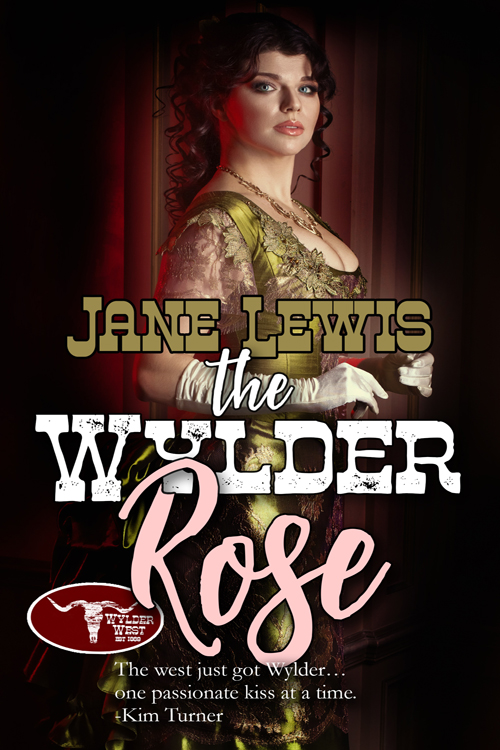
In case you haven’t figured it out yet, I’ve been showcasing winners and finalists of the American Book Fest awards for Historical Fiction in different genres. While romance isn’t my thing (unless you count 35 successful years with the Duchess) cool stories are. Enter Jane Lewis and her book, The Wylder Rose.

What’s your deal, Jane?

I fell in love with romance when I read Kathleen Woodiwiss books many years ago. I never wanted her books to end and decided someday I would write historical romance. I have a degree in music and work as a church musician on the weekends. After retiring from my corporate job, I’m free to pursue my dream as a writer. I have eight books published and will publish the ninth book soon. I write historical romance as Jane Lewis and rock star romance as Eve Lyn.

I was so excited when The Wylder Rose won the 2026 Central Region Oklahoma Writers National Excellence in Storytelling Short Historical category and was an Award Finalist in the 2026 American Bookfest American Fiction Awards. 

I enjoy cooking, playing music, singing, weight training, and hanging out with my real-life hero, my husband.

What’s your book about?

The Wylder Rose is about Rose O’Brien while escaping from her abusive lover gets stranded in a blizzard. A handsome Scotsman, Callum MacPhilip finds her carriage stuck in a snowbank and the woman and her horse almost frozen. When Callum sees her face, he realizes she’s the woman he fell in love with at first sight when he watched her board a carriage in Cheyenne.

Callum nurses her back to health but must let her go when she recovers and moves to town for her job as a singer in the saloon.

The overprotective Scotsman watches over her but her fiery temper, determination, and desire for independence makes courtship difficult.

What is it about that time period that appeals to you?

The Wylder Rose is set in Wyoming in 1879. The people of that period were brave, traveling in wagons or horseback to start a new life in unknown territories. Life was hard but people persevered. Trains were beginning to cross the country to make travel easier and allow more people to move west.

I wanted to write a story with a handsome Scotsman as the hero. I chose a red haired fiery tempered Irish lass as the heroine.

The root of the story is her background as an actress living with a powerful man in Cheyenne, Wyoming who was a criminal and abuser of women. The best part of the story is how she defeats the villain in the end.

Whoa! Spoiler Alert. What’s your favorite scene in the book?

My favorite scene is when Callum takes the unconscious Rose to his cabin, takes her wet clothes off and places her in a makeshift bed in front of the fireplace. He takes his clothes off so his body heat can warm her and joins her in the bed. He drifts to sleep but wakes to a yelp and a draft of cold air as the blanket is yanked from him.

Where can we learn more about you and your work?

My website, www.janelewisauthor.com

Goodreads

Bookbub

Amazon

Facebook

Youtube

Check out The Deserter- a Tale of the Foreign Legion. “Wayne Turmel’s The Deserter manages to feel both old fashioned and strikingly original. While it possesses qualities of the adventure tales of old—whether that be those of daring from Scott and Cooper or stoical Hemingwayesque figures or most directly P.C. Wren of Beau Geste fame with even a bit of T.E. Lawrence. “– Michael Harnett, author, Windmill Bluff
Mesopotamian Historical Fiction with Ellen Rachlin

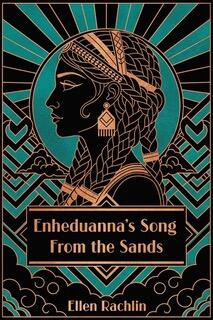
I know what you’re thinking: Not another book about a Mesopotamian princess with literary ambitions! I love histfic that covers time periods that aren’t overdone and this one qualifies. Plus it’s an American Book Fest Finalist.

Ellen tell us about yourself.

I’m the author of the historical fiction novel Enheduanna’s Song From the Sands (Histria Fiction) and five poetry collections. My most recent collection, Permeable Divide, received the IBPA Benjamin Franklin Silver Award and was a finalist for other awards. My other poetry collections include Until Crazy Catches MeCaptive to ResidueWaiting for Here, and At the Big Bang Resort (Red Hen Press, March 2027). My writing has appeared widely in journals, anthologies, and books. I spent my career in financial services, and along the way, authored textbook chapters for Wiley and McGraw Hill, along with journal articles on investing and finance. Outside of writing, I’m a Taekwondo grandmaster, an enthusiastic Latin dancer, and a lifelong learner of mathematics and science.

Enheduanna isn’t the most familiar historical character. What’s your book about?

Enheduanna’s Song From the Sands tells the story of Enheduanna, the world’s first named author and the daughter of Sargon the Great, who forged history’s first empire in ancient Mesopotamia. Chosen to become high priestess of the moon god in the sacred city of Ur, Enheduanna must navigate political intrigue, a vengeful rebel, family loyalties, and the demands of the gods as uprisings threaten the empire. Drawn into the underworld in search of answers, she struggles to discover her own voice while confronting forces that seek to destroy her. Inspired by history and mythology, the novel brings to life the extraordinary woman whose poetry has echoed across more than four millennia.

What is it about that time period or character that appealed to you? What are the roots of the story?

I encountered Enheduanna by chance. I was reading about her father, Sargon the Great, who was the world’s first emperor. Then I noticed one of his children‚ a daughter, had a brief description attached to her name: “the world’s first named author”. I had to discover what she wrote and how she earned this title. I was stunned that the world’s first was a woman. Then I found these remarkable hymns and the controversy over whether she actually wrote them. I felt that the most moving of the works attributed to her was The Exaltation of Inanna, or Ninmešarrawhich survives only in incomplete form. In that hymn, a woman identified as Enheduanna pleads to the god, Inanna, to restore her as high priestess of Ur after being brutally forced into exile. This opened a world of mythology that I hadn’t known before. These gods shaped Enheduanna’s survival, identity, and happiness. The other works are similarly captivating.

Enheduanna inspired me. Here was a woman who either wrote these memorable hymns or inspired them. This was during a time when women had little agency. Usually only great men in this time period had epics and legends about them while great women were less visible in the surviving records. I couldn’t stop thinking about her life as it might have been. To me, this was a woman who leaps out of deep history and refuses to be forgotten. She deserves to be remembered. It also puzzled me why ancient Mesopotamian literature had been overlooked compared to ancient Greece and Rome. That realization made me want to write this novel even more. I wanted readers to discover that literature began in Mesopotamia, and that a remarkable woman whose voice still speaks to us today was part of that lineage.

What is your favorite scene in the book? I know that’s an unfair question.

I can’t tell you my favorite scene in the book because it comes at the end and with spoilers. And it isn’t conventionally satisfying, but I found it emotionally satisfying to write. But next, after that, my favorite scene comes after a brutal experience when Enheduanna finally enters the city-state of Ur as the high priestess. She is young and determined to be feared as she believes this is the best way to protect herself. She dresses in full ceremonial garments and refuses to meet anyone’s eyes. She lets the citizens look at her, take in her appearance, daring them to see not merely a young woman but their high priestess and a force they must respect.  

Where can we learn more about all your impressive work?

My website EllenRachlin.com

My book at Simon and Shuster

Amazon

Goodreads

Instagram @ellenrachlin

I just found out that The Deserter- a Tale of the Foreign Legion is the 2026 American Book Fest winner for Adventure/Historical books. You can read about it here.

If you haven’t read it yet, what’s keeping you?

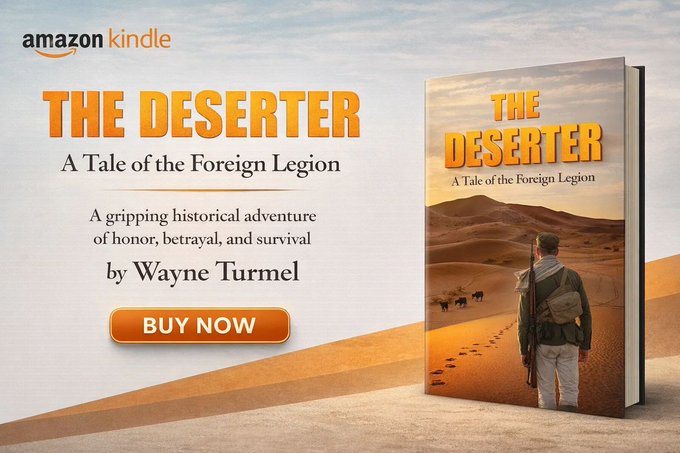
The Deserter- a Tale of the Foreign Legion, is “a remarkable, thoroughly researched, gripping tale. A two-fisted adventure set in the African desert.” Available in paperback anywhere, and on Kindle.

Top 5 Characters I Want to Write About But Don’t Have the Nerve (and 1 I’m Writing Anyway)

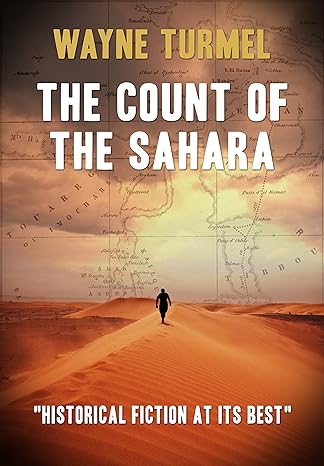
When I wrote my first novel, The Count of the Sahara, it was because I became utterly obsessed with a real-life character. Byron de Prorok was the most fascinating human I’d come across in a long time, and yet, I didn’t know a single person who had ever heard of him.

In fact, if it wasn’t for archivist Michael Tarabulski (blessings be upon him), I wouldn’t have found the chutzpah to write the book. Frankly, nobody else on the planet seemed to care about this complicated, brilliant, talented, self-destructive, and infinitely infuriating guy. He was, quite literally, the stuff that great stories are made of.

Maybe because I didn’t know any better, I decided I would be the one to tell his story. I figured since nobody else cared, who would I tick off if I failed? The Count of the Sahara made its way into the world and kick-started my historical fiction career.
Since then, my filing cabinet has filled up with real-life people who would make incrediblenovel protagonists.

The problem? Sometimes I look at their actual lives and think: I don’tknow if I’m writer enough to pull this off. In the case of people from different backgrounds or genders, is it my story to tell?

Here is a list of five characters you probably haven’t heard of, all possessed of absolutely jaw-dropping backstories. In my fevered imagination, I would love to chronicle their lives, or at least some of the cool stuff. In reality, they intimidate the hell out of me.

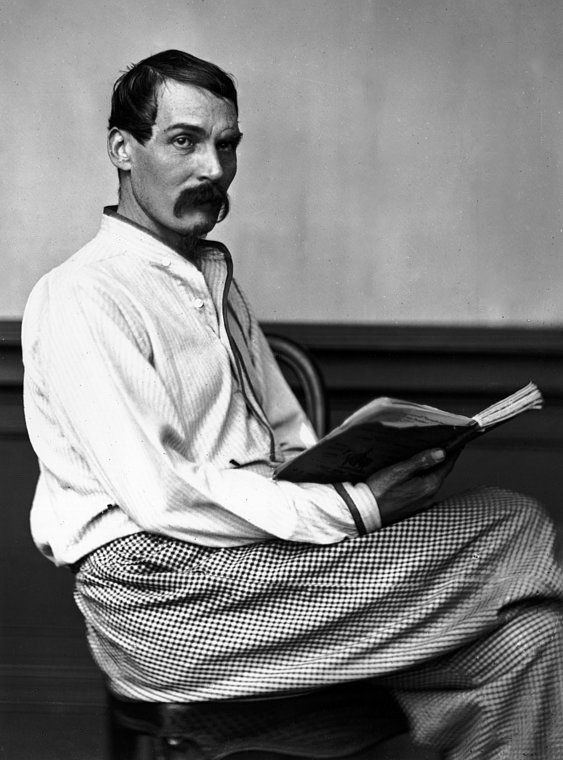
  1. Sir Richard Francis Burton Swordsman, linguist (fluent in 27 languages and dialects), explorer, minor pornographer, and a world-class pain in the ass to everyone who ever knew him—except for his fiercely loyal, wildly co-dependent wife, Isabel. He’s a biographical mountain that I’m still afraid to climb. How do you do justice to the guy you wanted to be when you grew up (without the being a complete A-hole part?)
  2. Florence Baker (And her husband, Samuel, but damn… Flo.) Born in Transylvania, she was orphaned and sold into the Ottoman slave trade, only to be purchased by a naive, wealthy English noble who originally just wanted to save her from a grim fate. She eventually married him and accompanied him to Africa on one of the most dangerous, insane missions ever conceived: to follow the Nile backwards, from its mouth to its source. Badass women are my kryptonite. Speaking of which…
  3. Kate Warne In 1856, a 23-year-old widow walked into the Pinkerton Detective Agency and demanded a job. She became America’s first female detective. Her career was a masterclass in espionage; in fact, it was her literal clothing that Abraham Lincoln wore when he disguised himself as a woman to escape the infamous Baltimore Murder Plot.
  4. Thomas-Alexandre Dumas Davy de la Pailleterie Known in his day as the “Black Hercules,” he was the father of the much more famous author Alexandre Dumas. Born to a French nobleman and an enslaved Black woman in Haiti, he rose to become the first person of color to command white troops in the French Army. He fought for (and then famously feuded with) Napoleon, and spawned two generations of France’s greatest literary dynasty.
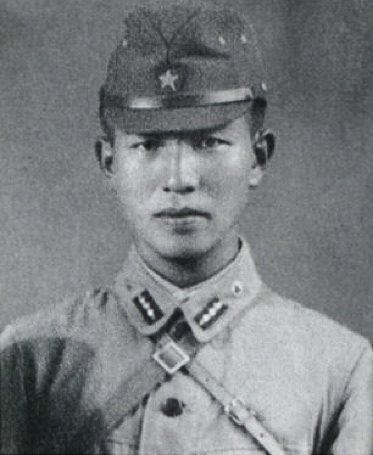
  5. Hiroo Onoda A Japanese intelligence officer so unyielding in his loyalty to the Imperial cause that he spent 29 years holding out in the jungles of the Philippines. He refused to believe WWII was over or that Japan lost. The crazy bastid didn’t surrender until his former commanding officer personally flew out to relieve him of duty in 1974.

The One I’m Writing Anyway… Vlad Tepes Dracul Yes, Vlad the Impaler.

Now, let’s be clear: this is NOT a vampire story. (Sorry, Johnny Lycan fans!) My new project is Vlad-adjacent. it asks a story that may or may not be relevant to today’s political situation: how far will a human being go before passion becomes power, power becomes madness, and what is it truly like to be trapped in that terrifying person’s orbit when it seems they’re your only choice for your country’s survival?

Over to You:
Which of these five historical wildcards floats your boat the most?
Who would you want to see get the full novel treatment next?
Let a brother know in the comments below!

The Deserter- a Tale of the Foreign Legion, is “a remarkable, thoroughly researched, gripping tale. A two-fisted adventure set in the African desert.” Available in paperback anywhere, and on Kindle. While it doesn’t necessarily have a famous character, it is a kick-ass tale of the Legion at its peak.

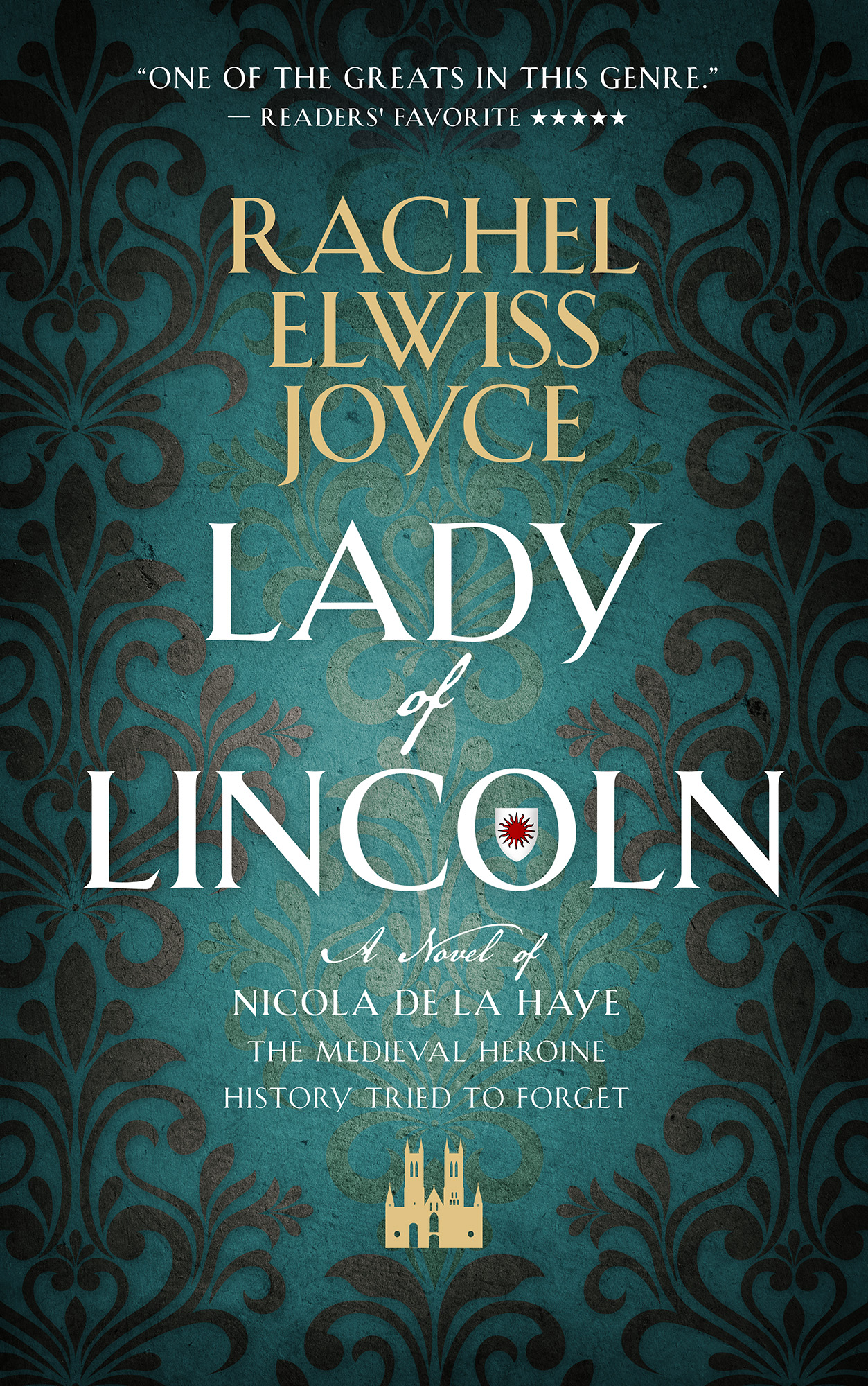
A Thirteenth Century Bad@#$ Woman with Rachel Elwiss Joyce

In promoting a book, you come across a lot of great writers. Some are begging you to help them, some are the beggars. You know what I mean. When promoting The Deserter, I was graciously hosted by Rachel Elwiss Joyce, who is an excellent author in her own right. Because Mama raised me right, I’m returning the favor and talking about her excellent book, The Lady of Lincoln.

So, Rachel. Tell us about yourself.

I’m Rachel (Elwiss) Joyce, a newly retired scientist and newbie British historical fiction author who, following the type of fiction I’ve loved since I was a teenager, seems to have fallen down a very deep medieval rabbit hole and isn’t quite sure she’ll ever crawl out again (although I do plan to expand the conventional definition of medieval/ middle ages to include the Saxon and Tudor eras).

My current obsession is the formidable twelfth- and thirteenth-century noblewoman Nicola de la Haye, who defended Lincoln Castle during two wars and held the position of castellan for nearly forty years. I first heard about her when visiting Lincoln Castle’s Magna Carta exhibition during a COVID-19 enforced ‘staycation’. I’d never heard of her, but I should have, because if it hadn’t been for her, we (the English) may well have ended up with a French King.  Chroniclers barely mentioned her (she was a woman, so it was amazing they mentioned her at all!), yet she played a crucial role, on more than one occasion, in the survival of the English crown. Discovering her story felt a bit like finding a missing piece of history that had been hiding in plain sight.

When I’m not writing, I’m usually researching for my novels, wandering around old castles, cathedrals, and ruined abbeys (and dragging my husband and two adult children with me), walking my dog, Griffin, or catching up with stories in novels, TV and film.

What is the book about?

Lady of Lincoln is the first novel in a trilogy about Nicola de la Haye, the woman who held Lincoln Castle for the Angevin kings during one of the most turbulent periods in English history.

The story begins when Nicola is a young woman whose father refuses to believe a daughter can inherit and defend his lands without a husband. Through two marriages, political intrigue, rebellion, and war, Nicola learns to survive, and unusually to thrive and command in a world where power belongs almost entirely to men.

In the second book, due out in the autumn, she will play a pivotal role during the time when Richard the Lionheart goes on crusade, and the kingdom starts to fall apart.

Decades later, during the period of Magna Carta and the great rebellion against King John, she defends Lincoln Castle against rebel barons and a French invasion army. By then she is nearly seventy years old—but still refusing to surrender. That period is covered in the third nove in the series—Lady of England—that is due out in early 2027.

Hers is a story about resilience, power, loyalty, and what it means to hold your ground when the world expects you to step aside.

What was it about the period and this character that drew you (although I can guess)?

The late twelfth and early thirteenth centuries are one of the most dramatic periods in English history—rebellions, crusades, Magna Carta, and a full-scale French invasion. Yet when you look closely, you find women quietly shaping events in ways that are rarely acknowledged.

Nicola fascinated me because she wasn’t simply a noblewoman watching history happen. She commanded a major royal fortress, negotiated with kings, and was trusted with enormous responsibility at a time when women were rarely allowed any formal power.

Once I started digging into the history, Nicola’s story practically demanded to be told.

Totally unfair question, but what’s your favorite (or favourite) scene in the book?

One of my favourite scenes comes near the beginning of the story, when Nicola secretly trains a young squire to ride in close formation with a lance.

It completely captures her character. He was being bullied because he hadn’t mastered all the skills, and she wants to put it right. She’s grown up watching the world of knights and warfare from the sidelines, and although she’s not expected to take part, she understands it well, and in that scene she steps across the boundary that society has placed around her.

It’s also the moment when you realise Nicola isn’t going to accept the limits other people place on her life.

Where can we learn more?

Readers can find Lady of Lincoln on:

Amazon: https://www.amazon.com/dp/B0DQQKQ87L

Universal Booklink: https://books2read.com/u/4980nW
Goodreads: https://www.goodreads.com/book/show/213742243-lady-of-lincoln

Website: https://rachelelwissjoyce.com
Twitter/X: https://x.com/RachelElwJoyce
Instagram: https://www.instagram.com/racheljoycehello/
Facebook: https://www.facebook.com/RachelElwissJoyceAuthor

The Deserter- a Tale of the Foreign Legion, is “a remarkable, thoroughly researched, gripping tale. A two-fisted adventure set in the African desert.” Available in paperback anywhere, and on Kindle.

How A Genre I Don’t Read Made Me a Better Historical Fiction Writer

“The author skillfully introduces characters that heighten the sense of foreboding, ” Historical Fiction Reviews

” …meticulous research and attention to detail. The descriptions of the Algerian towns, the forts, life in the French Foreign Legion drop the reader right into the action.” Jeanie B Roberts

” This story has a vividly authentic feel to it. It reads something akin to a novel by Alexander Dumas or Victor Hugo.” Mike Kerr

How does a Canadian guy from the rainy, green Pacific Northwest create a world of sand, heat, and the scents and sounds of men trapped together in quarters too close? Science Fiction, of course.

Admittedly, that’s a leap! Let me explain. I recently posted an interview on the Archaeolibrarian blog about this, so if you want to read the original version, you can find it here.

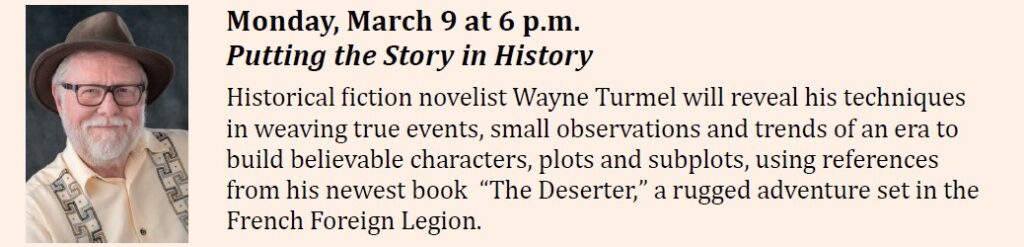
If you’re interested in hearing me talk more about this, I’ll be at the Clark County Library on March 9 at 630 PM to talk about “Putting the STORY in History- How Writers Turn Dry Facts into Compelling Fiction.”

And so it begins:

Historical fiction readers are a picky bunch, God love’em. They demand good stories, rich characters, and they also want to learn a little something about the time period in question. Even if it’s a genre or era they read a lot about, if you can’t give them something new about General Lee’s camp or the material of Lady Uppercrust’s pinafore, they are unlikely to be satisfied.

Just a warning to writers. Get the facts right, especially guns and horses. For some reason, weapon enthusiasts and horse people are the most likely to hunt you down and tell you in great detail how you screwed up. But put in too many details and the non-obsessives out there will tap out.

This makes it hard on those of us just trying to tell good stories. We need to do all the stuff other authors do while having to get the facts straight and keep the story moving. This is a tricky balancing act.

Not to brag (okay, a little. I’m proud of the book), but the kindest reviews of The Deserter talk about the details. They like the way you can almost feel your mouth go dry, or smell the bunkhouse (ick), or feel tallow sink into cuts on your hands as you prepare mule tack. (Just read the book, it’s a thing.) Many of my fellow writers ask how I get the details to be so evocative without sinking into a Tom Clancy technology porn data dump. The answer might surprise you.

I do not read a lot of Science Fiction. Much of it drives me crazy; I don’t understand most technology, and if a character name has two apostrophes in it, I’m out. But in my writers group, I am forced to read all kinds of work, and I found a lesson in sci-fi that has really helped my historical writing: world-building.

In science fiction, you take people somewhere they’ve never been and try to make them feel situated so the story can take place. It’s easy to either not explain enough, in which case the reader can be confused, or to data-dump details that no human can possibly remember a hundred pages later. The right amount of information, context and detail at the right time makes all the difference.

The same is true when writing history with one big exception. People know a lot about certain time periods. You can’t just give the Romans laser beams or the British East India Company oxen to ride. Even if most people aren’t overly familiar with the period, as in the case of the French Foreign Legion in Algeria, they know what the world was like in 1908, and most of us have met French people.

So you need to get the facts right. But how do you strike the right balance of detail and world-building?  The balance is fairly simple. You simply ask, “Does the audience need to know this right now to understand the story?” That’s a surprisingly effective way to give them what they need. It’s also why a simple book has three boxes of research in my office- the author learns a lot that they never share with the reader. Buy me a beer sometime, I’ll be happy to tell you all about it.

The second, and maybe most important thing about historical world-building is creating a sensory experience. Someone once told me that people have five senses, but we only write with one or two. Clearly, we can visually describe something like a green car. But what does it sound like? Is the engine purring or is it chugging like it’s about to die? Does the interior smell like pine air freshener or week-old McDonalds?

Good science fiction gives us a world we may have never experienced, but can instantly understand. The same is true when writing history.

I hope that readers of The Deserter get a sense for what it’s like to be in the desert, or ride a mule, or get punched in the nose. When you read it let me know.

My addition to the Legion oeuvre is The Deserter- a Tale of the Foreign Legion. “A gritty, well-researched historical thriller that revives the classic Foreign Legion adventure with confidence and control.” Author Glow.

An AI Thriller from a Pair of Actual Writers

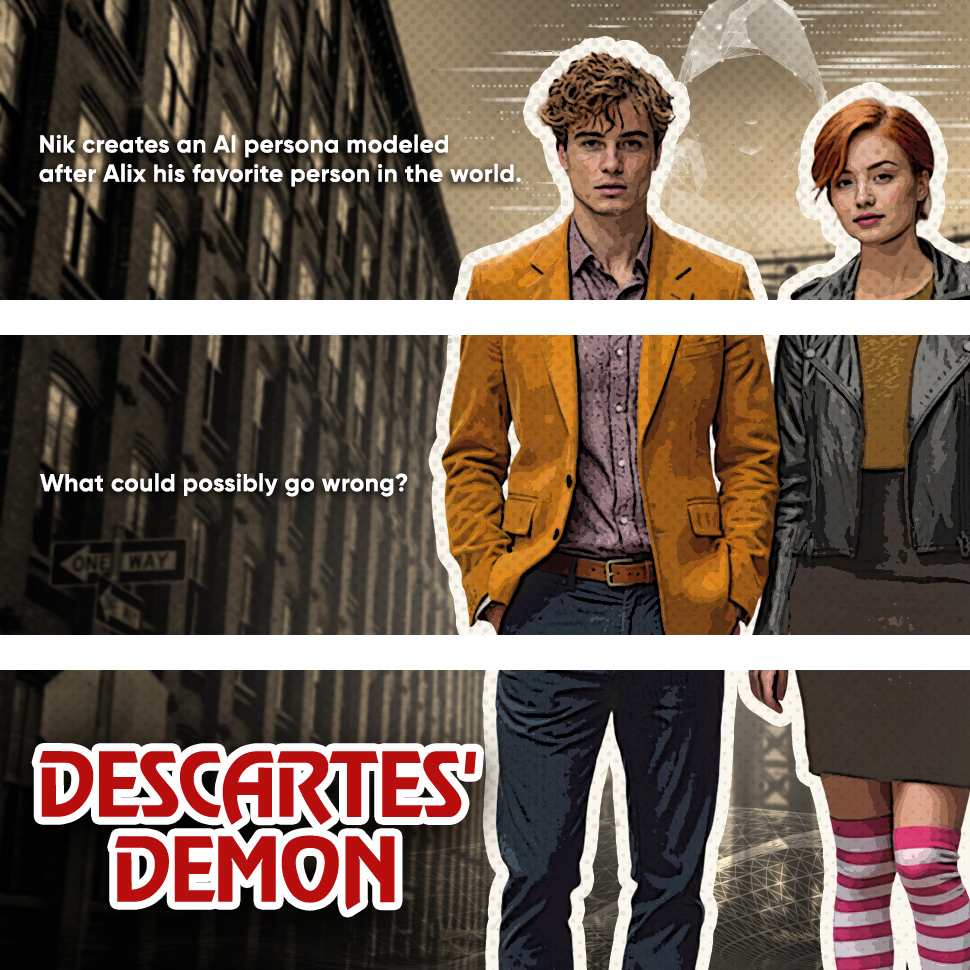
It should be obvious I’m a big fan of switching up genres in my writing. Turns out I’m not the only one. Deb Heim and Ross Hightower usually write excellent epic fantasy like The Spirit Song Trilogy, so it was a bit of a surprise to see their latest work is a Sci-fi, urban fantasy mashup called Descartes’ Demon (available February 7). It’s hard enough to make a switch like that when it’s just you. But when there are two of you???? I don’t even get along with myself when writing.

Okay, you two. Tell the folks who you are.

Deb: I used to call myself a guerilla gardener/almost a writer, but now I am willing to call myself a writer. At first glance, my life followed the pattern of our generation – school, (grad school), marriage, house, family, work, more work, moving, more moving, and now retirement with a pension. (I am quite distressed that our two children don’t even have the option of that pattern.) One day Ross talked about how thrilling his life was, especially his torrid love affair. It took me a beat to realize he was talking about me. And now we are on our next great adventure as writing partners.

Ross: It may seem odd that I ended up becoming a writer late in life. After all, I was a chemical engineer (briefly) and a professor of information technology for many years. Neither of those professions seems especially compatible with writing fantasy. But, in fact, I find one of the things I like most about my technical jobs is the same thing I enjoy about writing. Writing is about solving puzzles. Putting the pieces of a plot together. Deciding how characters with different personalities respond to one another. It makes my mind purr. I feel fortunate for many reasons. Having a partner in Deb who I swear I’ve known in previous lives, is the most important. But finding my passion in writing is right up there.

Lord, you two are adorable. So what’s the book about?

When cybersecurity wiz Nik breathes life into Nicola—a deepfake AI sculpted in the image of Alix, his favorite person in the world – it was just a little cyber experiment. When one of his contractors is found dead and intern Kate goes missing, the stakes turn deadly.

A black hat cracker styling himself “The Technician” hacks into his cyber-security company.  Shadowy cyberpunk icon “The Vulture” sends cryptic messages to his best programmer. A ruthless oligarch schemes with his partners to wrest control of the company he started. Supernatural figments occupying NYC like paranormal vagabonds seem to know what’s going on but are no help at all. And big thugs with Russian accents keep turning up like bad pennies.

With everyone scrambling to gain control of his creation, Nik and Alix set out to contain what he unwittingly unleashed. When one of his contractors is found dead and intern Kate goes missing, the stakes turn deadly. Of course, the only police detective who believes them has been forced to resign, but her cyber-sleuth girlfriend “The Bloodhound” is on the case. Can they find Kate before The Technician finishes her off?  Will they ever get rid of those lurking Russians? And can Nik put the cybernetic genie Nicola back in the virtual bottle or will she escape into the digital wild?

It takes a lot to switch genres. What are the roots of this story?

Ross is a retired IT professor who ran a large data center and did his early academic work exploring AI, so this felt like a great space to explore as an author. He started out trying to write a basic, snappy thriller that was easier to market, but once the characters in the book started asking questions about the nature of reality and consciousness, all bets were off. He has an artist’s soul, so he had to let the story go where it was going to go. At some point, a paranormal/supernatural element of the story popped in and then became a focal point of the plot. And to be perfectly honest we wanted to write a contemporary series as an excuse to travel around the world for research.

I’m guessing that, like me, you read in many categories and genres. Who do you enjoy?

Ross and Deb both lean toward classic epic fantasy (Rothfuss, Sullivan, Wexler, Tolkien), but since we started a “Firkins and Fantasy” book club at our local brewery, we’ve had the pleasure of reading authors we wouldn’t have found otherwise – NK Jemison, Roanhouse, Choo, Novik, El-Mohtar. Urban fantasy, re-imagined fables, historical fantasy. Having spent too many years in Florida, we are both big fans of Carl Hiaasen and Tim Dorsey. AND we are actually big Wayne Turmel fans – Deb has read all the books in the Werewolf PI series. The snappy dialogue and surprising, poignant moments between the characters were some of the elements that inspired us for our first foray into urban fantasy.

Sucking up is unnecessary, and I’m not taking responsibility for your cynical foray into urban fantasy! Where can folks learn more about the two of you?

Website https://rosshightower.com/

Contact/newsletter page https://rosshightower.com/contact/

Ross’ Goodreads page  Amazon page Bookbub page

Deb’s Amazon page Bookbub page

Our FB page https://www.facebook.com/QuizzicalSpirit/

Instagram @quizzicalllc https://www.instagram.com/quizzicalllc/

BlueSky https://bsky.app/profile/quizzicalllc.bsky.social

And speaking of genre-hopping, my return to historical fiction is available now.

The Deserter- a Tale of the Foreign Legion, is “Beau Geste if it were directed by Sam Peckinpah”, a two-fisted adventure set in the African desert. Available in paperback anywhere, and on Kindle.

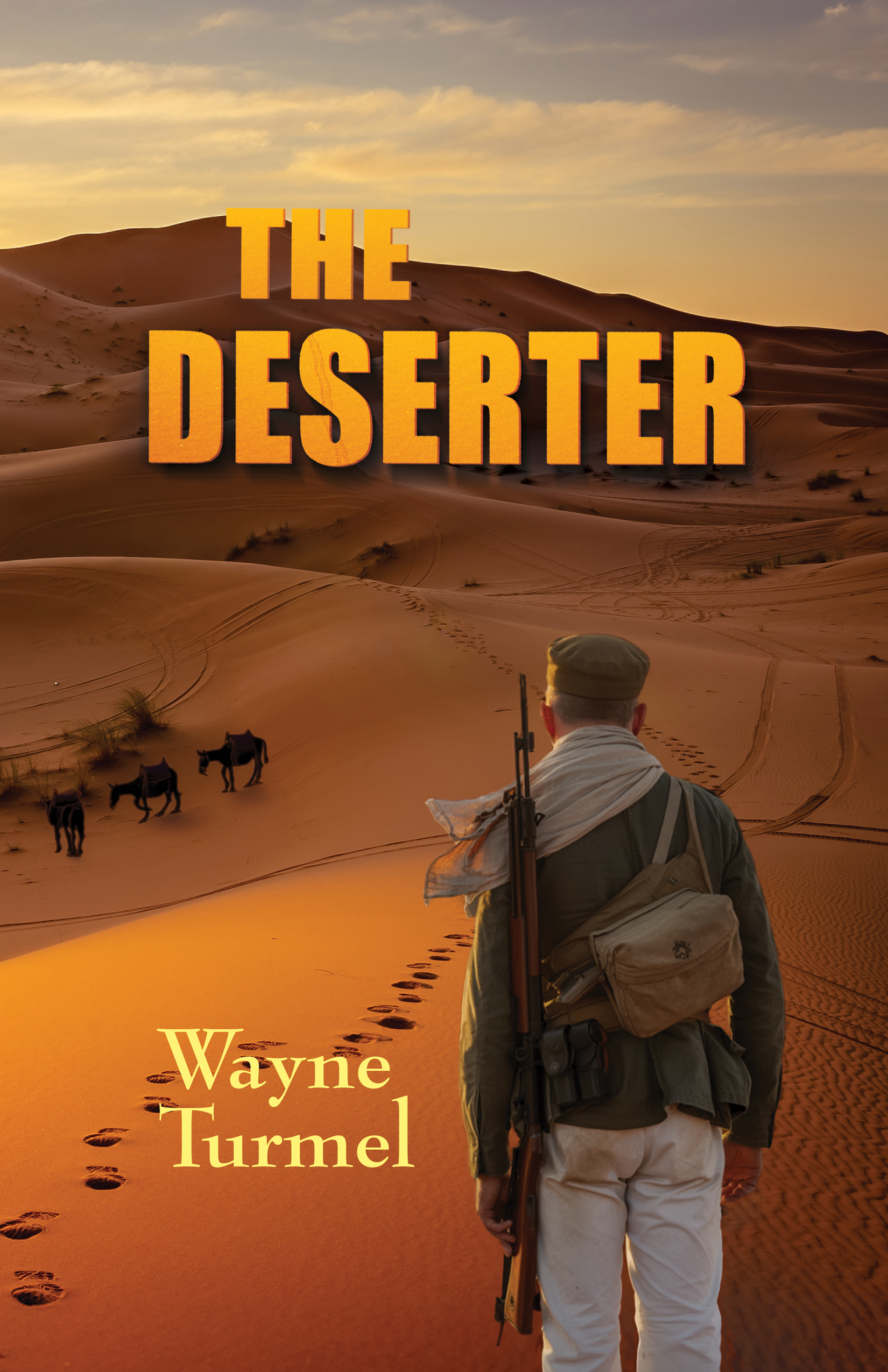
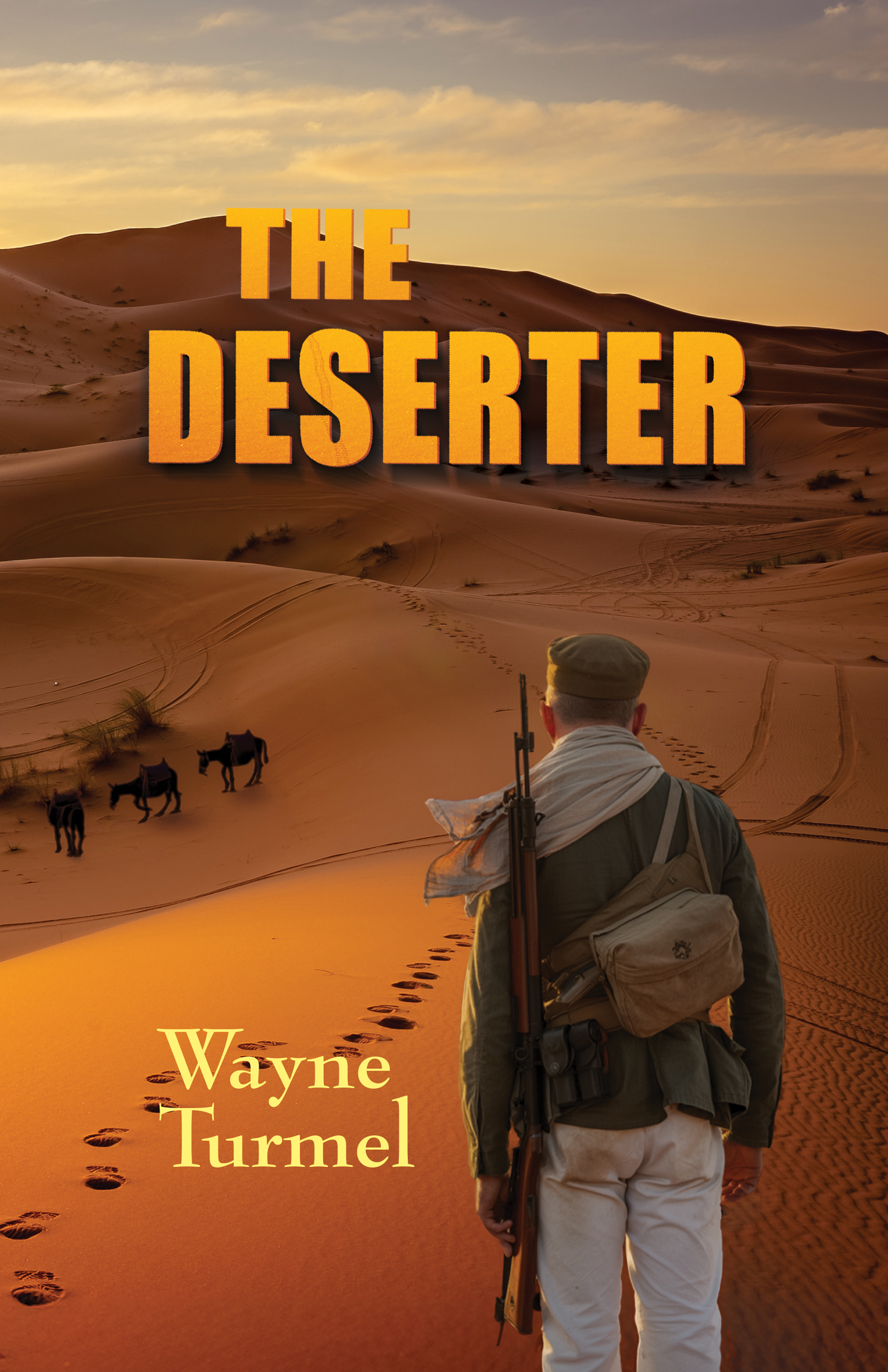
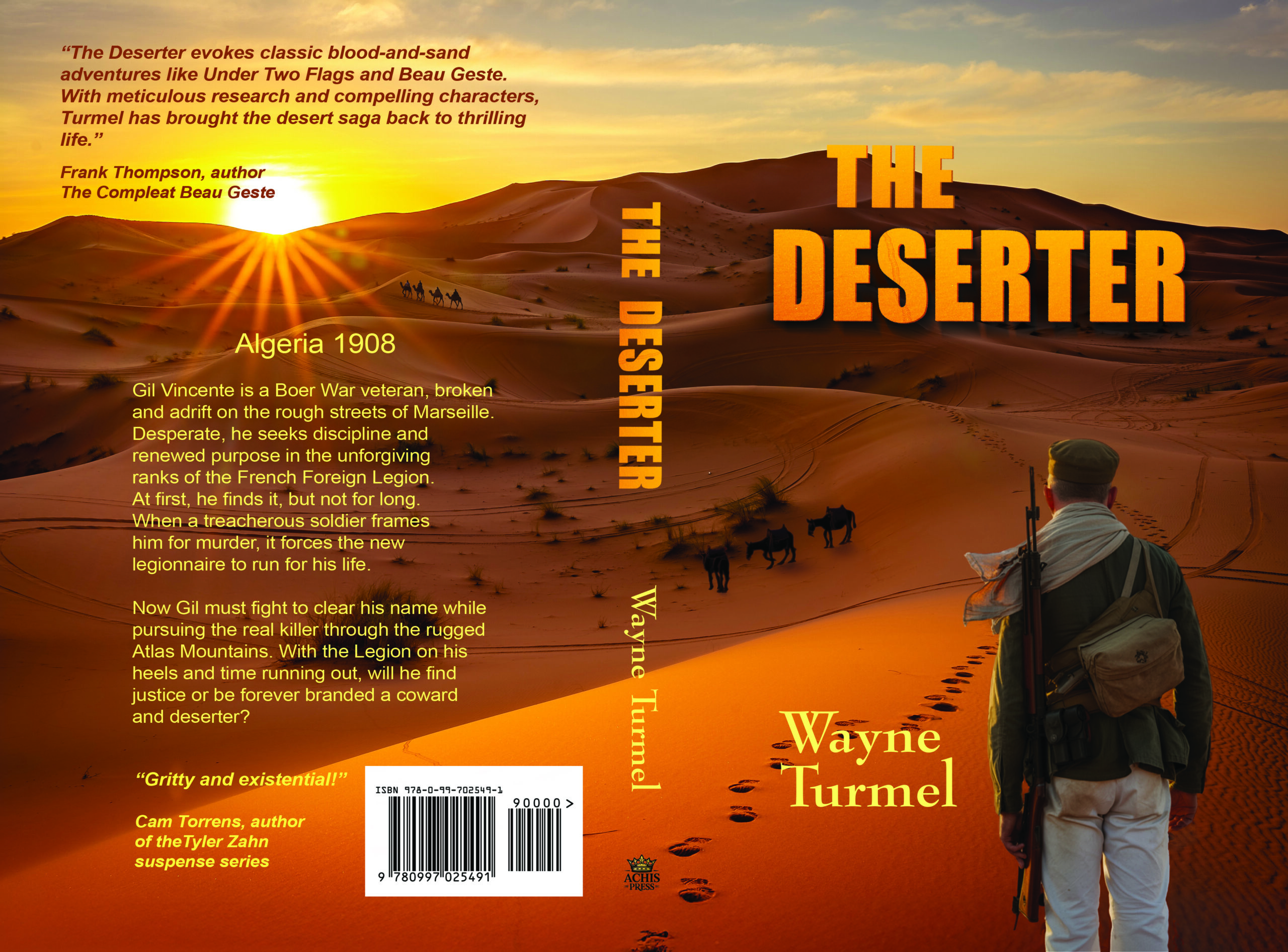
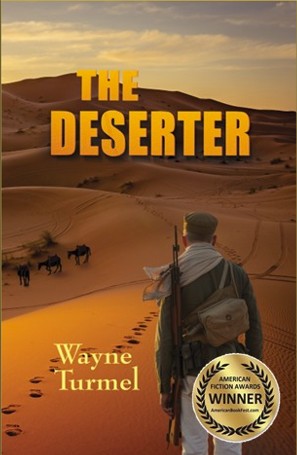
Here it is: The Cover for The Deserter

My newest novel, The Deserter- a Tale of the Foreign Legion, is coming January 15. It’s available for Pre-order on Amazon in both Kindle and Paperback version internationally (or you can buy a signed paperback from me!)

Here’s the cover, and some of what people are saying.

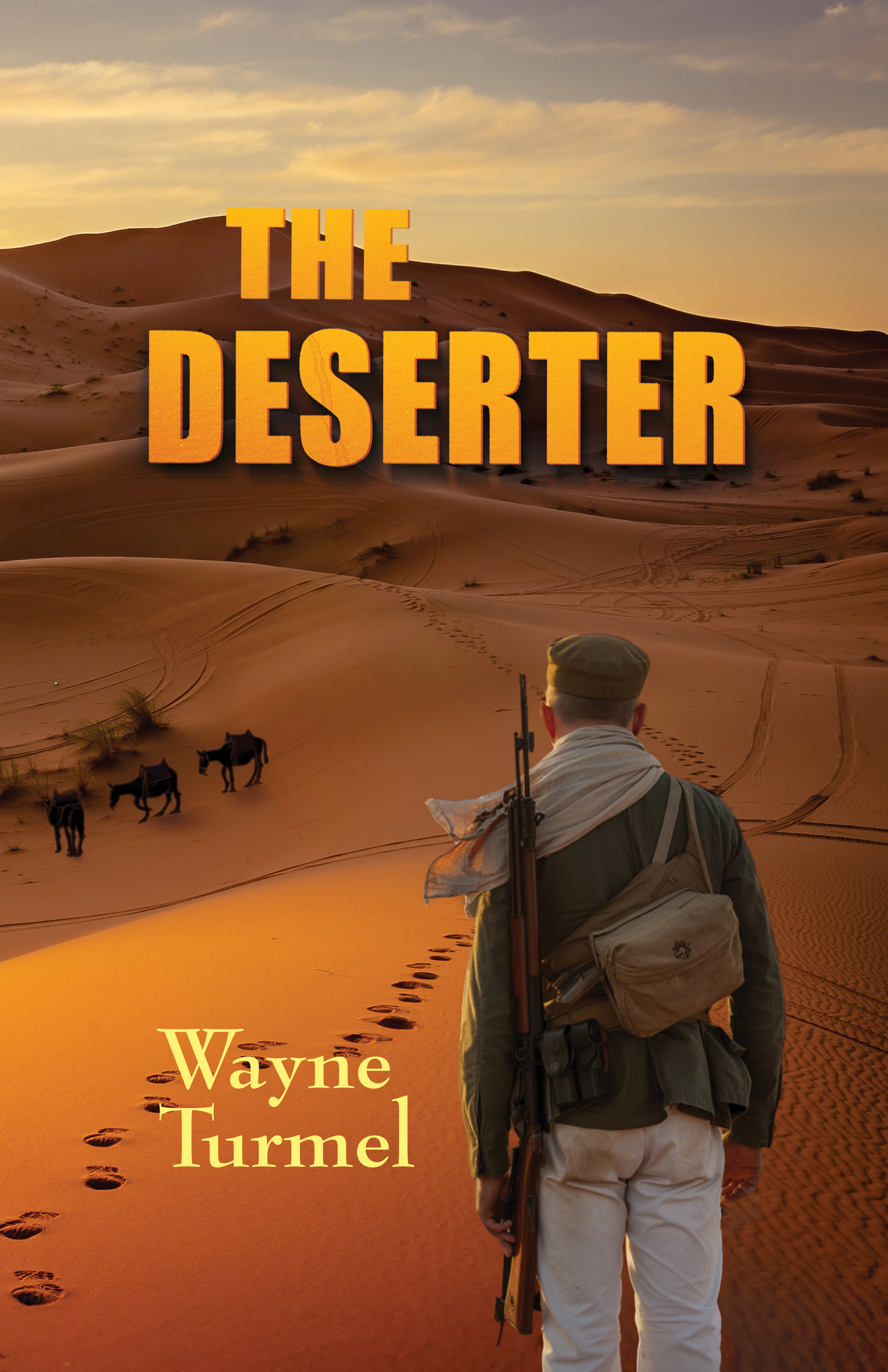
First, the Front cover, and the cover for the eBook:

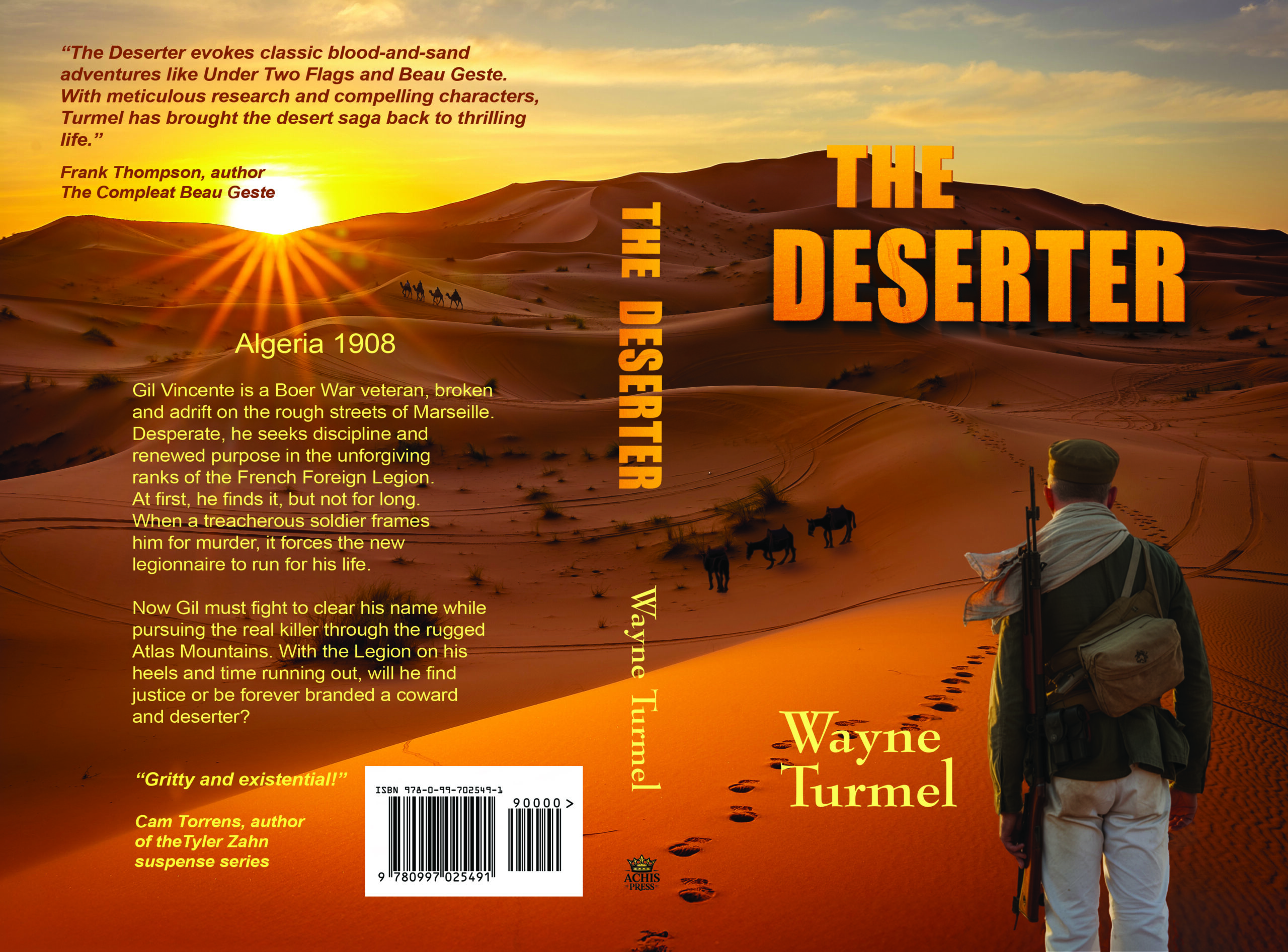
And then the full cover:

Thanks to Ruth Zakarian, a fellow Sin City Writers member for her amazing, evocative cover art.

Gritty and existential! – author Cam Torrens

…a powerful tale of loyalty, survival, and second chances. Perfect for fans of Bernard Cornwell and classic adventure fiction.- KJ Fieler

Coming January 15, 2028

Okay, Here is the Formal Announcement- The Deserter Comes Out January 15th!

After a lot of false starts and hemming and hawing, “The Deserter, a Tale of the Foreign Legion,” will be out January 16, 2026.

Gritty and existential! A British veteran’s stint in the French Foreign Legion turns ugly as he suffers from the brutal cost of good intentions and the indifferent machinery of war.—Cam Torrens, award-winning author of the Tyler Zahn suspense series
.

This book marks the return to my historical fiction roots. It’s different than anything you’ve read from me. It’s dark, violent, and decidedly not cute or funny. But it IS a thrilling story of desperation and one man’s desire to overcome his worst impulses.

Here’s the synopsis:

Marseille, 1908.

A Boer War veteran, broken and adrift, seeks discipline and renewed purpose in the unforgiving ranks of the French Foreign Legion. He finds it, but not for long. When a payroll guard is murdered, a treacherous soldier blames him, forcing Gil Vincente to run for his life.

Chasing his nemesis through the rugged mountains of North Africa, Gil must fight to clear his name. But with the Legion on his heels and a ruthless killer on the loose, will he find justice or be forever branded a coward and deserter?

Think Beau Geste, directed by Sam Peckinpah, and you’re on the right track.

If you’d like an early review copy, want to be on my launch team, or just want to know more details as launch day draws near, Get on my mailing list.

More to come. Stay tuned

What do Histfic Readers Actually Like? Take a Poll For Me Please.

I had a conversation with someone the other day that left me a little shook, not gonna lie. I was telling this person (who shall remain nameless despite every vengeful nerve in my body screaming for justice) about my new book, The Deserter, and how I was having trouble finding a publisher for it. I expected sympathy. Maybe performative empathy. Lip service, at the very least. Anything but what I got.

“What do you expect? You’re writing about a time and place that nobody knows or cares about.”

EXQUEEZE ME???!

I was gobsmacked (a greatly underused word, IMHO.) I read historical fiction to learn about places and times I don’t know much about. Whether it’s the Nabateans (last week’s interview about The Stonecutter) or the fallout (literally) from the WW2 nuclear experiments at Hanford, I learn stuff (technical term) when I read historical fiction.

Turns out, this is not everyone’s experience. A good friend of mine reads almost exclusively about the American Civil War. Another is obsessed with the Tudors. (AUTHOR NOTE: Civil War 1.0 and British Royalty are my LEAST favorite historical subjects, but I try not to judge. I fail, but I try.)

While I certainly have favorite periods, I think a novel should be, well, novel. Give me a fresh take and tell me something I don’t already know. Maybe tell me my assumptions are wrong.

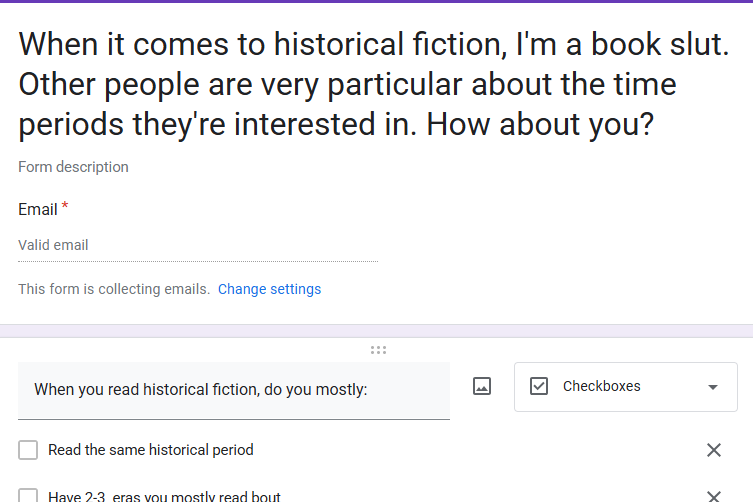
All of this leads me to a quick, painless poll. Put simply, When (or if) you read histfic, do you like reading about periods you’re not familiar with, the same couple of topics, or one in particular? I’m not even asking which one, just why do you read historical fiction?

You can take the poll here, and let me know. Please, help a brother out.

If you like reading about people and periods you might be unfamiliar with, I have some suggestions:

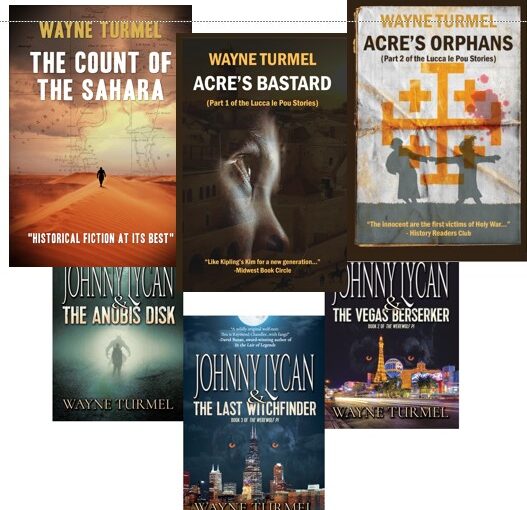
Count Byron de Prorok: archaeologist, showman and disappointment to most is the hero of The Count of the Sahara

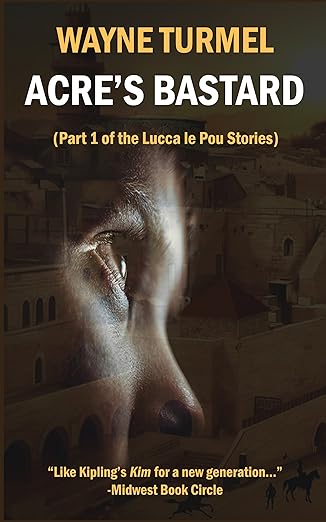
What would life be like for a half-French, half-Syrian orphan in the Crusades? Acre’s Bastard, and Acre’s Orphans, the Lucca Le Pou Stories contain special bonus lepers!

Yup, that’s me. Historical fiction with nary a ruffled shirt or Johnny Reb in sight. Of course, if you want to know when I find a publisher for my dark Foreign Legion tale, you can get on my mailing list.

Sign up with the form on this page or you can use the QR code: