Mesopotamian Historical Fiction with Ellen Rachlin

I know what you’re thinking: Not another book about a Mesopotamian princess with literary ambitions! I love histfic that covers time periods that aren’t overdone and this one qualifies. Plus it’s an American Book Fest Finalist.

Ellen tell us about yourself.

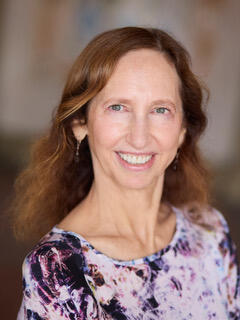
I’m the author of the historical fiction novel Enheduanna’s Song From the Sands (Histria Fiction) and five poetry collections. My most recent collection, Permeable Divide, received the IBPA Benjamin Franklin Silver Award and was a finalist for other awards. My other poetry collections include Until Crazy Catches MeCaptive to ResidueWaiting for Here, and At the Big Bang Resort (Red Hen Press, March 2027). My writing has appeared widely in journals, anthologies, and books. I spent my career in financial services, and along the way, authored textbook chapters for Wiley and McGraw Hill, along with journal articles on investing and finance. Outside of writing, I’m a Taekwondo grandmaster, an enthusiastic Latin dancer, and a lifelong learner of mathematics and science.
Enheduanna isn’t the most familiar historical character. What’s your book about?

Enheduanna’s Song From the Sands tells the story of Enheduanna, the world’s first named author and the daughter of Sargon the Great, who forged history’s first empire in ancient Mesopotamia. Chosen to become high priestess of the moon god in the sacred city of Ur, Enheduanna must navigate political intrigue, a vengeful rebel, family loyalties, and the demands of the gods as uprisings threaten the empire. Drawn into the underworld in search of answers, she struggles to discover her own voice while confronting forces that seek to destroy her. Inspired by history and mythology, the novel brings to life the extraordinary woman whose poetry has echoed across more than four millennia.

What is it about that time period or character that appealed to you? What are the roots of the story?

I encountered Enheduanna by chance. I was reading about her father, Sargon the Great, who was the world’s first emperor. Then I noticed one of his children‚ a daughter, had a brief description attached to her name: “the world’s first named author”. I had to discover what she wrote and how she earned this title. I was stunned that the world’s first was a woman. Then I found these remarkable hymns and the controversy over whether she actually wrote them. I felt that the most moving of the works attributed to her was The Exaltation of Inanna, or Ninmešarrawhich survives only in incomplete form. In that hymn, a woman identified as Enheduanna pleads to the god, Inanna, to restore her as high priestess of Ur after being brutally forced into exile. This opened a world of mythology that I hadn’t known before. These gods shaped Enheduanna’s survival, identity, and happiness. The other works are similarly captivating.
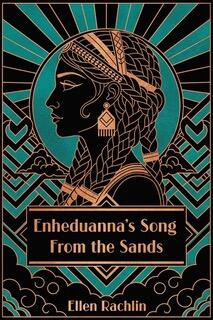
Enheduanna inspired me. Here was a woman who either wrote these memorable hymns or inspired them. This was during a time when women had little agency. Usually only great men in this time period had epics and legends about them while great women were less visible in the surviving records. I couldn’t stop thinking about her life as it might have been. To me, this was a woman who leaps out of deep history and refuses to be forgotten. She deserves to be remembered. It also puzzled me why ancient Mesopotamian literature had been overlooked compared to ancient Greece and Rome. That realization made me want to write this novel even more. I wanted readers to discover that literature began in Mesopotamia, and that a remarkable woman whose voice still speaks to us today was part of that lineage.

What is your favorite scene in the book? I know that’s an unfair question.

I can’t tell you my favorite scene in the book because it comes at the end and with spoilers. And it isn’t conventionally satisfying, but I found it emotionally satisfying to write. But next, after that, my favorite scene comes after a brutal experience when Enheduanna finally enters the city-state of Ur as the high priestess. She is young and determined to be feared as she believes this is the best way to protect herself. She dresses in full ceremonial garments and refuses to meet anyone’s eyes. She lets the citizens look at her, take in her appearance, daring them to see not merely a young woman but their high priestess and a force they must respect.  

Where can we learn more about all your impressive work?

My website EllenRachlin.com

My book at Simon and Shuster

Amazon

Goodreads

Instagram @ellenrachlin

I just found out that The Deserter- a Tale of the Foreign Legion is the 2026 American Book Fest winner for Adventure/Historical books. You can read about it here.

If you haven’t read it yet, what’s keeping you?

The Deserter- a Tale of the Foreign Legion, is “a remarkable, thoroughly researched, gripping tale. A two-fisted adventure set in the African desert.” Available in paperback anywhere, and on Kindle.

The Deserter is the ABF Historical Adventure of the Year!

Among all the spam and hustles sent to authors, it’s easy to skip the good news. I just found out that The Deserter- a Tale of the Foreign Legion is the 2026 American Book Fest winner for Adventure/Historical books. You can read about it here.
If you haven’t read it yet, what’s keeping you?

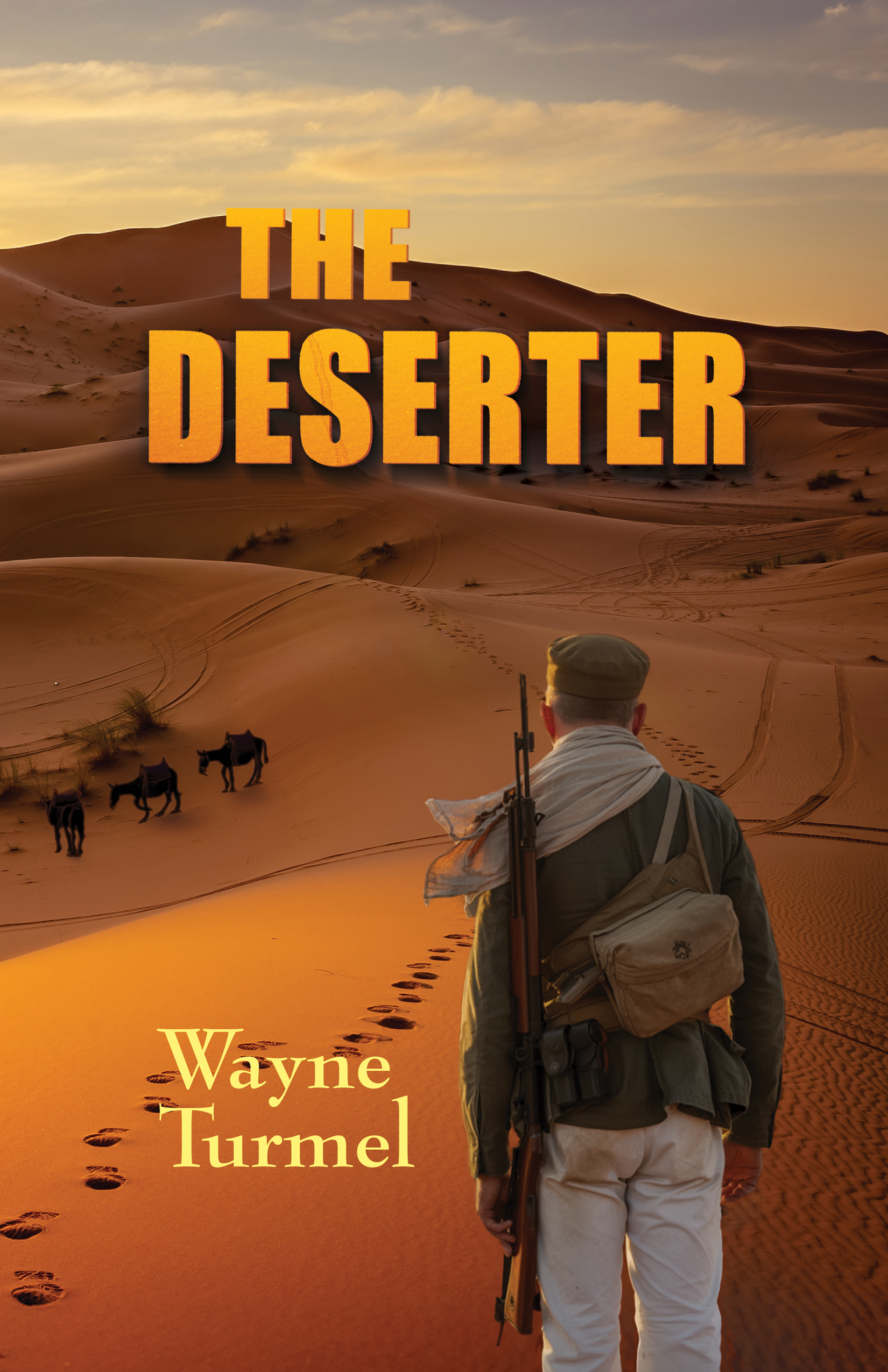
The Deserter- a Tale of the Foreign Legion, is “a remarkable, thoroughly researched, gripping tale. A two-fisted adventure set in the African desert.” Available in paperback anywhere, and on Kindle.
Top 5 Characters I Want to Write About But Don’t Have the Nerve (and 1 I’m Writing Anyway)

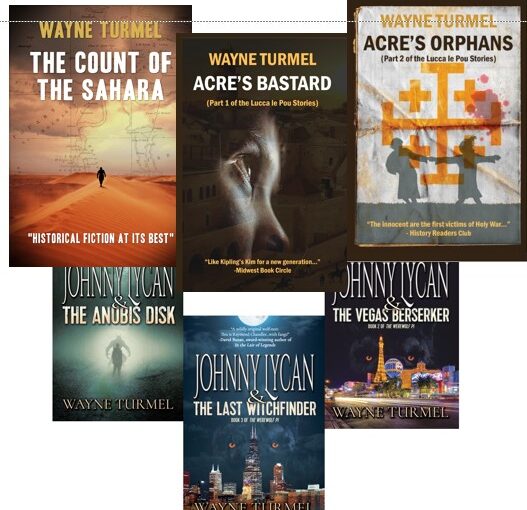
When I wrote my first novel, The Count of the Sahara, it was because I became utterly obsessed with a real-life character. Byron de Prorok was the most fascinating human I’d come across in a long time, and yet, I didn’t know a single person who had ever heard of him.

In fact, if it wasn’t for archivist Michael Tarabulski (blessings be upon him), I wouldn’t have found the chutzpah to write the book. Frankly, nobody else on the planet seemed to care about this complicated, brilliant, talented, self-destructive, and infinitely infuriating guy. He was, quite literally, the stuff that great stories are made of.

Maybe because I didn’t know any better, I decided I would be the one to tell his story. I figured since nobody else cared, who would I tick off if I failed? The Count of the Sahara made its way into the world and kick-started my historical fiction career.
Since then, my filing cabinet has filled up with real-life people who would make incrediblenovel protagonists.

The problem? Sometimes I look at their actual lives and think: I don’tknow if I’m writer enough to pull this off. In the case of people from different backgrounds or genders, is it my story to tell?

Here is a list of five characters you probably haven’t heard of, all possessed of absolutely jaw-dropping backstories. In my fevered imagination, I would love to chronicle their lives, or at least some of the cool stuff. In reality, they intimidate the hell out of me.

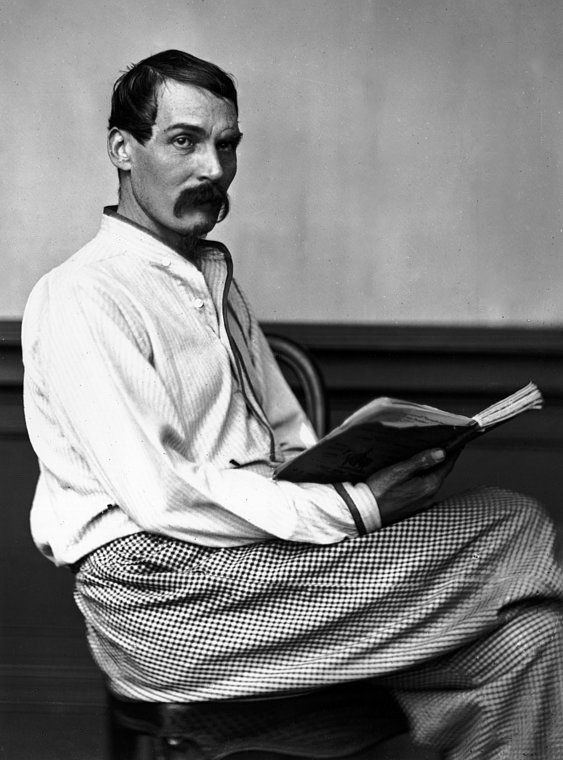
  1. Sir Richard Francis Burton Swordsman, linguist (fluent in 27 languages and dialects), explorer, minor pornographer, and a world-class pain in the ass to everyone who ever knew him—except for his fiercely loyal, wildly co-dependent wife, Isabel. He’s a biographical mountain that I’m still afraid to climb. How do you do justice to the guy you wanted to be when you grew up (without the being a complete A-hole part?)
  2. Florence Baker (And her husband, Samuel, but damn… Flo.) Born in Transylvania, she was orphaned and sold into the Ottoman slave trade, only to be purchased by a naive, wealthy English noble who originally just wanted to save her from a grim fate. She eventually married him and accompanied him to Africa on one of the most dangerous, insane missions ever conceived: to follow the Nile backwards, from its mouth to its source. Badass women are my kryptonite. Speaking of which…
  3. Kate Warne In 1856, a 23-year-old widow walked into the Pinkerton Detective Agency and demanded a job. She became America’s first female detective. Her career was a masterclass in espionage; in fact, it was her literal clothing that Abraham Lincoln wore when he disguised himself as a woman to escape the infamous Baltimore Murder Plot.
  4. Thomas-Alexandre Dumas Davy de la Pailleterie Known in his day as the “Black Hercules,” he was the father of the much more famous author Alexandre Dumas. Born to a French nobleman and an enslaved Black woman in Haiti, he rose to become the first person of color to command white troops in the French Army. He fought for (and then famously feuded with) Napoleon, and spawned two generations of France’s greatest literary dynasty.
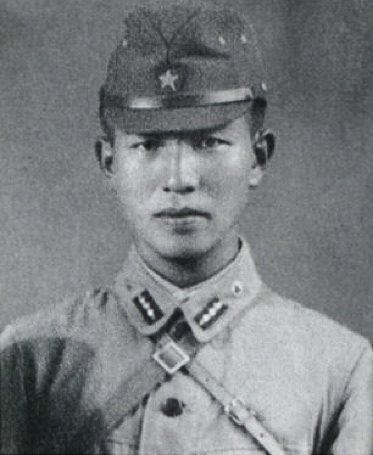
  5. Hiroo Onoda A Japanese intelligence officer so unyielding in his loyalty to the Imperial cause that he spent 29 years holding out in the jungles of the Philippines. He refused to believe WWII was over or that Japan lost. The crazy bastid didn’t surrender until his former commanding officer personally flew out to relieve him of duty in 1974.

The One I’m Writing Anyway… Vlad Tepes Dracul Yes, Vlad the Impaler.

Now, let’s be clear: this is NOT a vampire story. (Sorry, Johnny Lycan fans!) My new project is Vlad-adjacent. it asks a story that may or may not be relevant to today’s political situation: how far will a human being go before passion becomes power, power becomes madness, and what is it truly like to be trapped in that terrifying person’s orbit when it seems they’re your only choice for your country’s survival?

Over to You:
Which of these five historical wildcards floats your boat the most?
Who would you want to see get the full novel treatment next?
Let a brother know in the comments below!

The Deserter- a Tale of the Foreign Legion, is “a remarkable, thoroughly researched, gripping tale. A two-fisted adventure set in the African desert.” Available in paperback anywhere, and on Kindle. While it doesn’t necessarily have a famous character, it is a kick-ass tale of the Legion at its peak.