Two Prize-Winning Novels, One Author: Jillian Forsberg

When I won the American Book Fest award for The Deserter, I was pretty full of myself. Along comes Jillian Forsberg who wrote two novels, one of which was a finalist for general Historical Fiction, The Rhino Keeper. The other, The Porcelain Menagerie, was a finalist. Despite being a big-old showoff, I interviewed her anyway. Her books are fascinating tales that aren’t retelling of the same old stories.

Okay, Jill. Tell us about the wonder that is you.
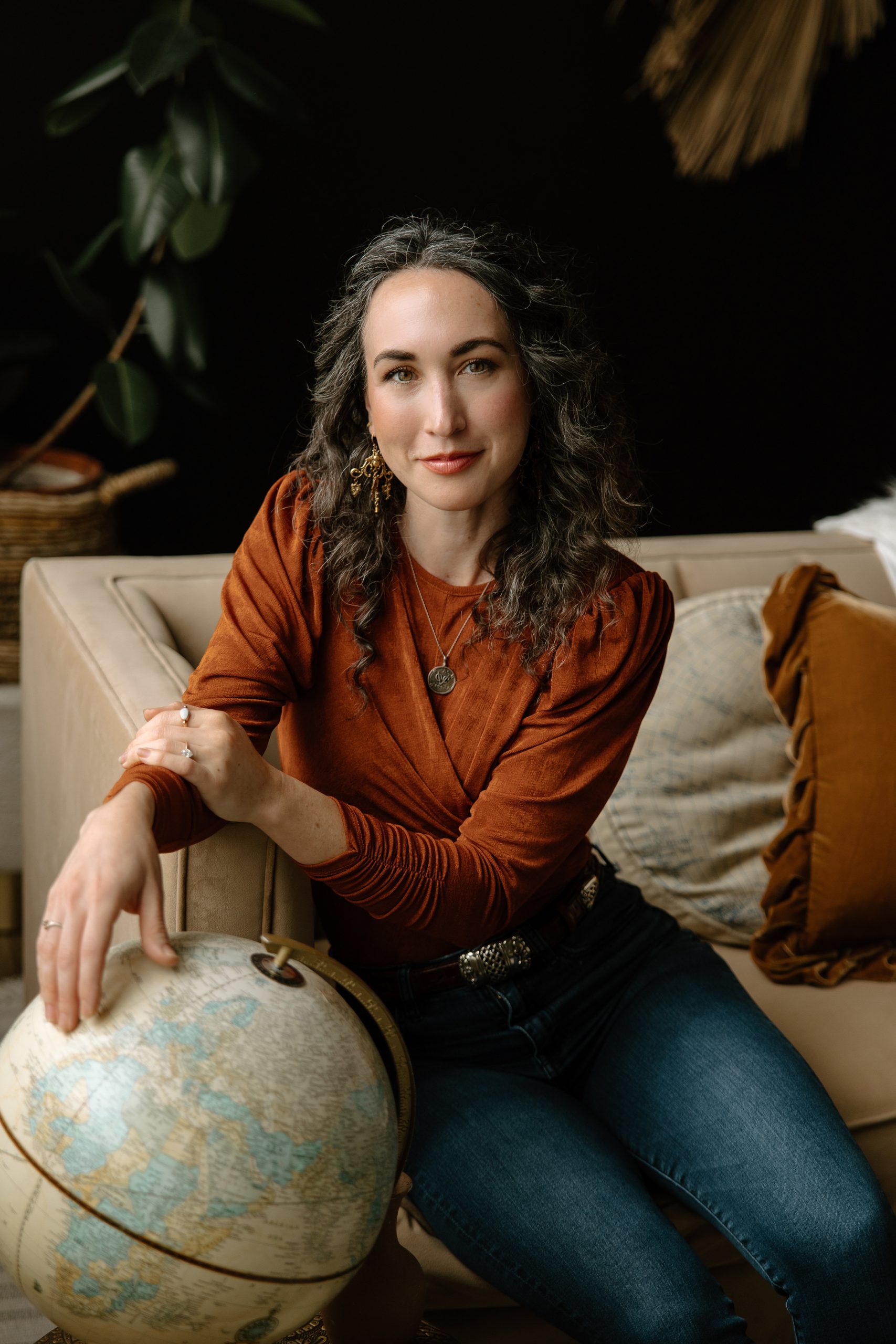
I’m a unique soul for sure — I have a master’s degree in public history from Wichita State University and worked in museums for years, but went back to my college job in the bridal industry and now own a bridal store. I exercise my history brain with historical fiction novels. I’ve often compared the landscape of my brain to a old-school library. Think marble floors and rich wood card catalogs, which, for me, contain everything from wedding dresses to 18th century royals. I have always had a fascination with historical animals, artifacts, and ordinary people. I’d say I live a pretty fulfilling life!

Now tell us about your book (s!)

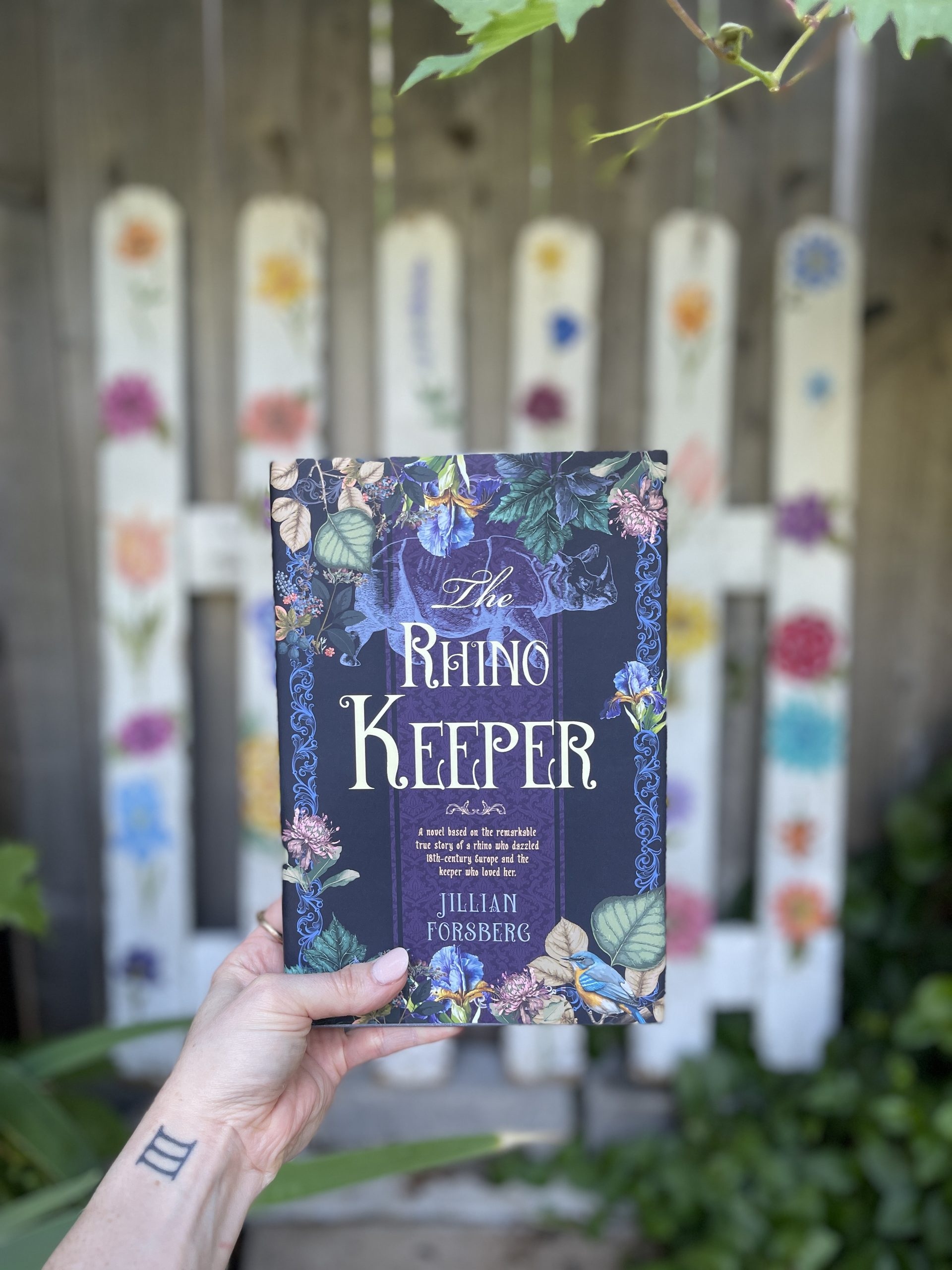
THE RHINO KEEPER is about the first animal celebrity: an Indian rhino named Clara who travelled 18th century Europe with a Dutch ship captain. She became a sensation, but also became a really important moment in animal history. People learned how to care for rhinos in captivity and her legacy continues today in art, animal husbandry manuals, and in capturing the imagination of people who stumble upon her unique story. 

THE PORCELAIN MENAGERIE is a companion to THE RHINO KEEPER — Clara went to
a porcelain factory in Germany to be turned into a figurine. In doing research on Meissen porcelain, which is still in operation today, I became obsessed with the fact that porcelain was more valuable than gold, that artists were held captive to produce for a mad king, and that a 10th century castle was the factory in which they worked. I was struck, too, that the porcelain artist Johann Kaendler has one or two images of his likeness and yet even today is considered the finest porcelain sculptor in history, nailing the details of peoples likenesses in astounding detail. I simply had to know more about him, and a novel emerged.

What is it about that time period you found so fascinating?

The 18th century is a time of absolute contrasts: royals are more wealthy than ever

before, yet common people are waking up and realizing that they, too, deserve a piece of the pie. By the end of the century, dozens of revolutions sprang up around the world. I truly love the art and grandeur of the century, mixed with the raising of fists and torches. I write about the early to mid-century period, which I think are overlooked in fiction. There aren’t many novels that take place in 1710, especially in Germany, nor in the 1740s on a wild road trip with an animal. But truly, both novels were must-writes (and hopefully to this audience, must-reads) because I had too many unanswered questions and my imagination would not leave a rhino or a one-eyed lion alone. 

I get wanting to write about something that hasn’t been done to death. That’s what is behind most of my historical fiction as well. What are your favorite scenes, since you have two books to talk about (and sell)?

In THE RHINO KEEPER, my favorite scene is when the Dutch ship captain Douwe Mout van der Meer sees Clara the rhino for the first time. He is awe-struck. In THE PORCELAIN MENAGERIE, my favorite scene is when a shipwreck is revealed to hold more than just devastation. 

Where can we learn more?

My novels are both published through History Through Fiction, an amazing independent publisher of historical fiction. You can order signed copies from my website: https://www.jillianforsberg.com, and they’re available wherever books are sold. I’m on social media @jillianforsberg on all platforms. 

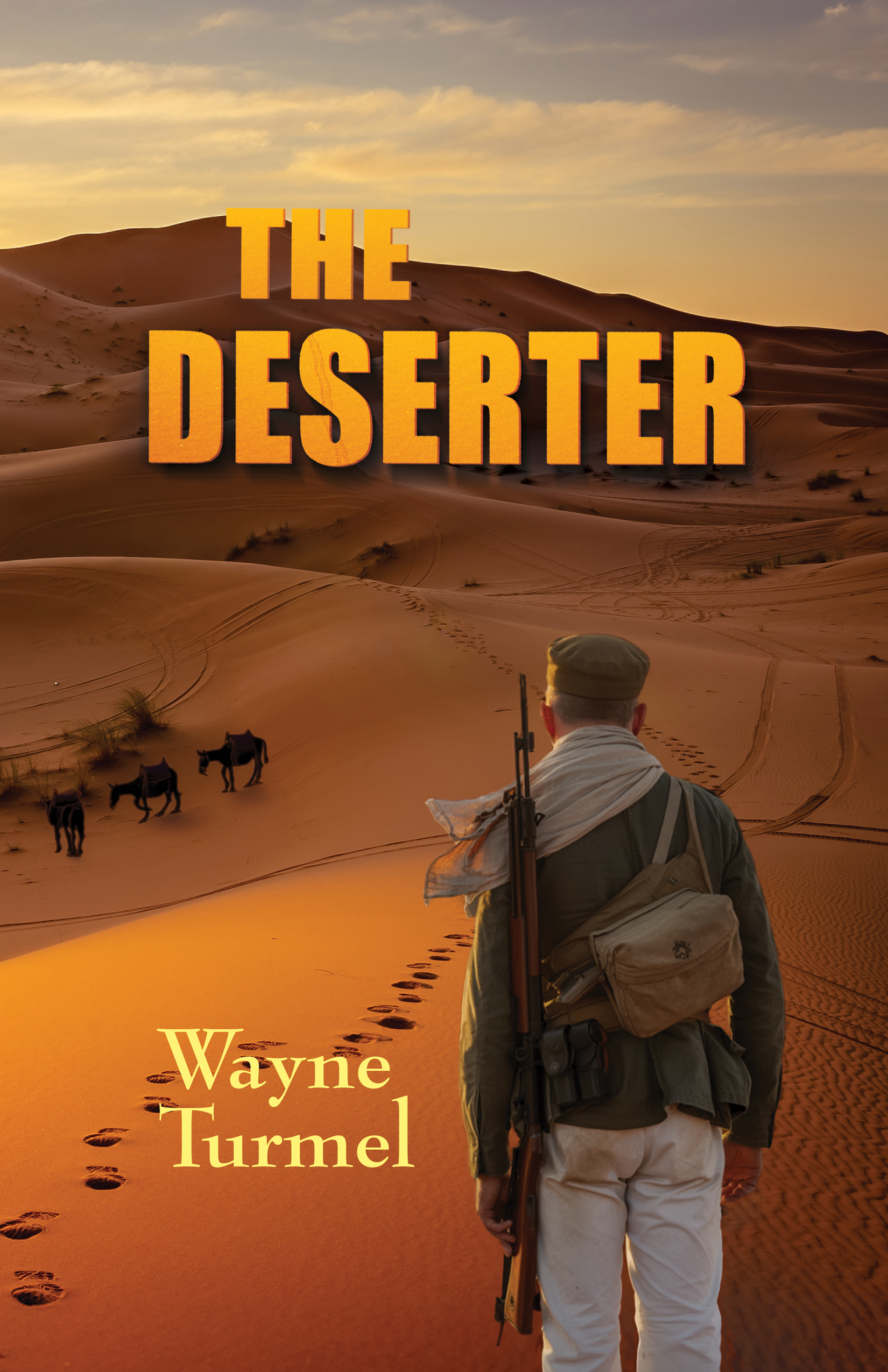
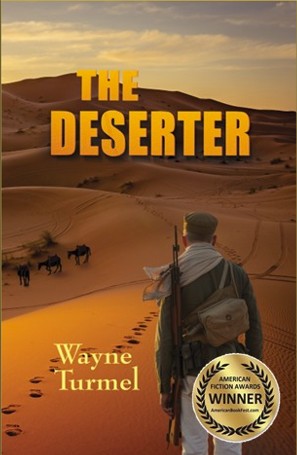
Okay, it only one ONE American Book Fest award, but it’s still a damned good read. Check out The Deserter- a Tale of the Foreign Legion. “Wayne Turmel’s The Deserter manages to feel both old fashioned and strikingly original. While it possesses qualities of the adventure tales of old—whether that be those of daring from Scott and Cooper or stoical Hemingwayesque figures or most directly P.C. Wren of Beau Geste fame with even a bit of T.E. Lawrence. “– Michael Harnett, author, Windmill Bluff
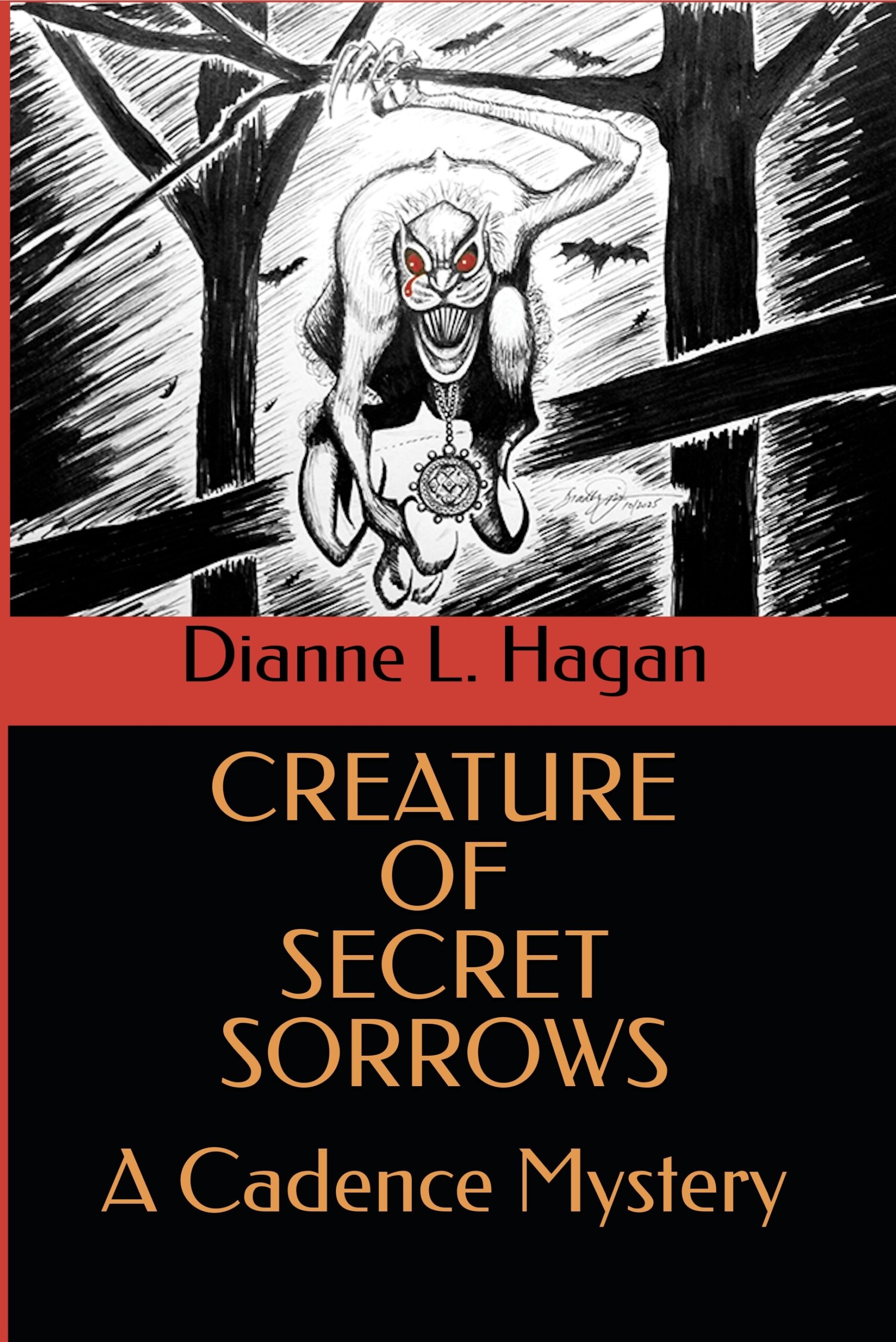
The Creature of Secret Sorrows with Dianne L Hagan

I have lived in America now for 35 (Jeez, really?) years. I do love this country but I’m not blind to history–it’s the curse of the writer and history nerd in me. Being white, male, of a certain age and generally benign, I have not suffered much unless you count having to watch the news without going all Howard Beale. That’s not the case for everyone. Enter Dianne L Hagan and her award winning novel, Creature of Secret Stories. She is a finalist in the American Book Festival awards, Horror: General and Mystery/Suspense: Multicultural and Diverse.

Dianne, you’ve been writing a while. Tell us your story, then tell us about your story. (You know what I mean.)

In January 1976, freshman year of college, I met Ronald Hagan and knew within five minutes that he was the man with whom I would share my life. Young and naïve, I was not prepared for how the world would view us as a couple. You see, I’m white and Ronald is Black. Our love for one another, and our determination to stay together, started me on a journey of learning about race in America from one of the most intimate seats in the country. It shaped who I became as an adult and as a writer who is willing to share our stories as testimony and as a way of understanding the long reach of our country’s history.

I’ve published two memoirs. The first, Another Day in Post Racial America: To the Mothers of the Black Lives Matter Movement, With Love, was named one of the best Black Lives Matter books of all time by BookAuthority and was a semi-finalist in the North Street Book Prize 2020. American Dreaming: A Memoir of Interracial Love, Estrangement, and Race Equality won an Honorable Mention in the 29th Annual Writer’s Digest Self-Published Book Awards. My multicultural mystery series, A Cadence Mystery, is the winner of six Literary Titan Book Awards, and seven finalist awards from the American Fiction Awards. Creature of Secret Sorrows (A Cadence Mystery, #7) the newest book in the series was named a finalist in two categories in the 2026 American Fiction Awards: Mystery/Suspense: Multicultural and Diverse and Horror: General. I’m currently working on book 8 of the series. The series focuses on the small town of Cadence, New York, where the past doesn’t stay buried. It awakens and demands justice.

So tell us about book #7

In Creature of Secret Sorrows (A Cadence Mystery #7), Randy Nichols, a retired geology professor, goes missing. While searching for him, Marian Greene stumbles upon a horrific murder scene reminiscent of a bygone dark era in American history. A family relic, twice stolen, is returned and found to be cursed, altering perceptions and causing suspicion among close friends. And then things turn really bad when a creature that should only exist in Ghanaian folklore taunts police officers.

When the FBI arrives and takes charge, Police Chief George Powless is more determined than ever to solve the case, even if it means using methods that are far outside the usual police procedures and protocols.

As with all the books in the series, Creature of Secret Sorrows blurs the line between a police procedural and the supernatural.

It’s pretty obvious, given your personal stake in it, but what about the story interested you?

All the books in the series explore how the past, if left unresolved, has a stranglehold on the present. This book is no different. The dark chapters in American history still have an impact on our identity as a country today.

Cadence, New York, a fictional town in the Finger Lakes region, founded in 1789 on sacred Seneca land, is a multicultural utopian community governed by the Onondaga principles of respect, collaboration, and equality. Since its founding, the town has been besieged by haters, and after a race massacre in 1921, went into hiding for 100 years with the hope that the rest of the country would evolve. The series opens in 2021 at the close of that 100 years of waiting. A running theme of A Cadence Mystery is that long-buried secrets aren’t truly buried. They are simply waiting for the right convergence of people and events to reveal themselves. And once revealed, they demand acknowledgement, reclamation, and reparative justice. And the final theme is that the strength of community, found family, and human resilience can carry us through the worst of times. Readers who like mysteries that go beyond police procedurals, are character-driven, and that deal with both historical and current social justice themes and/or supernatural influences will enjoy the series.

What’s your favorite scene?

Toward the end of the book, Junee, a root worker (a spiritual practitioner) from New Orleans, and Wilson Woodrow, one of the series regulars, goes to one of the Cadence family cemeteries to gather soil for use in a spell to break the curse of the family relic. Wilson has only recently settled in Cadence after a life of wandering because he has always been haunted by his best friend Joey’s death during a drunk driving accident when they were teens. Junee nearly floats through the cemetery, joyfully greeting spirits, while Wilson is weighed down by guilt and regret. That is, until Joey appears. I loved writing this scene, bringing the visual and sensory details of the cemetery to the page and the difference between Junee’s and Wilson’s response to this sacred place where the line between life and death is blurred

Where can we learn more about you and your work?

Goodreads

Facebook

The Cadence series on Amazon

DiannelHaganauthor.com

Speaking of the American Book Festival Awards:

 The Deserter- a Tale of the Foreign Legion is the 2026 American Book Fest winner for Adventure/Historical books. You can read about it here.

If you haven’t read it yet, what’s keeping you?

The Deserter- a Tale of the Foreign Legion, is “a remarkable, thoroughly researched, gripping tale. A two-fisted adventure set in the African desert.” Available in paperback anywhere, and on Kindle.

Mesopotamian Historical Fiction with Ellen Rachlin

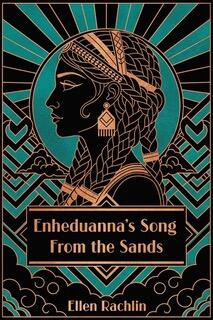
I know what you’re thinking: Not another book about a Mesopotamian princess with literary ambitions! I love histfic that covers time periods that aren’t overdone and this one qualifies. Plus it’s an American Book Fest Finalist.

Ellen tell us about yourself.

I’m the author of the historical fiction novel Enheduanna’s Song From the Sands (Histria Fiction) and five poetry collections. My most recent collection, Permeable Divide, received the IBPA Benjamin Franklin Silver Award and was a finalist for other awards. My other poetry collections include Until Crazy Catches MeCaptive to ResidueWaiting for Here, and At the Big Bang Resort (Red Hen Press, March 2027). My writing has appeared widely in journals, anthologies, and books. I spent my career in financial services, and along the way, authored textbook chapters for Wiley and McGraw Hill, along with journal articles on investing and finance. Outside of writing, I’m a Taekwondo grandmaster, an enthusiastic Latin dancer, and a lifelong learner of mathematics and science.

Enheduanna isn’t the most familiar historical character. What’s your book about?

Enheduanna’s Song From the Sands tells the story of Enheduanna, the world’s first named author and the daughter of Sargon the Great, who forged history’s first empire in ancient Mesopotamia. Chosen to become high priestess of the moon god in the sacred city of Ur, Enheduanna must navigate political intrigue, a vengeful rebel, family loyalties, and the demands of the gods as uprisings threaten the empire. Drawn into the underworld in search of answers, she struggles to discover her own voice while confronting forces that seek to destroy her. Inspired by history and mythology, the novel brings to life the extraordinary woman whose poetry has echoed across more than four millennia.

What is it about that time period or character that appealed to you? What are the roots of the story?

I encountered Enheduanna by chance. I was reading about her father, Sargon the Great, who was the world’s first emperor. Then I noticed one of his children‚ a daughter, had a brief description attached to her name: “the world’s first named author”. I had to discover what she wrote and how she earned this title. I was stunned that the world’s first was a woman. Then I found these remarkable hymns and the controversy over whether she actually wrote them. I felt that the most moving of the works attributed to her was The Exaltation of Inanna, or Ninmešarrawhich survives only in incomplete form. In that hymn, a woman identified as Enheduanna pleads to the god, Inanna, to restore her as high priestess of Ur after being brutally forced into exile. This opened a world of mythology that I hadn’t known before. These gods shaped Enheduanna’s survival, identity, and happiness. The other works are similarly captivating.

Enheduanna inspired me. Here was a woman who either wrote these memorable hymns or inspired them. This was during a time when women had little agency. Usually only great men in this time period had epics and legends about them while great women were less visible in the surviving records. I couldn’t stop thinking about her life as it might have been. To me, this was a woman who leaps out of deep history and refuses to be forgotten. She deserves to be remembered. It also puzzled me why ancient Mesopotamian literature had been overlooked compared to ancient Greece and Rome. That realization made me want to write this novel even more. I wanted readers to discover that literature began in Mesopotamia, and that a remarkable woman whose voice still speaks to us today was part of that lineage.

What is your favorite scene in the book? I know that’s an unfair question.

I can’t tell you my favorite scene in the book because it comes at the end and with spoilers. And it isn’t conventionally satisfying, but I found it emotionally satisfying to write. But next, after that, my favorite scene comes after a brutal experience when Enheduanna finally enters the city-state of Ur as the high priestess. She is young and determined to be feared as she believes this is the best way to protect herself. She dresses in full ceremonial garments and refuses to meet anyone’s eyes. She lets the citizens look at her, take in her appearance, daring them to see not merely a young woman but their high priestess and a force they must respect.  

Where can we learn more about all your impressive work?

My website EllenRachlin.com

My book at Simon and Shuster

Amazon

Goodreads

Instagram @ellenrachlin

I just found out that The Deserter- a Tale of the Foreign Legion is the 2026 American Book Fest winner for Adventure/Historical books. You can read about it here.

If you haven’t read it yet, what’s keeping you?

The Deserter- a Tale of the Foreign Legion, is “a remarkable, thoroughly researched, gripping tale. A two-fisted adventure set in the African desert.” Available in paperback anywhere, and on Kindle.

The Deserter is the ABF Historical Adventure of the Year!

Among all the spam and hustles sent to authors, it’s easy to skip the good news. I just found out that The Deserter- a Tale of the Foreign Legion is the 2026 American Book Fest winner for Adventure/Historical books. You can read about it here.

If you haven’t read it yet, what’s keeping you?

The Deserter- a Tale of the Foreign Legion, is “a remarkable, thoroughly researched, gripping tale. A two-fisted adventure set in the African desert.” Available in paperback anywhere, and on Kindle.