Do Men Still Read Fiction? (Part 1 of 4) The Panic and the Reality

The headline reads “Only 1 in 5 Men read a novel last year.”

That sounds bad. As someone who writes books I hope men read, it’s damn near catastrophic. But what is behind that number, and what does it really mean?

I am starting to become obsessed with the fact that boys don’t read as much as I think they should. (To be fair, nobody on earth reads as much as I think they should.) But think about what that number says. A mere 20% of North American men read fiction last year. A short story. A novel. Anything “made up”.

Like, at all.

But there are things that clickbait number doesn’t tell you: It doesn’t mean men don’t read at all, they’ve just largely rejected novels. In fact, nearly 70% of American men read at least one book last year. (Pew research) They haven’t completely abandoned books, just fiction. Men make up 75% of the market for nonfiction history, 65% of the market for biography and memoir, and 70% of the books on science and technology. They are considerably less than 40% of the market for contemporary fiction.

Is that a bad thing? And why are people (including me) so freaked out?

Why does fiction matter?

Reading is only one way we upload information into our brains. Film, real life, conversation, the interwebs, all count as input. But reading uses our brains in very specfic, mostly healthy ways. And reading fiction exercises different muscles than reading for information retention, to learn a skill, or pass a test.

  • ´Fiction is a “Human Simulator” (It helps create a “Theory of Mind”)
  • ´It Builds high-performance empathy
  • It ´Provides nonthreatening exposure to diverse groups and builds social acuity
  • ´It Trains deep focus and narrative imagination
  • It Helps us understand metaphor and analogy

Sounds like desirable goals and all. So what’s the problem?

We have trained boys to hate reading fiction.

Until about age 10 or so, boys and girls read at about the same rate. Then about 6th grade, something changes. We stop treating reading as fun, or as entertainment, or a way to develop our mental muscles and turned it into homework. Thick 19th century novels (often curated so as not to offend the sensitive) demand five page essays on theme and symbolism. Reading should be fun and adventurous, and has become the most dreaded thing in a teenage boy’s vocabulary: homework.

And there are lots of other things to occupy idle time and stimulate imaginations (even if they operate very differently on young brains): video games, Netflix, YouTube at the top of the list.
This is the first of four short essays designed to address these concerns, and suggest some ways to reverse the trend. In no way should this be thought of as “anti-woman” or “anti-teacher,” or even just the ramblings of an old cis-het white guy. I write this with love.

In the next episode, we’ll look at “The Middle School Cliff” and what happens at that critical juncture.

Meanwhile…. what books do you think would make a difference to young boys and men? I want recommendations, people. The more recent the better. Comments are open, please use them responsibly.
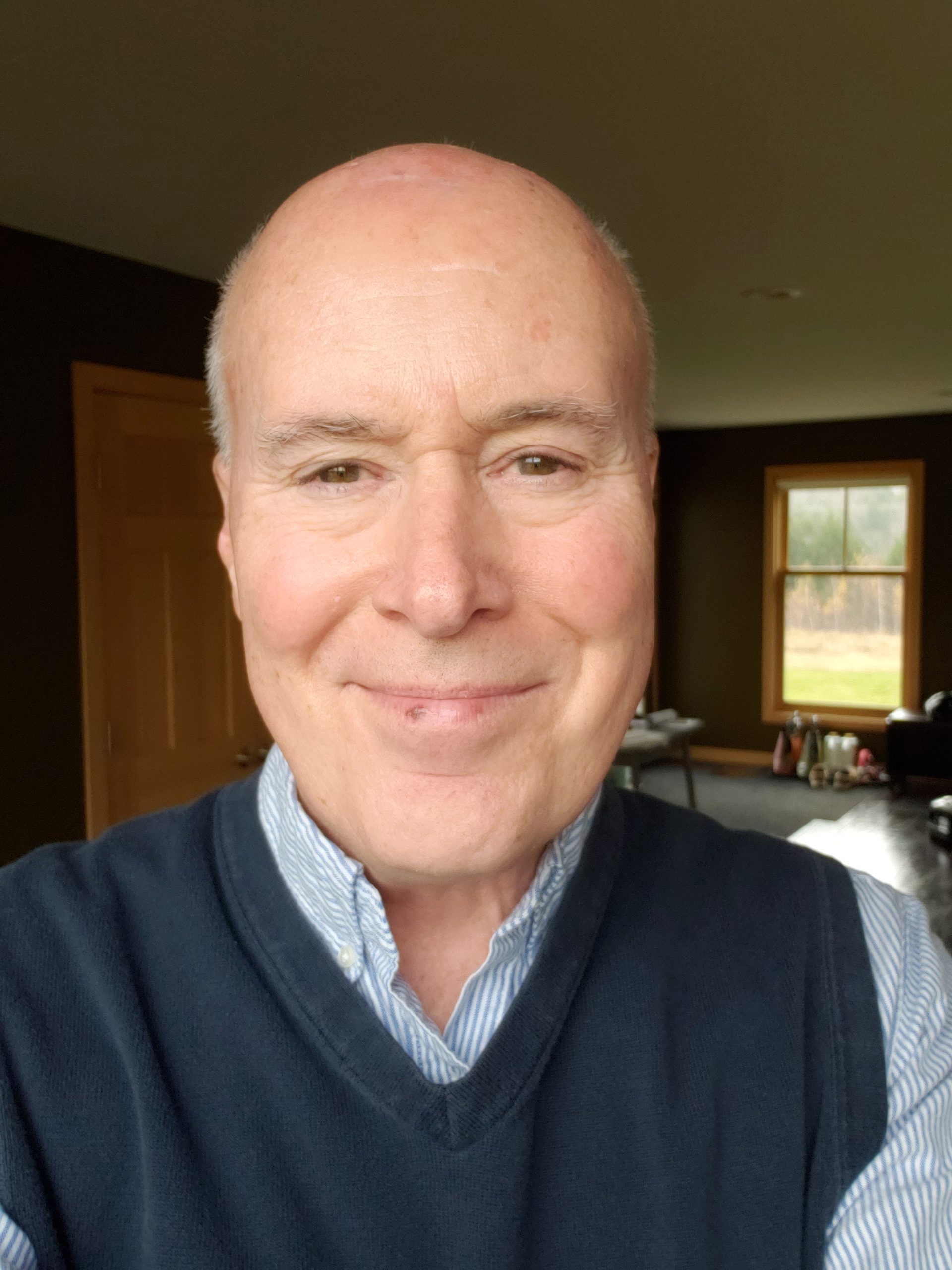
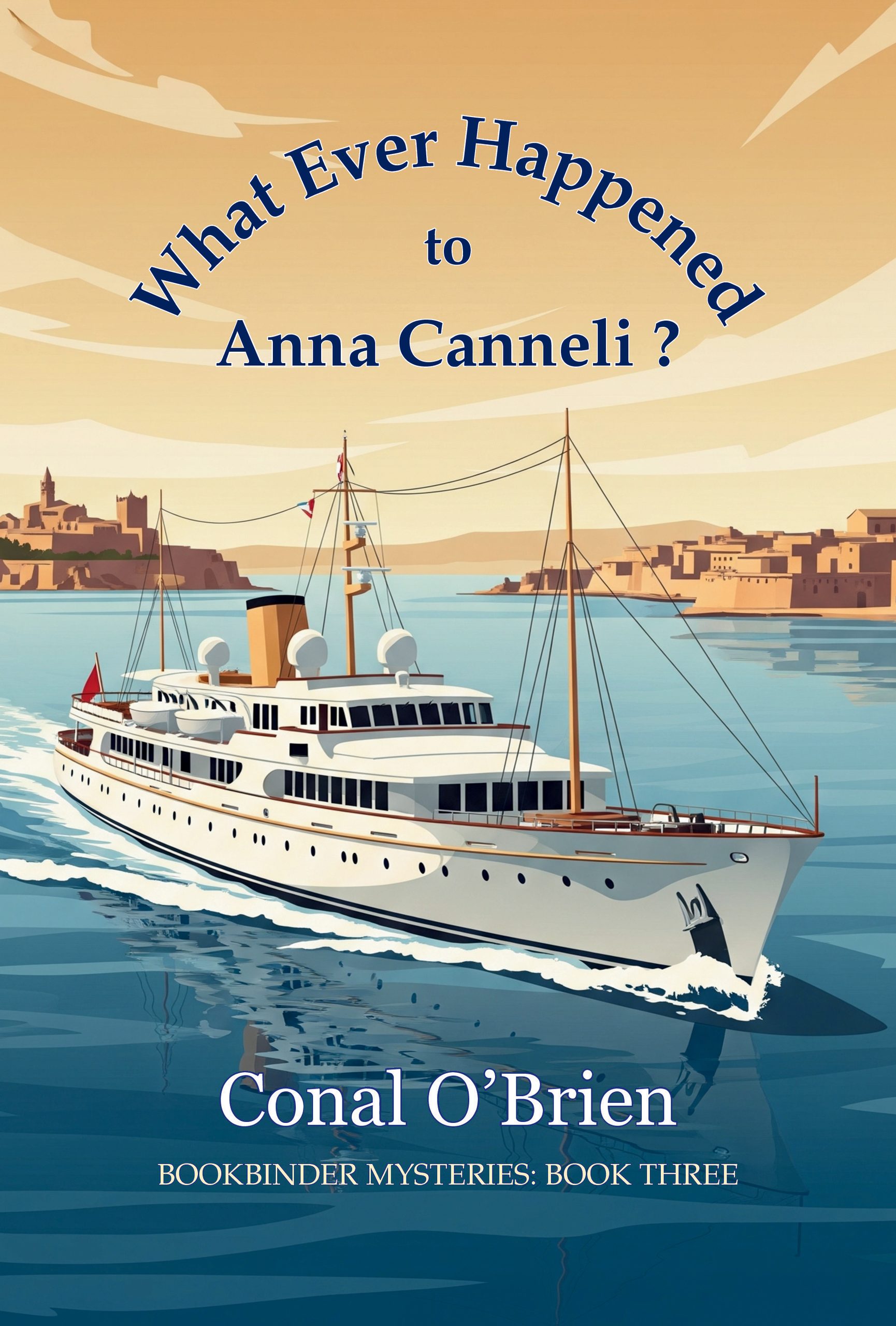
A Mystery Thriller with a Lot of Moving Pieces- Conal O’Brien

It’s strange. I love figuring out where writers are going, and am so happy when I’m wrong because the writer has done their job. But I don’t read as many flat-out “mysteries” as I could. Today I’m talking with author (among other things) Conal O’Brien. Surely he’s tired of being asked if his first name is a typo but I digress…

Give us the Conal O’Brien story.

I’ve directed over 2,000 television episodes, produced two films, written a few plays, was once an actor, a photographer, a cab driver, a waiter, a short order cook, a school bus driver, a reupholster, and I shagged golf balls at a driving range. I got fired for catching golf balls hit at me – in my hat. Most of those things happened in the distant past. Throughout my life my one true love has always been writing, and for the last dozen years or so I have done only that. The Bookbinder Mysteries series is the result.

Let’s see, what else? Both of my parents were actors, and I am one of ten children. I grew up in a small town in northern New Jersey in a very noisy household, filled with singing, yelling, and a great deal of love.

So what is “What Ever Happened to Anna Canneli?” about?

What Ever Happened to Anna Canneli? is a global mystery thriller. It’s a ‘standalone’ story (with many continuing characters) about a murder, a court-martial, a woman living under a false name in Sicily – and a document somebody very powerful doesn’t want anyone to read. It’s the kind of thriller that uses the genre as a vehicle for something bigger. The political conspiracy here isn’t the backdrop, it’s the whole point. And, there’s a pivotal (on-going) story that involves a real-life event – the famous robbery of the Gardner Museum in Boston.

(Readers, I told you there was a lot going on.) What are the roots of the story?

I like writing about the ‘now.’ For example, my first book in the series (Birth of the Angel) was set to be published just as the recent global pandemic broke out. My lead character, Artemis Bookbinder is, notably, a germophobe – and I realized that his struggle to exist in that difficult time was an important story to tell. So, I pulled the book back and rewrote it.

The roots of the story started quite some time ago, in 1999 – or so. I was on vacation, sitting on a beach, reading a novel by a bestselling writer. It was thriller involving terrorist trying to blow up Time Square, and it included a detailed description of how the ‘bad guys’ could build this bomb. And that bothered me so.

I have been a life-long fan of Agatha Christie. I’ve read her novels many times indeed. I’ve always admired the positive tone in her work (despite the usual murders and mayhem!). So, that day on the beach, I was gripped by the notion that I could write a story – certainly not as ‘cozy’ (or as good) as hers, but something new for our time.

Editor’s note- Cozy mysteries have always been a puzzle to me. Sure, there are no cursing or sex…. but there’s a dead body here! If somebody killed me, you can bet there’s be dirty words shouted. Back to Conal.)

And here we are in 2026, and I am so grateful that my book has won the American Book Fest, American Fiction Award in Mystery & Suspense. (And Wayne, congratulations on your win, too!)

Thanks, brother. What’s your favorite scene in the book?

Ah, Wayne, you know no writer can list just one!

I lived in New York City for many years and I love the famous and familiar locales. They are such fun to write about. There’s a scene in a (real-life) restaurant on the Upper West Side (complete with the owner ‘Mickey Piccatta’) that makes me smile. Or the scene between Ida Orsino and her sister sitting in the elegant bar/lounge of the Mark Hotel on the Upper East Side.

I love Lucille’s solitary moonlit hike up Elmore Mountain in Vermont. I love the danger implied in any scene with Leticia Rios. And, near the end of the story, there is a scene that can only be described as ‘High Noon.’ It involves lots of characters and was exhilarating to write.

Where can we learn more about you and your book?

The best place to learn more is at my website:  conalobrien.com

All of my books are available (by request) in any bookstore in American, Canada, Great Britian. Also, on-line at Barnes and Noble, Amazon, and wherever books are sold. Titles in the series:

Birth of the Angel

Death of Television

What Ever Happened to Anna Canneli?

Thank you, Wayne, for letting me be here with you!

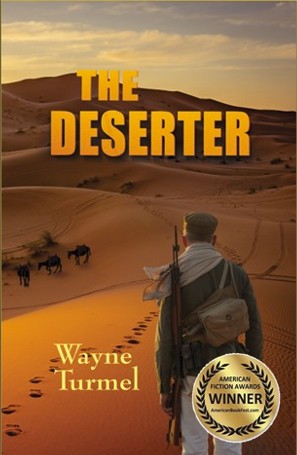
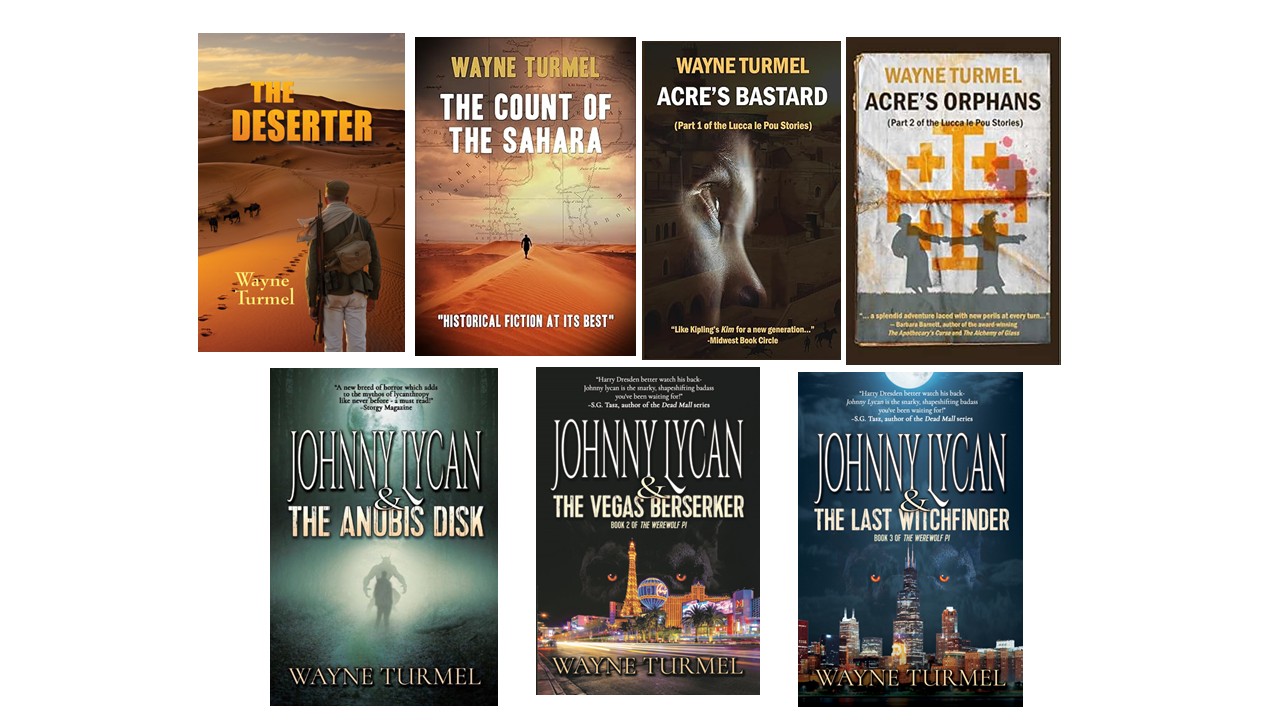
Check out The Deserter- a Tale of the Foreign Legion. “Wayne Turmel’s The Deserter manages to feel both old fashioned and strikingly original. While it possesses qualities of the adventure tales of old—whether that be those of daring from Scott and Cooper or stoical Hemingwayesque figures or most directly P.C. Wren of Beau Geste fame with even a bit of T.E. Lawrence. “– Michael Harnett, author, Windmill Bluff

Going to a Book Event? Here are some (not so much rules as it is) guidelines

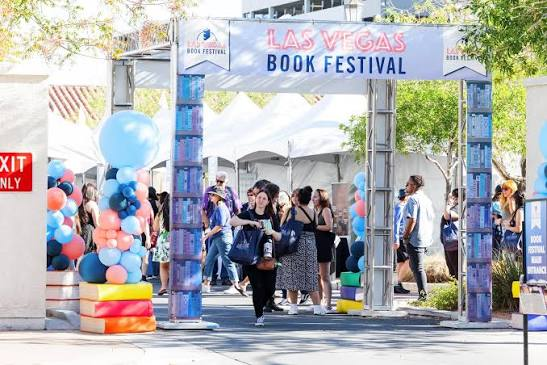
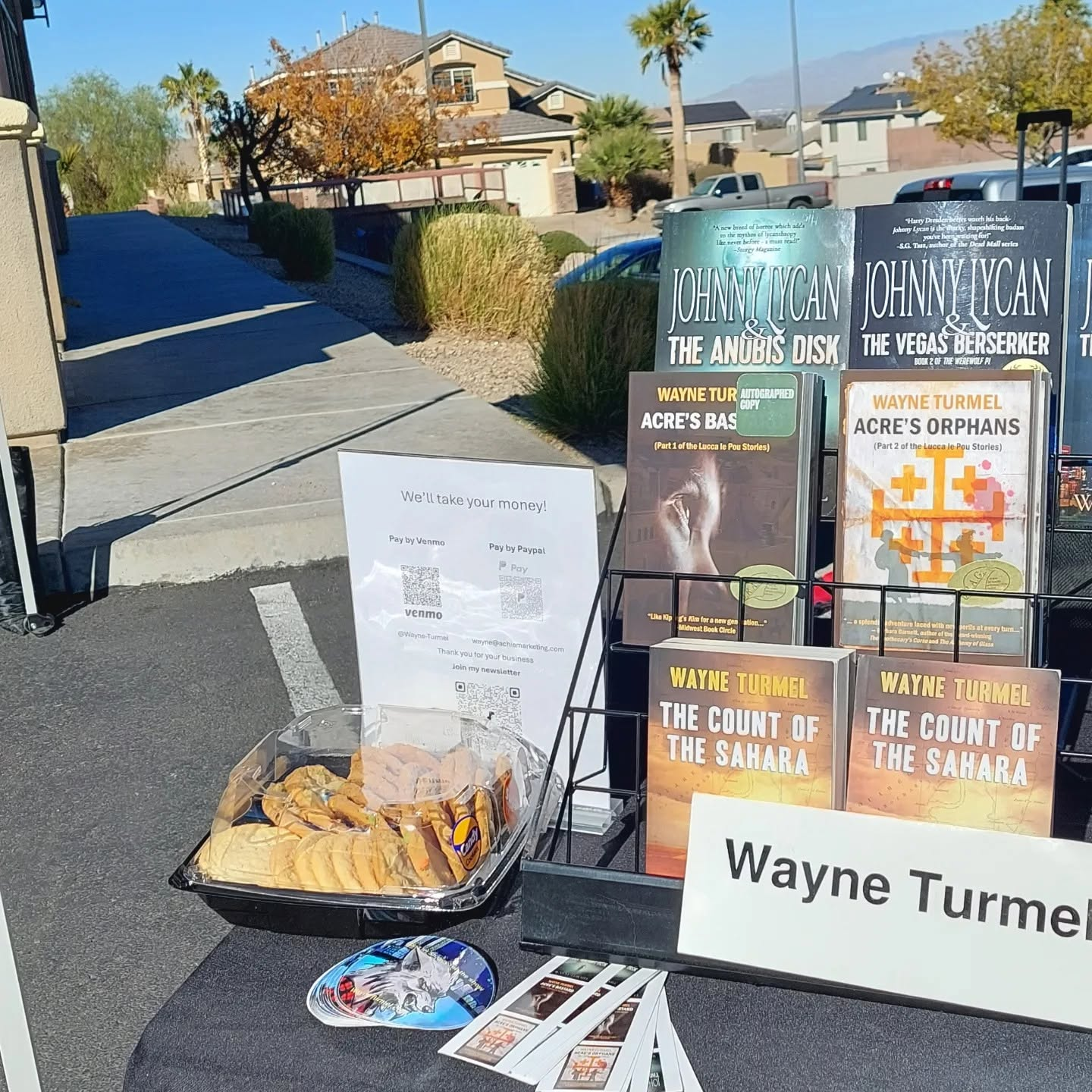
The Las Vegas Book Festival is Saturday, the 17th. I love selling books in person,

even if it is the statistically least efficient way to make money. If you are a civilian attending for the first time, here are a few things you want to know about the dynamics at play.

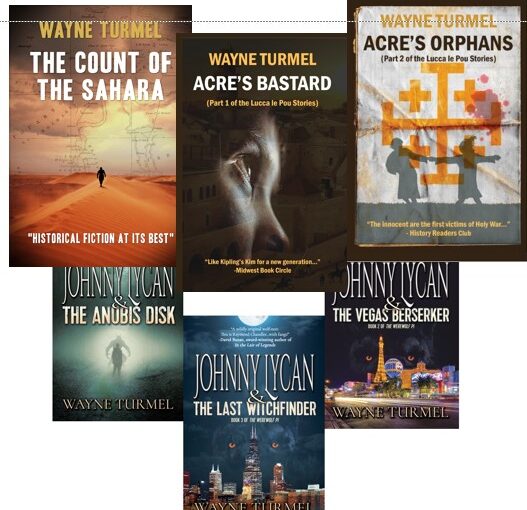
Selling books face-to-face is a fascinating anthropological experiment disguised as a commercial transaction. You sit behind a table draped in black cloth, flanked by vertical displays of your paper-children, whether those are historical thrillers, Crusades epics, or urban fantasy and you wait for the human tide to roll in.

You quickly learn that a book festival operates on entirely different physics than the internet. Online, a reader discovers your book via a targeted ad or a search algorithm in the quiet comfort of their home and can buy with the push of a button. By the time they remember they bought it, it’s at their doorstep.

At a live festival, you have roughly three to five seconds of eye contact as someone drifts past your booth. That is your entire window to transition from a needy stranger standing awkwardly behind a stack of paperbacks to an engaging human being.

It is wonderfully humbling. You will have deeply philosophical conversations with strangers about the nuances of the French Foreign Legion or the mechanics of modern urban fantasy, and then the very next person will pick up a book, squint at the cover as if it might go off in their hand, and mutter, “Oh, I thought this was a map booth,” before briskly speed-walking away.

When you stop by a local author’s table—whether it is at a massive downtown literary festival, a bustling weekend farmers market, or a local library showcase—remember that there is a real, live human being sitting behind those stack of books who spent a couple of years staring at a blinking cursor praying for inspiration and hoping they make Twenty Bucks a book.

If you’re thinking of going to any book event, here are some tips. As they said in “Pirates of the Caribbean,” it’s not so much code as it is guidelines.

You have no obligation to buy the book, but please don’t be rude. People ignore a greeting or walk by like they’re afraid to get caught in the tractor-beam and sucked in. Just be nice. Smile. We don’t bite. Except hockey romance authors. I don’t trust them. Neither should you.

Not all books are your cup of tea, and that’s alright. I always ask people what they like to read before going on about my books. Maybe they’re more likely to enjoy Johnny and friends instead of history. Maybe they think Urban Fantasy is dumb. I don’t take it personally. We all have things we like and stuff that’s not for us. Hey, I’m an old, cis-het, white guy and I write like it. I’m probably not the audience for your sapphic manga-inspired space opera. We can still get along.

You’re overwhelmed with all the books around you and how many can you buy? You have a budget, or you don’t have anything to carry them in. Don’t feel bad. At my table you can get a bookmark with the code to my Amazon page and buy them later ( in multiple formats.) Buy a book and I’ll give you a bag to carry it in. At least you can support an author by signing up for their newsletter, so you can be noodged a month from now.

See you on Saturday. Stop by Booth #2 and remember if there’s a way to take your money, (cash, Venmo, Paypal, credit card) we can get that book into your hands.