A Young Girl’s Dangerous Escape Through Europe- Barbara Stark-Nemon

Here’s another historical adventure that came to me via the American Book Fest awards. It’s the tale of a young girl who escapes the Spanish Inquisition (and I WIL NOT SAY THAT NOBODY EXPECTS THAT) and flees to Northern Europe. Not the most common subject for a novel… and that’s a good thing. Welcome Barbara Stark-Nemon.

Hi Barbara. Introduce yourself, will ya?
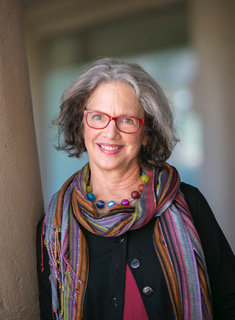
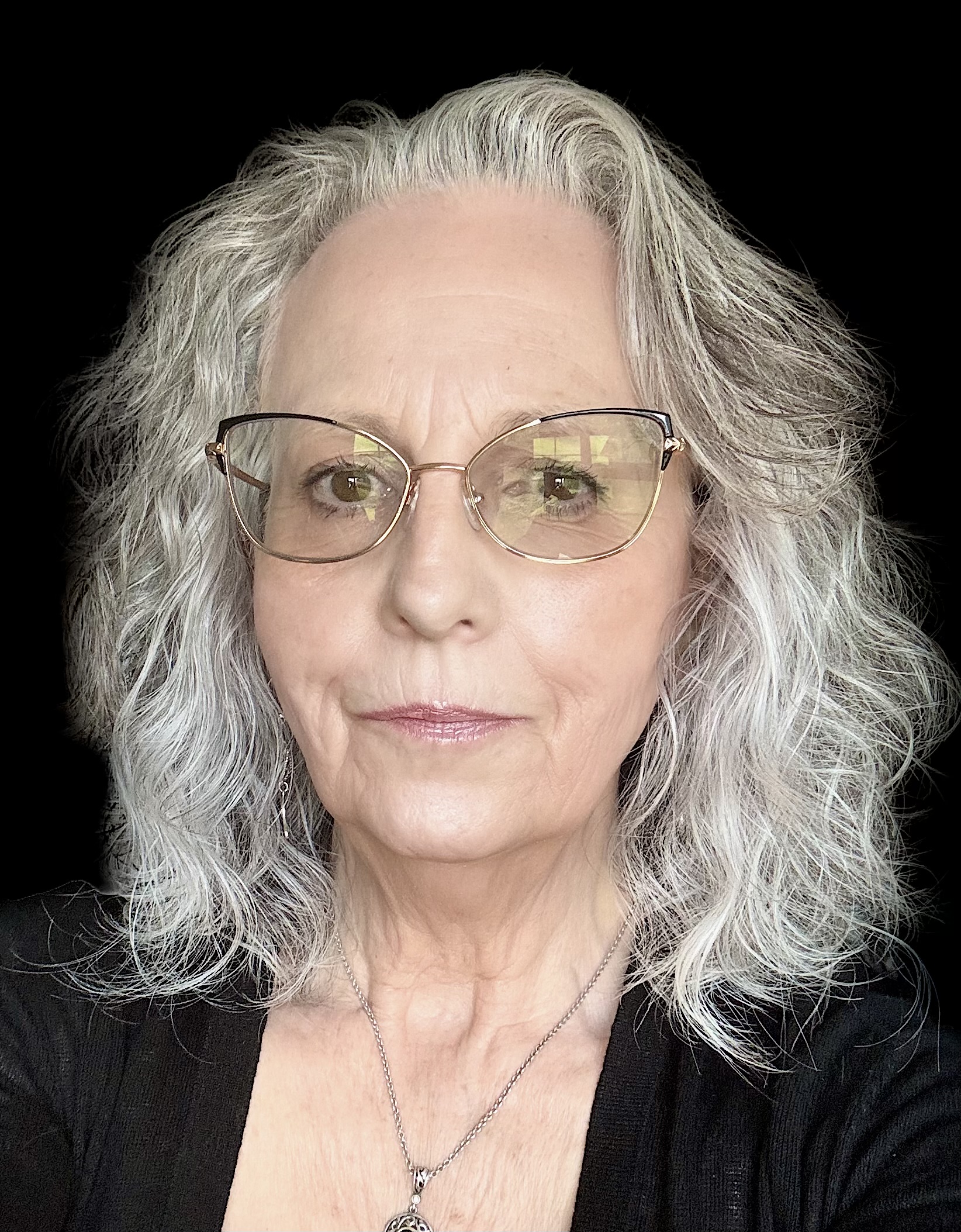
Writing novels is my encore career, and I couldn’t feel luckier. I had a thirty-year career teaching English, working as a speech and language therapist and teacher consultant, and I loved that work.  I’m grateful to have then been able to fulfill my lifelong dream of being a writer with the publication of three novels; Even in Darkness, Hard Cider, and Isabela’s Way.  When I’m not writing, traveling, or visiting our three sons and eight grandchildren, I swim, garden, cycle, knit, quilt, and embroider in Ann Arbor, and Northport Michigan. 

What’s Isabela’s Way about?

Isabela’s Way, set in the early 17th century, is the story of a 14-year-old embroideress who has to find her way out of Portugal, through Spain and France, to Germany to escape the Spanish Inquisition.  She, and a young man from her home town are assisted by a network of supporters who work to help Conversos (forcibly converted or expelled Jews) to escape to safer cities. Isabela gradually realizes that her embroidery of coded symbols is used by the network to designate danger or safety of clandestine sanctuaries along her route. She is shocked to discover her family’s true origins, and must use all her resilience to surmount the danger and disorientation of her circumstances as she eludes the Inquisitor priest who is pursuing her. She grows up and comes to terms with a changing identity.

Holy cow! That’s not your average story. Where’d it come from?

Isabela’s Way came to me 15 years ago when I was on the third day of a bicycle trip from Portugal to the Alhambra in Spain. I had just huffed and puffed up a steep hill to a Celtic standing stone circle where if the sun fell in exactly the correct alignment,  local legend had it that your ancestors would come to you.  So maybe I shouldn’t have been surprised when on the merciful glide down the hill to the next stop, a fourteen-year-old embroideress came to me with her story of escape from the Spanish Inquisition through a journey from Portugal to Spain, then France and finally to Germany. I told the girl to wait… I was writing Even in Darkness, and Hard Cider, my second novel, was in the wings.

My girl did wait, and I traveled three times to Spain, Portugal, France and Germany to research her. Then came Covid and I was restricted to continue my research online.  A deep dive into Ancestry.com revealed my ancestor, who was born in 1586 in Abrantes, Portugal, and died in 1655 in Hamburg, Germany, providing both the time period and the escape route for Isabela’s story.

Totally unfair question: What’s your favorite scene?

My favorite scenes to write in Isabela’s Way turned out to be the ones involving the herbal healer and dye maker, Ana Martel Gerondi. She is a skilled and savvy member of the secret network helping Isabela reach her father.  Her knowledge and skill at healing, her imposing figure, her quiet strength and deep passion made her one of my favorite characters.

Where can we learn more about your work?

www.barbarastarknemon.com

https://www.instagram.com/bannstark

https://barbarastarknemon.substack.com

https://www.instagram.com/bannstark

www.facebook.com/starknemon

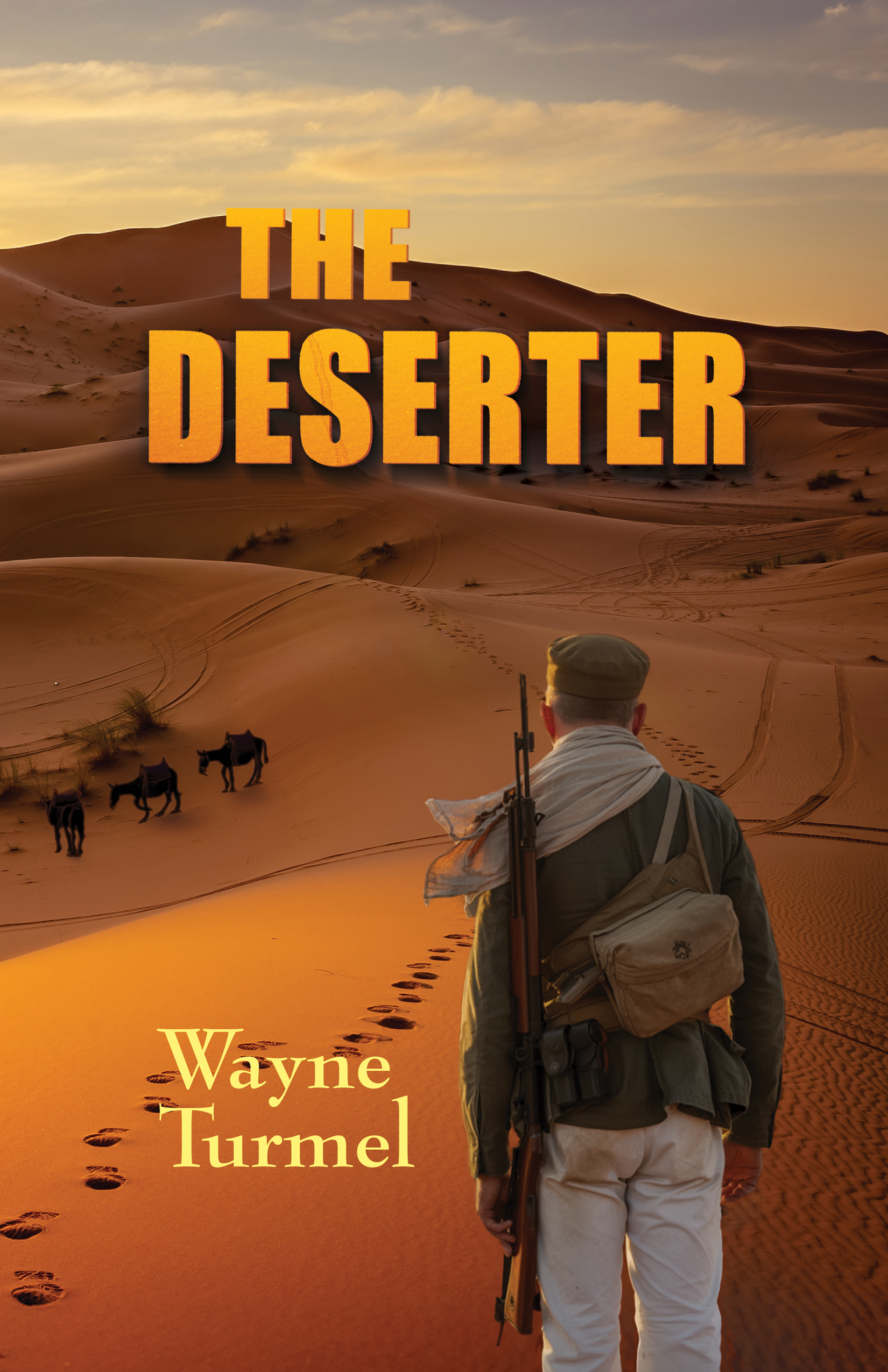
Check out The Deserter- a Tale of the Foreign Legion. “Wayne Turmel’s The Deserter manages to feel both old fashioned and strikingly original. While it possesses qualities of the adventure tales of old—whether that be those of daring from Scott and Cooper or stoical Hemingwayesque figures or most directly P.C. Wren of Beau Geste fame with even a bit of T.E. Lawrence. “– Michael Harnett, author, Windmill Bluff
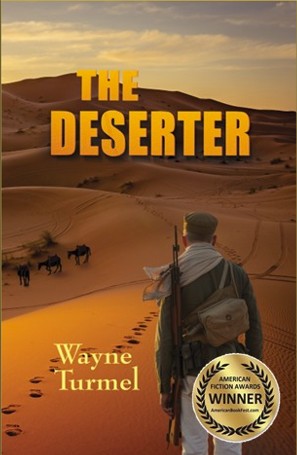
It’s an American Book Festival 2026 Winner for Best Adventure/Historical Novel!

Join my newsletter and get a weird (sometimes icky) historical fact and an update on what’s going on in my world! Fill out the form on the right hand side.


When Was the Last Time You Read Anything About Patagonia? Kate Beales

One of the best things about being in contact with other winners and finalists of the American Book Fest awards, is finding out about the time periods and topics that have obsessed their authors. That brings us to an author and topic I’ve never heard of: Kate Beales and her tale of the British colony in Patagonia, Broken Horses.

Okay Kate, floor’s yours. What should we know about you?

I’m from the UK, and I live mostly in London with my husband and two grown-up sons. I say mostly, because I spend as much time as I can in the hills of Northern Piemonte, Italy, where I host creative retreats for writers and other artists. 

My background is in theatre – I learned my trade as an assistant director at the beautiful Deutsches Schauspielhaus in Hamburg, where, because I spoke English, I got to work with all the international directors. Over the next five years, I toured the world with the English Shakespeare Company, became a theatre director and then joined the Learning Department at the National Theatre as a freelance associate. I’ve created projects for and with children, young people, elders, teenagers at risk of homelessness, business people and many other communities. I’ve made a show with (yes, with!) toddlers, set in a giant bed, and worked with refugees on the streets of Paris and Athens. I’ve collaborated with an analogue photographer to create pop up darkrooms and pinhole cameras for community storytelling, and worked with puppeteers in the townships of South Africa. Along the way, I’ve learned to tell stories and teach storytelling – including for the Tisch School of the Arts at NYU, where I worked as a visiting professor teaching both Storytelling and Shakespeare for twenty years. Today I facilitate work with limbless and wounded veterans, teaching writing and theatre, helping them share their stories of resilience. 

I write my own stories whenever I can, in between the day job, mostly on trains and buses. I’m proud of Broken Horses, it’s had a long and rocky path to publication, and I’m delighted that it’s made it out into the world. I’ve been told, by someone who has lived experience of the story behind the story, that it ‘digs up the bodies’ – in a good way!

This is a story I know most people have no exposure to. What’s the book about?

Broken Horses is the story of Georgie, a young Englishwoman who travels to Southern Patagonia after the Great War, hoping to begin a new life as governess to a motherless child. Slowly, she builds a friendship with her employer, the widower Ian Creed, and dares to dream of a secure future as his wife. At the same time, her heart is drawn to Raúl, the gentle horsebreaker, who teaches her to love her wild new home. 

But Patagonia is in turmoil, riven with political struggle. Ian, suffering from the loss of his wife and his own wartime trauma, becomes increasingly erratic. When a rural workers’ strike leads to rebellion and the region’s colonial landlords plan brutal reprisals, Georgie finds herself caught between the values of her old world and the desperation of the new. 

What are the roots of the story? What is it about this time period you find so fascinating?

I’ve always been interested in how Europe responded to the collective trauma of the first world war – and how the role of women changed at that time. The conflict really was global: colonial Patagonia was affected too, even though it’s so far away from the rest of the world. 

The roots of this story lie in my curiosity about how it might have felt for a European woman to sail across the world to make a life in such a far-off and inhospitable place. My own grandmother sailed to Punta Arenas in 1905: it must have been unimaginably hard. The more research I did,, the more I was fascinated by Patagonia’s history. The indigenous people who had roamed the land for millennia were systematically destroyed by the new settlers. The environment was irrevocably altered, the migrant workers brutally exploited. And yet it’s a beautiful, haunting world, full of stories of courage, hope and heroism as well as violence and loss.

For more insights into why I wrote this book, please check out this 7-minute documentary about the story behind Broken Horses.  https://vimeo.com/djangopinter/brokenhorses

What’s your favorite scene in the book?

This is a really difficult question! There is a scene set at the height the workers’ rebellion that I’m particularly proud of because it cost me a lot to write it. I still find it difficult to read back. There are a couple of moments which were validated by subsequent experiences in Patagonia that pretty much exactly replicated what I’d written – that felt wonderful! The scene where the gosling is attacked by the carancho actually happened. I witnessed it in Magellanes, Chile and understood at the time that it was something very special. I’m very happy that it made it into the book. I am also very happy with the twist at the end: it took me at least six different versions to get the ending the way I wanted it! 

If pressed to choose, I would probably go for the scene where Georgie rides out onto the plain with Raúl and they encounter a herd of wild horses. The experience lifts Georgie out of the trauma she’s been living with, and gives her a glimpse of freedom – it also cements her relationship with Raúl, although neither of them know it yet.

Thanks for your time and your fascinating tale. Where can we learn more about you?

My publisher: Linen press

My Instagram:

Amazon (both UK and US)

Check out The Deserter- a Tale of the Foreign Legion. “Wayne Turmel’s The Deserter manages to feel both old fashioned and strikingly original. While it possesses qualities of the adventure tales of old—whether that be those of daring from Scott and Cooper or stoical Hemingwayesque figures or most directly P.C. Wren of Beau Geste fame with even a bit of T.E. Lawrence. “– Michael Harnett, author, Windmill Bluff

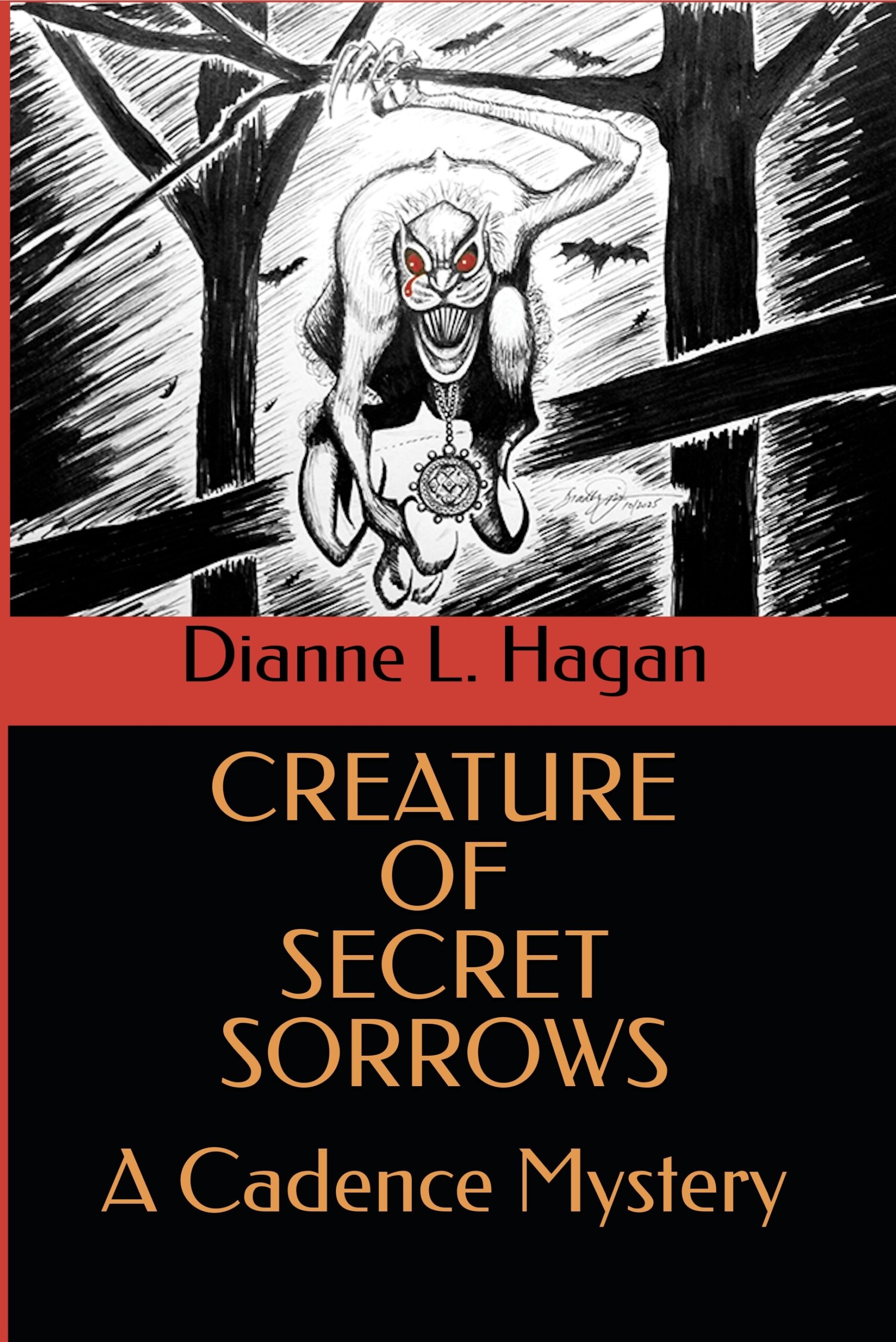
The Creature of Secret Sorrows with Dianne L Hagan

I have lived in America now for 35 (Jeez, really?) years. I do love this country but I’m not blind to history–it’s the curse of the writer and history nerd in me. Being white, male, of a certain age and generally benign, I have not suffered much unless you count having to watch the news without going all Howard Beale. That’s not the case for everyone. Enter Dianne L Hagan and her award winning novel, Creature of Secret Stories. She is a finalist in the American Book Festival awards, Horror: General and Mystery/Suspense: Multicultural and Diverse.

Dianne, you’ve been writing a while. Tell us your story, then tell us about your story. (You know what I mean.)

In January 1976, freshman year of college, I met Ronald Hagan and knew within five minutes that he was the man with whom I would share my life. Young and naïve, I was not prepared for how the world would view us as a couple. You see, I’m white and Ronald is Black. Our love for one another, and our determination to stay together, started me on a journey of learning about race in America from one of the most intimate seats in the country. It shaped who I became as an adult and as a writer who is willing to share our stories as testimony and as a way of understanding the long reach of our country’s history.

I’ve published two memoirs. The first, Another Day in Post Racial America: To the Mothers of the Black Lives Matter Movement, With Love, was named one of the best Black Lives Matter books of all time by BookAuthority and was a semi-finalist in the North Street Book Prize 2020. American Dreaming: A Memoir of Interracial Love, Estrangement, and Race Equality won an Honorable Mention in the 29th Annual Writer’s Digest Self-Published Book Awards. My multicultural mystery series, A Cadence Mystery, is the winner of six Literary Titan Book Awards, and seven finalist awards from the American Fiction Awards. Creature of Secret Sorrows (A Cadence Mystery, #7) the newest book in the series was named a finalist in two categories in the 2026 American Fiction Awards: Mystery/Suspense: Multicultural and Diverse and Horror: General. I’m currently working on book 8 of the series. The series focuses on the small town of Cadence, New York, where the past doesn’t stay buried. It awakens and demands justice.

So tell us about book #7

In Creature of Secret Sorrows (A Cadence Mystery #7), Randy Nichols, a retired geology professor, goes missing. While searching for him, Marian Greene stumbles upon a horrific murder scene reminiscent of a bygone dark era in American history. A family relic, twice stolen, is returned and found to be cursed, altering perceptions and causing suspicion among close friends. And then things turn really bad when a creature that should only exist in Ghanaian folklore taunts police officers.

When the FBI arrives and takes charge, Police Chief George Powless is more determined than ever to solve the case, even if it means using methods that are far outside the usual police procedures and protocols.

As with all the books in the series, Creature of Secret Sorrows blurs the line between a police procedural and the supernatural.

It’s pretty obvious, given your personal stake in it, but what about the story interested you?

All the books in the series explore how the past, if left unresolved, has a stranglehold on the present. This book is no different. The dark chapters in American history still have an impact on our identity as a country today.

Cadence, New York, a fictional town in the Finger Lakes region, founded in 1789 on sacred Seneca land, is a multicultural utopian community governed by the Onondaga principles of respect, collaboration, and equality. Since its founding, the town has been besieged by haters, and after a race massacre in 1921, went into hiding for 100 years with the hope that the rest of the country would evolve. The series opens in 2021 at the close of that 100 years of waiting. A running theme of A Cadence Mystery is that long-buried secrets aren’t truly buried. They are simply waiting for the right convergence of people and events to reveal themselves. And once revealed, they demand acknowledgement, reclamation, and reparative justice. And the final theme is that the strength of community, found family, and human resilience can carry us through the worst of times. Readers who like mysteries that go beyond police procedurals, are character-driven, and that deal with both historical and current social justice themes and/or supernatural influences will enjoy the series.

What’s your favorite scene?

Toward the end of the book, Junee, a root worker (a spiritual practitioner) from New Orleans, and Wilson Woodrow, one of the series regulars, goes to one of the Cadence family cemeteries to gather soil for use in a spell to break the curse of the family relic. Wilson has only recently settled in Cadence after a life of wandering because he has always been haunted by his best friend Joey’s death during a drunk driving accident when they were teens. Junee nearly floats through the cemetery, joyfully greeting spirits, while Wilson is weighed down by guilt and regret. That is, until Joey appears. I loved writing this scene, bringing the visual and sensory details of the cemetery to the page and the difference between Junee’s and Wilson’s response to this sacred place where the line between life and death is blurred

Where can we learn more about you and your work?

Goodreads

Facebook

The Cadence series on Amazon

DiannelHaganauthor.com

Speaking of the American Book Festival Awards:

 The Deserter- a Tale of the Foreign Legion is the 2026 American Book Fest winner for Adventure/Historical books. You can read about it here.

If you haven’t read it yet, what’s keeping you?

The Deserter- a Tale of the Foreign Legion, is “a remarkable, thoroughly researched, gripping tale. A two-fisted adventure set in the African desert.” Available in paperback anywhere, and on Kindle.