
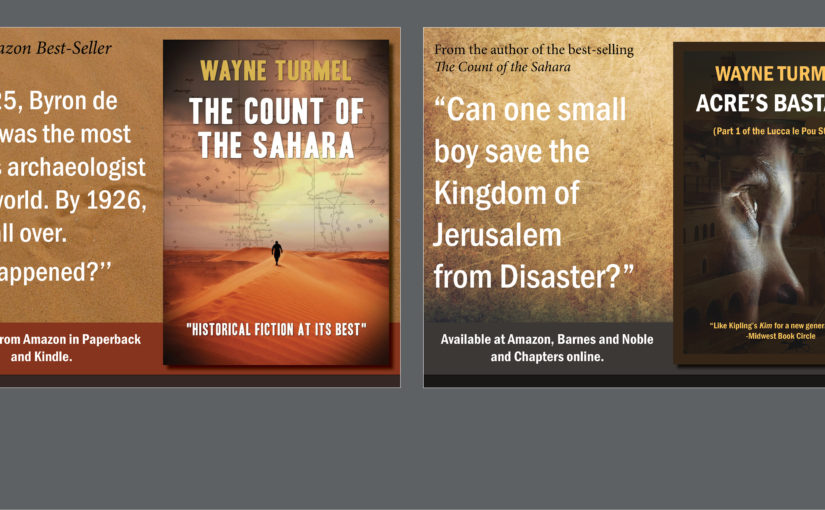
If you’ve read any of my fiction, you’ll see that a surprising percentage is written in the first person. That’s a lot of “me” I grant you, and that’s a mixed blessing. Of course, I’m not really a 10 year old half-caste kid in the 12th Century (Lucca the Louse in Acre’s Bastard) nor a first generation German-American from 1920s Milwaukee (Willie Braun in The Count of the Sahara) and I’m certainly not a 1950s Korean Vet car salesman (my latest short story on Scriggler. Check it out.)
It’s really not an ego problem. I don’t set out to be the center of attention (shut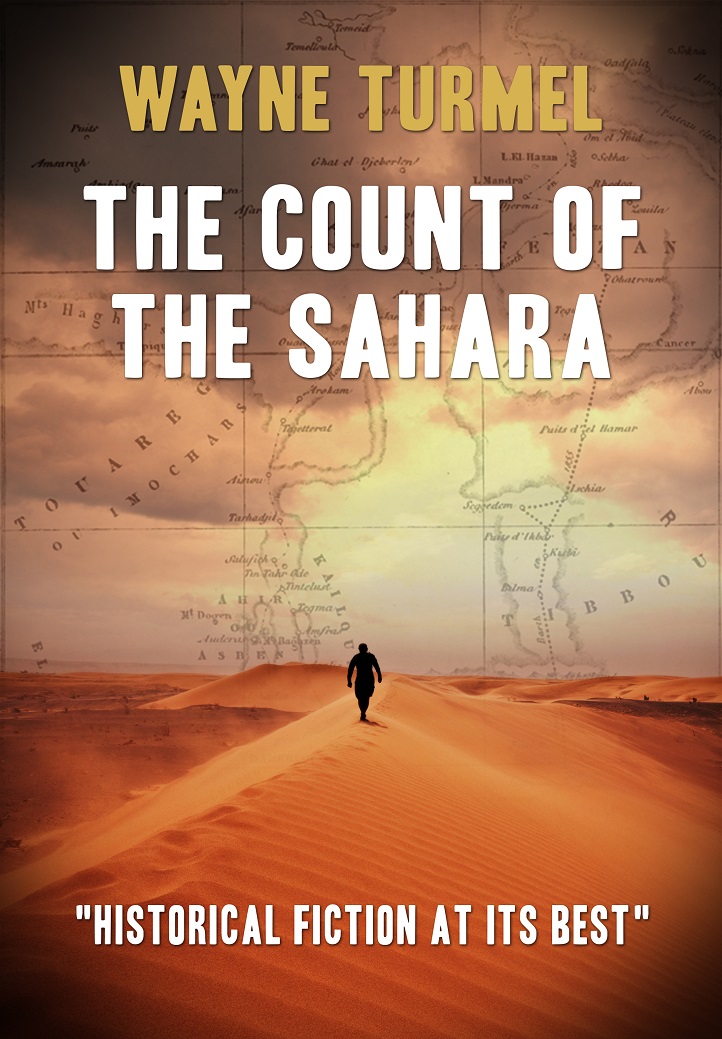 up!). In fact, I never noticed I was actually writing so much in that voice until someone in my writer’s group pointed out that the same curmudgeonly middle-aged loser keeps showing up in a lot of my stories. For the record, he’s not the same guy (the anti-social railbird in On the Rail, and the eaves-dropping alcoholic in Through the Arbor Vitae,) but I suspect they’re closely related and may have gone to the same middle school.
They’re also not me, although my own appreciation for cigars makes it easy to describe a lazy smoke on the deck and my experience as a comedian and professional speaker certainly influenced the way I captured De Prorok’s barnstorming tours. But just because I use “me” and “I” doesn’t mean they’re my thoughts and actions. In fact, I’ve been judged pretty harshly by the thoughts and comments of some of my characters. What can I tell you, people used different words to describe people 75 years ago. I sometimes blush writing them. (My work should have a disclaimer that the opinions of the characters are not necessarily those of the management.)
So why do I do it? Truthfully, it’s an accident.
I always start with a character who is another person. Ramon Pachecho is a Puerto Rican boxer I invented, and I was able to maintain that distance throughout the story. Lucca Le Peu was born when I saw a news picture of a Syrian boy in the back of an ambulance after his village was bombed. Willie was a simple way to narrate the story of Byron de Prorok from a neutral standpoint—I needed an innocent observer. Somehow, they go from “the old guy at the cigar lounge” to “I”. How come?
First person allows me some advantages as a writer. One of the comments I got from “Arbor Vitae” when it posted on Scriggler was from a fellow author who appreciated the way I do interior monologue. That only happens because I put myself so deeply in the character’s place. Inevitably it starts with “why does he/she do this?” and eventually becomes “if it were me, why would I act that way?” At that point, it’s just easier to capture those thoughts and expressions in their voice. Maybe I’m just not that good a writer.
First person for me is an exercise in empathy. I was taught early to put myself in the other person’s shoes (fortunately I have small feet). While I’m wide open to charges of “cultural appropriation” or telling stories that aren’t mine to tell (I’ll pour the anejo and we’ll have it out in person,) I also believe it gives me deeper insight into character. That’s where you find the humor, the emotion and the tension. Something is far more dramatic if it happens to you than to someone else. Watching someone’s horse die isn’t the same as having your own pet’s life drain away in front of your eyes. (Spoiler alert?)
For me, insight comes from within. Even going back to my standup days, I was more of a commentator than an observer. Some comics can neutrally observe from outside (Jerry Seinfeld is the ultimate example.) I usually found the humor in how I react and process something, and hoped the audience would relate. I’ve never taken an old man to a cockfight, but I suspect if I did I’d sound a lot like the narrator in Tio Fernando’s Field Trip. It’s just funnier.
I don’t set out to write everything in first person, it just usually works out that way. I hope you check out a couple of the examples and keep reading.
![The Sons of Hernan Garcia by [Ameringer, Charles]](https://images-na.ssl-images-amazon.com/images/I/41wHiDtXpvL.jpg)

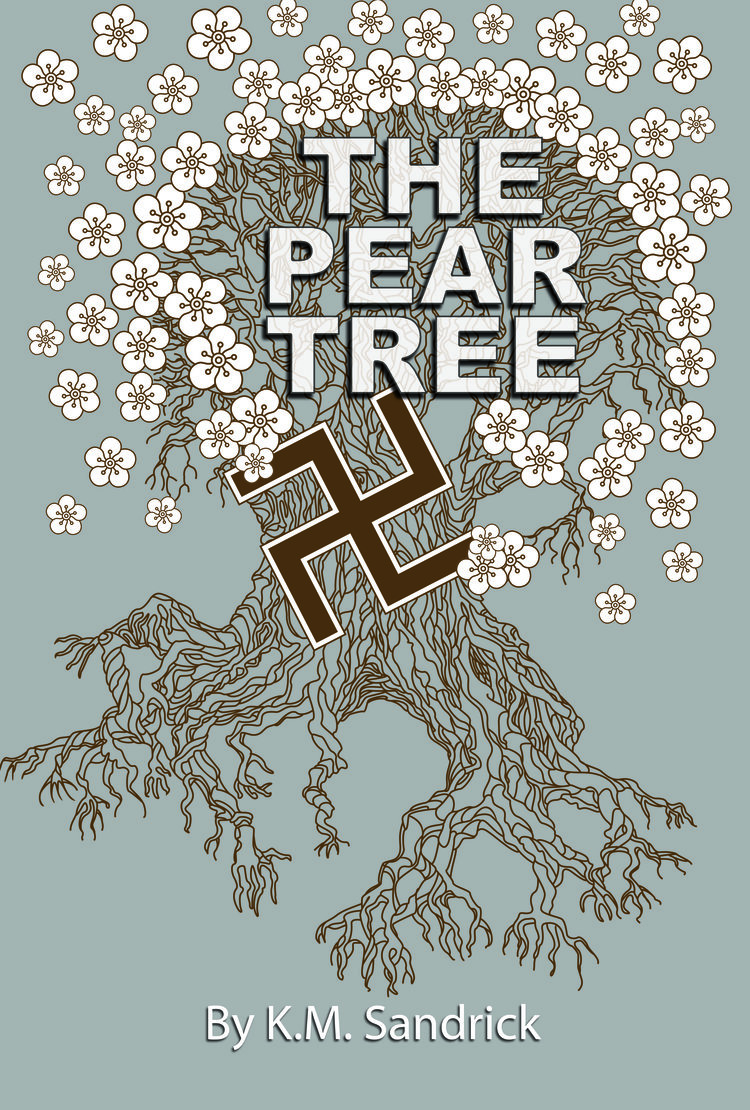 No area of history is as popular in historical fiction and film as the Second World War. Oddly, it’s one I don’t read a lot about anymore, maybe because of overload when I was younger. I mean, I get it…Nazis = bad, battles in the South Pacific were brutal, and I’ve seen all the Holocaust movies I ever need to see to get the point…. yet occasionally you get a new story, one you didn’t already know. Such is the case with
  I am a long-time freelance journalist who specializes in clinical medicine, hospital finance and governance.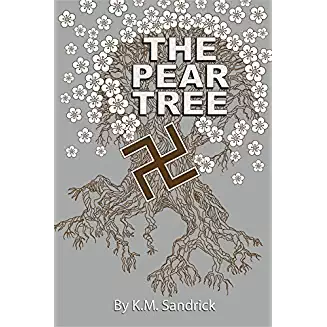
![The Pear Tree by [Sandrick, Karen M]](https://images-na.ssl-images-amazon.com/images/I/61nkTIV9eFL.jpg)

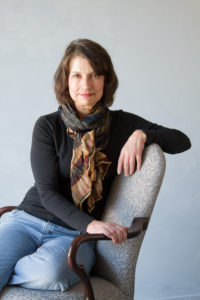
 I’m an American ex-pat living out her Grizzly Adams dream in the Austrian Alps. I don’t have a bear, but I do have a dog, a cat, a whole hell of a lot of fat chickadees and a very mild-mannered husband with whom I laugh every day. I grew up in Minneapolis, Minnesota, attended Rocky Mountain College in Billings, Montana and studied to become a veterinarian.
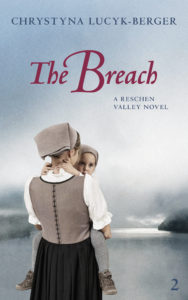
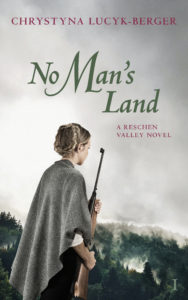 from 1920–1950. The Breach, which is part 2, releases March 15th and is on preorder now.
 You will find me on Goodreads a lot (Chrystyna Lucyk-Berger). I’m doing a Kindle giveaway of
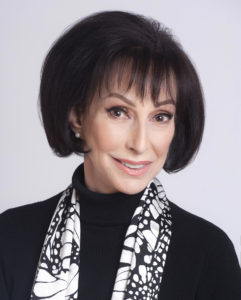
  Milana Marsenich has an M.Ed. In Mental Health Counseling from Montana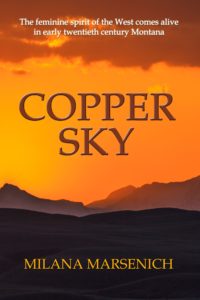
 What is it about that time period you found so fascinating?

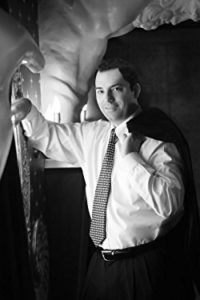 I’m from Colombia, so English, technically, is not my first language. I work developing medical software and have been doing that for over thirteen years now. My academic background is in engineering, but with a minor in history. History has always fascinated me, and I hope that my books showcase that. But, you’ll notice that there is no literary background. Nor do any of my family members have literary backgrounds; they are all engineers. But, I was always a good storyteller. I could make up stories during long road trips and keep everybody entertained. Teachers often told me I had a future in writing. But it would be decades before I took the fateful plunge into publishing. Having an exciting tale to tell helped, too.
 history, (approximately 1460-1600 for us Westerners, give or take) and as such, it is chaotic. Think of it as the equivalent of the Thirty Years War in Europe. When people imagine the samurai, they have an ideal of noble warriors following the Bushido. But in reality, the foundations of that discipline were often ignored during the Sengoku period; instead, it was refined and perfected into what is known today during the peaceful years of the later Tokugawa dynasty where warfare was near non-existent. Furthermore, if you read about Oda Nobunaga’s early struggles, you’ll find that much of his early conflicts were with rebellious Warrior Monk sects rather than other samurai clans. It’s also quite interesting that Oda Nobunaga, probably one of the most renowned samurai ever, was a pioneer in gun tactics.