Before Anne Rice and Stephanie Meyer ruined vampires for everyone, I was a big Dracula fan. As a writer, I loved the backstories of how tales like Frankenstein and Dracula came to be written. So when I heard about Calvin Cherry’s new novel, Stoker, about, duh, Bram Stoker I was in.
So what’s the Calvin Cherry story?
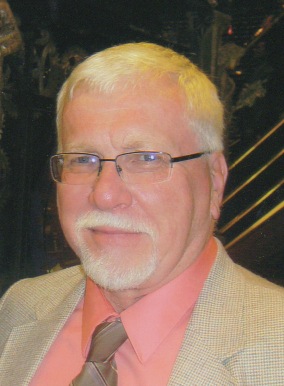
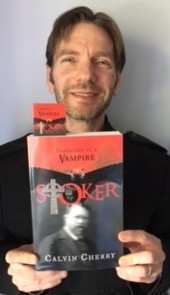 I am a 48-year-old native Georgian and a retired sailor. I work as a Business Systems Analyst for a major insurance company in Atlanta and have a 15-year-old son named Jacob. He is already 7 inches taller than me and six sizes up from my shoe size! My spouse, Kevin, is from Tennessee and shares my passion for music, traveling, reading and writing. I have seen Elton John 27 times in my life and about to make it 28 in November. English and History were my favorite subjects in school, so I guess it did not come as a surprise that one Christmas Santa left me four graphic novels under my tree when I turned 7: Moby Dick by Herman Melville, Dr. Jeckyll & Mr. Hyde by Robert Louis Stevenson, Frankenstein by Mary Shelly, and Dracula by Bram Stoker. I have been taking a bite out of Dracula ever since! After 11 years of intense research and crafting, my debut historical fiction novel Stoker: Evolution of a Vampire was published by Page Publishing this past February.
What’s the basic plot of Stoker?
My novel can be considered a prequel to Dracula. It is mainly set in Victorian London and Romania in the late 1800s, during the time period Bram wrote Dracula. There are also flashbacks to Bram’s youth and when Vlad Dracula III reigned Wallachia. Bram is the central character in my novel, along with supporting roles by Bram’s wife, Florence, Bram’s son, Noel, and Bram’s employer, Sir Henry Irving.
Many of the events in my novel are factual as I used Bram’s own diaries, reference materials and notes on Dracula as material woven into my plot. It is written in Bram’s own writing style, which is vastly different from my own and was a great challenge for me. I listened to nonstop audio books written in this time period the entire 11 years I worked on my novel as I wanted the style and language to be as authentic to the period as possible. Though my book is classified as historical fiction, there are elements of gothic horror, mystery, crime and suspense that yields a 576 page thriller.
I have a thing for Victorian England, but what’s your excuse? What is it about the time or subject you found so interesting?
Victorian England has been the time period for numerous fantastic and morbid ![STOKER by [Cherry, Calvin]](https://images-na.ssl-images-amazon.com/images/I/41YIcrv51kL.jpg) fictional and historical tales from Sherlock Holmes to Jack the Ripper. My fascination with this period began with reading Dracula as a child and then carried over into adult hood with favorites Charles Dickens, Oscar Wilde, and Lewis Carroll. Though I have been quoted as saying countless times that Dracula is the most frightening phycological tale ever written, around 2004 I began reading everything I could on Bram Stoker. Until then, there had been few biographies written about Bram – a fact in itself which I found interesting. Today, there are close to a dozen. With each additional book I read, it was astonishing and fascinating to discover his life was worthy of a novel. And in 2006 I outlined my book, incorporating many situations, milestones and events in his life.
fictional and historical tales from Sherlock Holmes to Jack the Ripper. My fascination with this period began with reading Dracula as a child and then carried over into adult hood with favorites Charles Dickens, Oscar Wilde, and Lewis Carroll. Though I have been quoted as saying countless times that Dracula is the most frightening phycological tale ever written, around 2004 I began reading everything I could on Bram Stoker. Until then, there had been few biographies written about Bram – a fact in itself which I found interesting. Today, there are close to a dozen. With each additional book I read, it was astonishing and fascinating to discover his life was worthy of a novel. And in 2006 I outlined my book, incorporating many situations, milestones and events in his life.
Without giving away spoilers, what’s your favorite scene in the book. (Don’t deny it, we all have one)
I believe my favorite scene in Stoker is about two-thirds into the plot when Bram is finally on a train back home. His watch had stopped shortly after he began his journey abroad, so he asks someone for the time. The answer he gets back is more than what he expected!
Where can we learn more about your book?
My novel can be found at Amazon, Barnes & Noble, Books-a-Million. Here is a link to my Page Publishing page which contains links to all the national retailers that are carrying Stoker:
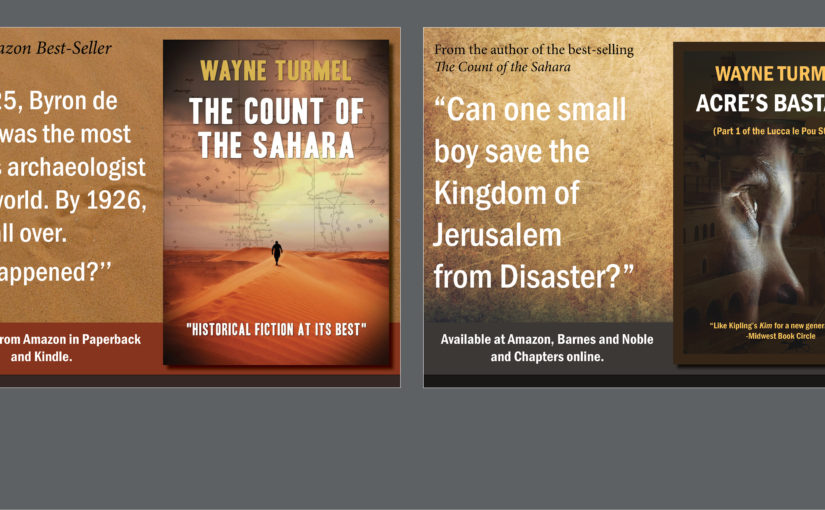
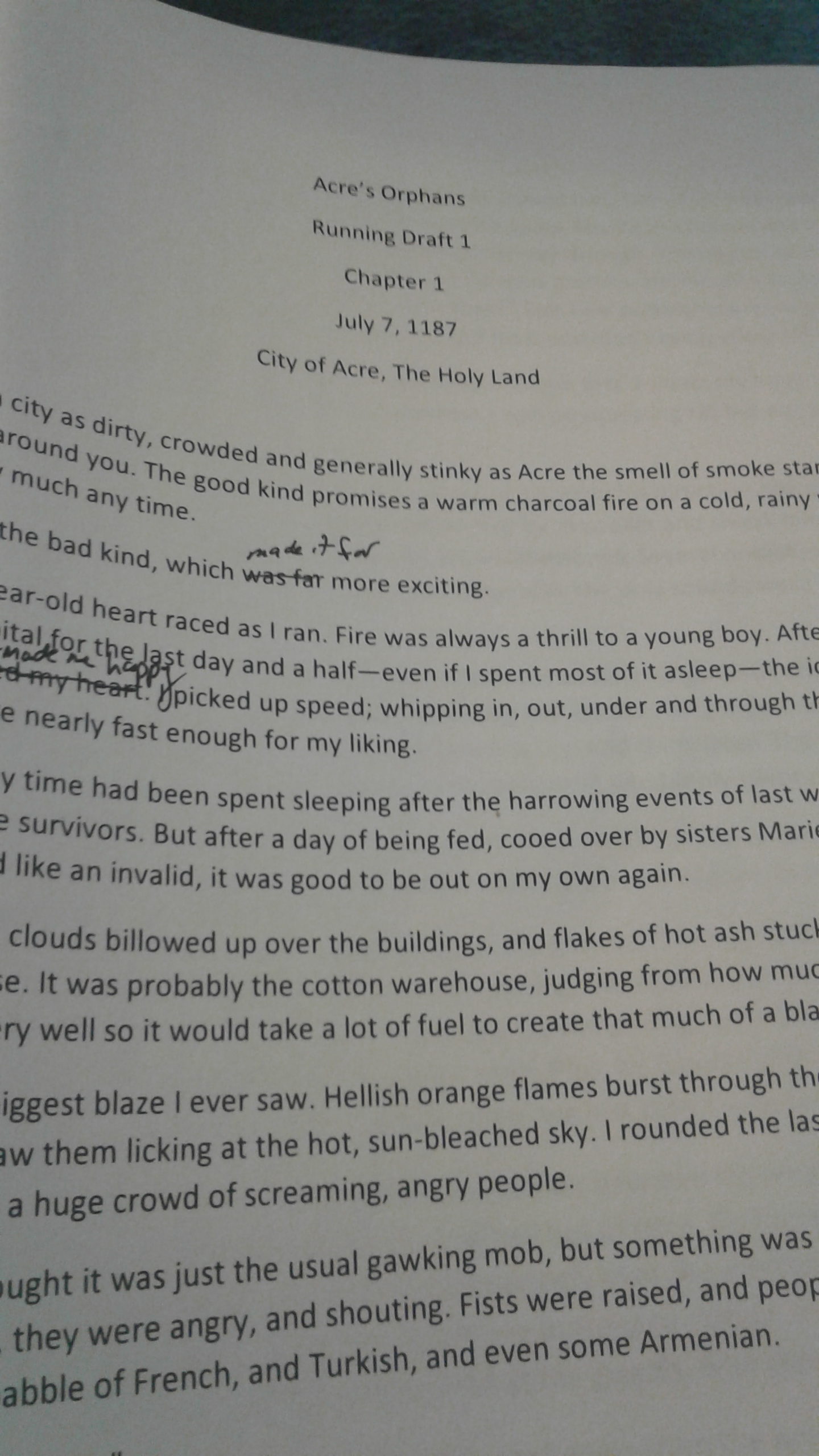
Subscribe to my newsletter and get a chance to win a signed paperback copy of Acre’s Bastard. Each month you’ll receive links to interviews with great authors, news about upcoming events and previews of my work in progress, Acre’s Orphans. Look at the bottom left of the page for the sign-up sheet. No spam, just once a month updates and a chance to learn about great new Historical Fiction of all types from around the world.






![The Sons of Hernan Garcia by [Ameringer, Charles]](https://images-na.ssl-images-amazon.com/images/I/41wHiDtXpvL.jpg)