Does Historical Fiction Include Fantasy?

The test of a first-rate intelligence is the ability to hold two opposed ideas in the mind at the same time, and still retain the ability to function.- F Scott Fitgerald.

Yeah, I’m a freakin’ genius.  I love historical fiction that is researched and full of interesting details. I also love fantasy (yes, I’m a sword and sorcery geek, sue me.) These two ideas come together, and often seem to clash. A good case in point is the sub-genre called “Arthurian fiction.”

From my earliest memories, the story of Arthur and the Knights of the Round Table have thrilled me.  But was Arthur an actual historical character? If so, what about Merlin, who was a magician, after all? This has led to a schism between those who love “Arthurian Fantasy” and a more factual, history-based approach. Two of my favorite current writers take opposite approaches to the same source material.

Jack Whyte, the author of The Camulod Chronicles painstakingly researches his

Was Arthur real? Jack Whyte’s carefully researched books are an amazing take on the story you think you know.

books and places them in a gritty, dark period between the fall of the Roman empire, and the beginnings of that bizarre mix of Celts and Saxons that created pre-Norman Britain. I love his stuff: dark, philosophical, as close to “realistic” as something lost in the fog of time could be. If you’re not reading him, you should be. Just saying.

Lavinia Collins, on the other hand, writes Arthurian fantasy full of magic, sex and a Celtic/feminist approach. Here’s the thing, though. It’s not like she doesn’t know her history. The background of the stories is well researched and true to the period. She just chooses
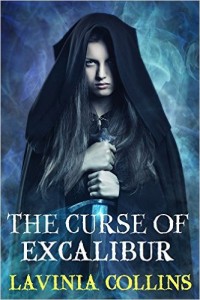
Was Arthur's sword created by magic? Makes a good story, doesn't it?
Was Arthur’s sword created by magic? Makes a good story, doesn’t it?

to use the known history of the time as the starting point to spin a great yarn. Does that mean it’s not “historical fiction?” She has written a wonderful blog post about that dilemma in fact. Click here to read it.

A case in point is where Excalibur came from. Jack says it was forged from the metal that came  from a meteorite, so it had unusual properties. According to Lavinia, it was forged by a woman blessed with magic in the caves under Avalon.

Is either “true?” Does it matter? I prefer to just enjoy them both. How about you?

Byron de Prorok and Why I Dig History

Byron de Prorok, brilliant speaker, social climber and pathological liar, and the main character in my new novel, coming out in August, 2015.

Friends often wonder why I’m a history freak, and why my favorite stories are based in real times and places (albeit long ago and far away). The fact is, that real people are at least as interesting, maybe moreso, than anyone you could invent. Case in point is the main character in my  novel, “The Count of the Sahara.”  (Note, the title has changed just a week prior to publication!)

Here’s part of what Wikipedia had to say about Byron de Prorok:

During the later 1920s and early 1930s, Prorok undertook a series of expeditions in Africa of dubious scientific value, pursuing ancient legends and eventually came to believe he had found evidence that proved Atlantis lay in North Africa, the true location of the fabled Biblical land of Ophir and what he supposed were the ruins of an ancient temple where Alexander the Great “became a god”. In addition to these tremendous ‘discoveries’ he also claimed to be a member of the Order of the Holy Sepulchre,  the Royal Archaeological Institute and The Royal Geographical Society.

His numerous critics say that this “count” Byron de Prorok was neither a real count nor an archaeologist, was expelled from The Royal Geographical Society (allegedly in 1932), who had “a vivid imagination” and “was given to gross exaggeration”. He was, however, an active member of the Adventurers Club of New York.

How do you not find this guy fascinating? I mean, how many archaeologists have their own IMDB page? In fact, two of them, one under his birth name.

The story tells of his most famous expedition in 1925, which was splashed all over the front pages of the New York Times, as well as his fall from grace the following winter in the snows of the Midwest. There’s bootleg hooch, stolen gems and Pinkertons, as well as warlike Tuaregs, desert heat and camels.

From time to time I’ll post other tidbits about Byron and other folks I find fascinating. Meanwhile, let me know if you’d like a review copy of “The Count of the Sahara”, coming soon from TheBookFolks.com.