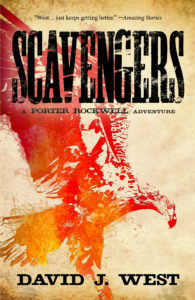
As a kid, I remember watching an episode of “Death Valley Days,” (It was a repeat, i’m not that old) where they talked about the legend of Orrin Porter Rockwell. He was-depending on who you ask- either a bad-ass enforcer and assassin for Brigham Young or a lawman with almost mystical powers. Either way, with his long hair, mystical religion and supposed bullet-proof skin, he was pretty much the stuff of legend.
David J. West writes dark fantasy and weird westerns because the voices in his head won’t quiet until someone else can hear them. He is a great fan of sword & sorcery, ghosts and lost ruins, so of course he lives in Utah with his wife and children.
What’s the story about in a nutshell?
Scavengers is an adventure featuring an infamous, gunslinger named Orrin Porter Rockwell who had a near supernatural aura hanging over him. Supposedly he was blessed by the Mormon prophet Joseph Smith, that if he never cut his hair, he could not be harmed by either bullet or blade; and for someone who was in the thick of things throughout the old west – that blessing remarkably came true. He was never shot nor stabbed though plenty of people tried on numerous occasions.
Rockwell is on a short list of real-life people I’d love to write novels about. The list starts with Byron de Prorok (from Count of the Sahara) but includes people like Kate Warne, Richard Francis Burton, and Eugene Francois Vidocq. Why did Rockwell fascinate you so darned much?
I was fascinated with this real person and since no one had written any adventures featuring him to my satisfaction I set out to do some of my own. I found him to be the perfect character for the weird west genre, where I can play around a little with spooks and legends and such.
There were a lot of funny scenes, and some good dialogue. What was your favorite scene to write?
A favorite scene? That’s a hard one but perhaps when Porter has his horse leap a wide chasm while pursued by bandits. I did base that on a real place in the San Rafael swell where a cowboy did leap the divide on a bet.
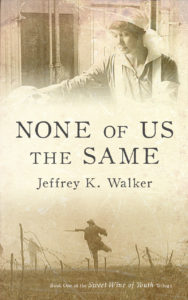
Every historical fiction fan has their pet periods. I will confess (and this is probably the Canadian in me- it was a seminal event in Canadian history and we were literally knee deep in it pretty much from day one. Plus, find one current world mess that doesn’t intersect with it somewhere) the First World War is a real obsession. So, when I find other writers working in that period it’s a happy day in my world. Enter Jeffrey K Walker, and his new novel, “None of Us the Same.”
Jeffrey is an impressive cat, and I’m looking forward to reading the book.
Jeffrey K Walker, author of the Sweet Wine of Youth trilogy and None of Us the Same.
JEFFREY K. WALKER is a Midwesterner, born in what was once the Glass Container Capital of the World. A retired military officer, he served in Bosnia and Afghanistan, planned the Kosovo air campaign and ran a State Department program in Baghdad. He’s been shelled, rocketed and sniped by various groups, all with bad aim. He’s lived in ten states and three foreign countries, managing to get degrees from Harvard and Georgetown along the way. An attorney and professor, he taught legal history at Georgetown, law of war at William & Mary and criminal and international law while an assistant dean at St. John’s. He’s been a contributor on NPR and a speaker at federal judicial conferences. He dotes on his wife, with whom he lives in Virginia, and his children, who are spread across the United States. Jeffrey has never been beaten at Whack-a-Mole.
I’ll put my doting on my wife up against his any day of the year. Other than that, he is just a better man than me in pretty much every way, which is incredibly annoying. That said, I still summoned enough self-esteem to ask him some questions.
In a nutshell, what’s the book about?
The book tracks the experiences during and after the First World War of three main characters. Deirdre Brannigan, who adds new meaning to ‘headstrong,’ is an Irish nurse from working-class Dublin, while affable Jack Oakley and complicated Will Parsons are childhood pals from St. John’s who enlist in the Newfoundland Regiment the day it’s formed in August, 1914. Deirdre joins a military nursing service after her father and brother hit the beach at Gallipoli. All three of their paths cross at Deirdre’s field hospital the first day of the Somme. Each of them suffers terrible and varied trauma from the war. The second half of the book returns to Newfoundland as they come to a reckoning with their self-pity, addictions, and emotional devastation. A big part of the healing process involves overlapping romantic and business relationships, not all of them entirely legal.
What is it about that time period or character that intrigued you and motivated you to write about it?
Well, Deirdre Brannigan is, in hindsight, an unconscious and dead-on composite of all the strong Irish-American women I grew up with—mother, aunts, grandmother, great aunts and cousins. Write what you know, right? I’ve been attracted to the First World War since I was a kid, much more so than World War II, which may sound odd coming from an American. The Great War was the first full-blown industrialized conflict fought by the world’s greatest economic powers with enormous conscript armies and rapidly evolving technologies. What no one really foresaw was the unimaginable level of violence, that if we could mass produce Model T’s and light bulbs, we could also mass produce death and destruction. Since at its heart None of Us the Same is about how war changes everyone and everything, World War I dovetailed nicely in my mind. Of course it’s also the centenary of the War, which we Americans just started commemorating 6 April 2017, being Johnny-come-lately as we were.
The other reason is, well, because I’m a coward. I wanted to write about the very timely subject of returning from the devastation of war—think Iraq and Afghanistan—but couldn’t quite bring myself to set the story present day. Besides the current over-politicized narrative around those two ongoing conflicts, I got the creeping sense I was appropriating the stories of these young men and women much too soon after the fact. As a retired Air Force officer, I was keenly sensitive to this. On the other hand, this also makes None of Us the Same historical fiction that deals with very contemporary issues.
Without giving away spoilers, what’s your favorite scene or event in the book?
Wow, tough question—and I know every writer has that same reaction, having created so many darlings, after all. I’m partial to the very first scene, set in Deirdre’s charity hospital where she’s dealing with a young trainee’s rather unique problem with, shall we say, man parts. The scene is interrupted by the rising peal of church bells all across Dublin as the declaration of war is announced. There are three scenes throughout the book set at a lighthouse kept by Jack’s uncle that were a guilty pleasure to write, the Newfoundland seacoast being so remarkably beautiful. There’s a scene early in the book when the pals meet their new company sergeant-major that’s a wry twist on the crusty old drill sergeant and all of my early readers loved Sergeant-Major Pilmore. Later in the book, there’s a fine (and pivotal) scene along the waterfront during “fish making”—the production of salt cod which was the economic mainstay of Newfoundland until the fisheries collapsed in 1992, ending 500 years of tradition.
But if I had to pick, I’d say my favorite scene is Will’s experience on the first day of the Somme. You can’t make up a more atrocious battle scene than the reality of the Somme on 1 July 1917. The British had 20,000 men killed just that morning, the Newfoundland Regiment suffering over 90% dead, wounded or missing. It’s almost unimaginable at a macro level, so I tried to show the abject horror of that day through one young man’s experience. And it’s plenty horrible, believe me. (If I can butt in, I’d put it up against the battle of Passchendaele where nearly half the dead drowned in mud…. but why pick nits?)
Where can people find you and your book?
I’d welcome them first and foremost at jeffreykwalker.com. Sign up to receive my latest news and I’ll happily send you a fun piece on sayings that originated during the Great War. Many fans have read it and said, “I didn’t know that!”
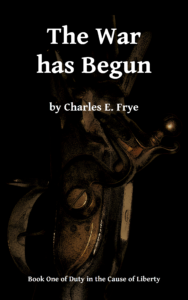
The American Revolution is truly one of the seminal events in world history, and while I get insane amounts of fun tweaking people about being a Loyalist and seeing it from the Canadian side, there’s no doubt of its importance. Oh, and the right side won. That leads us to “The War has Begun,” by Charles E Frye, the first book in his quadrology. (Is that a thing? Let’s assume it is)
So what’s the Charlie Frye story?
author and polymath Charles E Frye, author of The War has Begun
I am a geographer, cartographer, information scientist, and U.S. Army veteran. However, I studied architecture for three years prior to discovering geography, and I am still fascinated with architectural history and the design of the built environment. I have read books by the dozens every year since I could read. For fun, I still read fantasy and historical fiction. I decided I wanted to be a professional baseball player when I was five years old, and while I grew out of that, I have always enjoyed watching baseball, and am an Angels fan now. For the past fifteen years, my hobbies have included genealogy, reading about the history of the American Revolutionary War, and researching Isaac Frye’s story. I have been a member of the Sons of the American Revolution (SAR) for twelve years, and a member of George Washington’s Lifeguard, which the unit my chapter portrays in re-enactments, living history events, and parades—it definitely helped to know how to walk a mile in those shoes, including how to fire a musket and study the manual of arms. I was born in Ohio, and spent significant time in Missouri and Kansas. I am married and have three sons and a daughter, and for twenty-three years have lived and worked in southern California.
Re-enactors fascinate me (and freak me out a little) because of the depth of their passion for the topic. What is the story of The War Has Begun (besides the obvious, that the war had begun?)
The War has Begun is the first of four books about Major Isaac Frye in the American Revolution. He is a farmer, husband, father, and minuteman from Wilton, NH. So, why write about him? Wasn’t everybody a farmer and minuteman in those days? In New Hampshire, it was roughly one in five men. What makes Isaac different is that he served for the entire war as an officer, starting on day one, through to being in the last unit disbanded. No one else from New Hampshire did that, and nobody from any other colony, other than Massachusetts could have. To me, that was a story worth learning about and telling.
I called the series of four books Duty in the Cause of Liberty because as a veteran I know a little of what that means, but Isaac Frye and the men he served with fought to establish something that none of them could describe fully, even while their lives were at stake as they fought for it. As I watched our country go about its daily business remaining largely oblivious to the recent wars, I wondered how many of those people would sacrifice anything if their country called upon them. By the time I completed my research on Isaac, and saw the magnitude of what he, his family, and his town sacrificed; I felt strongly compelled to tell his story and hopefully convey some of why he may have done what he did. The story begins as he responds immediately to the Lexington and Concord alarm on April 19, 1775 and serves as an officer in the American army. His descendant’s oral history oral history included his words as he left: “The war has begun, I must be going.” Isaac fights in the Battle of Breeds Hill, and after the siege of Boston ends, marches to New York City, where he stays only a short time before ordered to Quebec. After retreating with the sick and nearly starving army from Quebec, his regiment is one of several that establish and construct Camp Independence during the latter months of 1776. The next book in the series will take up the story starting in early 1777.
What is it about this particular story that appealed to you?
As I started the research, I was stunned to find so many records were preserved, particularly compared the next hundred and fifty years. In part, it was due to Isaac being an officer, which meant he was named in many records pertaining to his regiments, and responsible for producing some of those records. I am a geographer and cartographer, so it was second nature for me to decide to map Isaac’s timeline during the war using a geographic information system (GIS). This allowed me to organize hundreds of records pinpointing Isaac’s location nearly a thousand times.
To make that geographic timeline, I needed a detailed map of America from 1775 to 1784. I spent several years compiling that from primary source documents—this allowed me to locate Isaac. Modern maps would not work because we have changed the names of towns and landforms, dammed rivers, drained swamps, and built highways and railroads. I needed a map that showed all the places that mattered during the Revolutionary War. The map is available online, and shows the path Isaac took during this book: https://dutyinthecauseofliberty.wordpress.com/2017/04/20/using-gis-to-research-isaac-frye/
All that research and time, what’s your favorite scene in the book?
I have always liked reading battle scenes, so the Battle of Bunker Hill is my “default” choice. However, the scenes near the end about Josiah Parker, the son of Isaac’s neighbor, were the most satisfying to write in terms of what motivated me to write this book. Those scenes stem from a letter Isaac’s wife Elizabeth wrote to him in the fall of 1776. It took both genealogical research and a little bit of luck to find a corroborating account that brought all the details together. That letter, combined with determining who Isaac’s neighbors were, held the keys to understanding some of how Wilton suffered and operated as a community during the war.
Where can people learn more about the book series and your work?
While exact definitions are hard to come by, historical fiction has to have taken place in the past. Most people generally accept a generation ago as the cut off (beware the upcoming flood of 90s nostalgia!). This means that the years of my childhood are now considered history. My first car ( a 1970 Chevy Nova) is officially an antique. Which is a way of saying that if you don’t think of the 1960s when you think HF, well get used to it. I’m trying.
What I love about reading stories that take place in the past is trying to get an insight into what and how they thought. I try not to judge, or impose modern attitudes to people then, just find out their stories. And that, in a way-too-long introduction, brings us to Genta Sebastian and her tale of female sexuality and empowerment, When Butches Cry.
Okay, so what’s the Genta Sebastian story?
Author Genta Sebastian
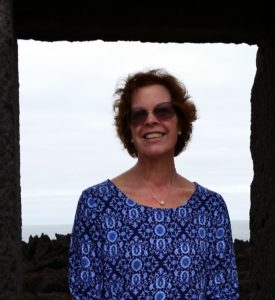
I am a multiple award-winning author with a backlist including LGBT YA novels and lesfic science fiction, erotica, and historical romance. Living in the thriving art center of the Twin Cities, I’m a professional storyteller with experience entertaining audiences of all ages and most proclivities. A traveler by nature, I have toured the continental US entertaining folks from all walks of life. My work has been compared to authors John Steinbeck and S.E. Hinton, mostly I believe, because I love the complexity of people. I give my characters foolishness and failings as readily as self-reliance and success.
Lesfic science fiction is a thing? Niches get nichier, which is why categories are so limiting I suppose. I know I find the same thing when I try to sell Acre’s Bastard to people who don’t think they care about the Crusades. Which (ever notice that when someone says “long story short,” it’s already too late?) brings us to this story which has a unique historical setting. What’s it about?
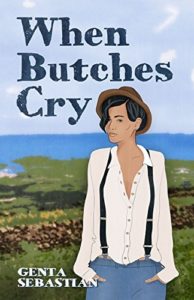
When Butches Cry takes place in the middle of the twentieth century when a twist of nature creates an unusually high number of young lesbians on a Portuguese island in the Atlantic Ocean. Whilst this might sound exciting to some of the men reading this, it is not as amorous as it first sounds. If you’re looking for that sort of thing, maybe you should watch lesbian adults videos online instead. The Portuguese island in question is Terceira, where Americans are establishing an Air Force/naval base among a local population of farmers and fishermen, is paved with cobblestone roads connecting isolated villas that have existed for five hundred years. Traf and her merry band of lesbians, calling themselves Troublemakers, take on the outdated conventions of friends and families, community gossips, brutal bullies, Catholic priests and even the US military, seeking to define themselves as modern women. The young women learn to deal with love, friendship, sex, and the power of women working together who never give up, but not one is prepared When Butches Cry.
A lot of people find their stories in family connections. What is it about this time period, and especially this uncommon location, that appealed to you?
Well, completely by coincidence mind you, my wife was born and raised on Terceira during the mid-twentieth century. Over our lifetime together, she’s told me stories about this fascinating place and the people she knew and loved then. Some of her tales are tragic, others funnier than hell. What else could I do but write a book making the shadows of real people and events live again?
Being the real life Trafulha’s wife brings me into the familial circle whenever we visit the Azores islands of her birth. Although the twenty-first century has marched through Terceira with all the miracles of modern technology, there’s a unique mindset to people who live on the same hundred and fifty square miles where the bones of their ancestors have been buried for centuries. Modern Azoreans are leaping into the future and I wanted to capture a unique period of change spurred, not incidentally, by an unusually large LGBT segment of their society. What happened there and then is unlike any other situation I’ve ever heard of, and contributed to a diaspora that changed the world. The courage of the Maria Rapaz in the face of incredible odds cannot be scattered on the winds of time.
Without spoilers, any favorite scenes?
Oh, I have so many. I laugh over Traf’s baptism of the whorehouse, cry over the broken bar, shudder in the graveyard, and cheer on chuckies! Crucifixion causes chuckles, letters bring hope and despair, fumbling first kisses make me sigh every time, and I fume at the renowned bull-fighter’s misogyny. The stories in When Butches Cry are as varied as the characters in them. There – absolutely no spoilers at all.
Where can we learn more about you and your work?
Look for me on Facebook. I spend way too much time there, unless I’m busy writing when I’m scarcer than hen’s teeth. I’m also on Twitter. @gentasebastian
You can read about my books and find links to buy them on Goodreads and Amazon.
My blog, Authorially Yours, Genta Sebastian, is also a good place to look for news about my work as well as five years of writing advice, thoughts on LGBT issues, and the occasional rant.
As over-exposed as much of WWII stories can be, I’m a sucker for the French Resistance. It’s an underdog story, it’s spy stuff, it’s got hot French girls (quick, name a movie where the French Resistance fighter isn’t a total babe… thought so. Apparently there was a dress code or something), what’s not to like?
It seems, Pamela Boles Eglinski agrees. Her third novel, The Third Knife, is set in the French Riviera in 1943… well, I’ll introduce her and let her tell you….
So who’s Pamela Eglinski when she’s home?
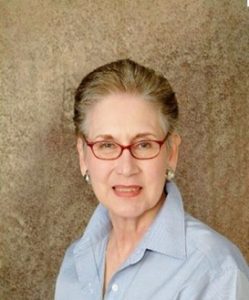
My life is a little more sedate than that of my characters.
You may view my biography, while cruising though my books on Author Central. I’m a founding member of Read Local: Kansas City, Write Brain Trust, and a contributing author to The Good Life France, an on-line magazine for ex-pats. I am also a proud member of the Alliance of Independent Authors. The Third Knife has propelled me into the status of best-selling international author, and earned the novel a lovely little golden tag that says, “best seller.” I count my “Amazon blessings.”
Show off 🙂 So, what’s the book about?
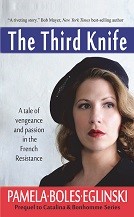
The Third Knife is an intimate story of young men and women who fought in the French Resistance during WWII. It’s the tale of vengeance and passion, lives lost and saved, and the making of heroes and martyrs.
I’ve always been intrigued by strong women—especially under fire. I created a male/female spy team in my second and third novels [Return of the French Blue, and She Rides with Genghis Khan], and wanted to tell their back-story. I needed to answer this question: what drove my contemporary characters to follow in their parent’s path? Today, my characters take on global terrorism, while their parents and grandparents fought another kind of terrorism—the German Gestapo.
So, I asked myself, what better back-story than the French Resistance? And so, into the chaos of war enters a young woman, Charlotte Beaumont. She is sent by her parents from Turin to Nice—with the hope of finding refuge with her aunt. She carries a family heirloom—a diamond necklace cut from the legendary French Blue.
Why was the time-period intriguing?
The novel begins in 1943. In the chaos of war, Charlotte is unable to find her aunt, and in desperation searches for a childhood friend, Edouard Bonhomme. He now leads a band of French Maquis—a subset of the Resistance. She embraces their mission . . . one of espionage, subterfuge, and guerilla warfare. Set on the French Riviera, this rag-tag team of spies sets out to defeat the Germans—focusing on the Gestapo.
I know we love all our children equally, but what’s your favorite scene in the book?
In researching the novel, I discovered the French village of Vercors—a WWII refuge for Maquis, in the Alps near the Italian border. There is a fabulous PBS series, Wish Me Luck, which depicts what is now a famous and heroic battle between the French Resistance and the Germans. I enjoyed the series so much I watched it half a dozen times. Great characters, true to life, and filled with the mission and passion to defeat Hitler. When writing my novel, I chose to focus on the battle of Vercors—a battle that epitomized love of country.
Where can readers learn more about you and your books?
Readers will gain an admiration of France, the resilience of its people, and deep insight into WWII and the Resistance movement—in both the cities and countryside. The e-book is available on Amazon and the paperback may be found on Createspace.
Please join me on: FacebookGoodreads New website under construction!
If you buy and read The Third Knife, kindly leave a review. Thank you in advance, and enjoy the story of the brave souls who fought and won the war against German oppression.
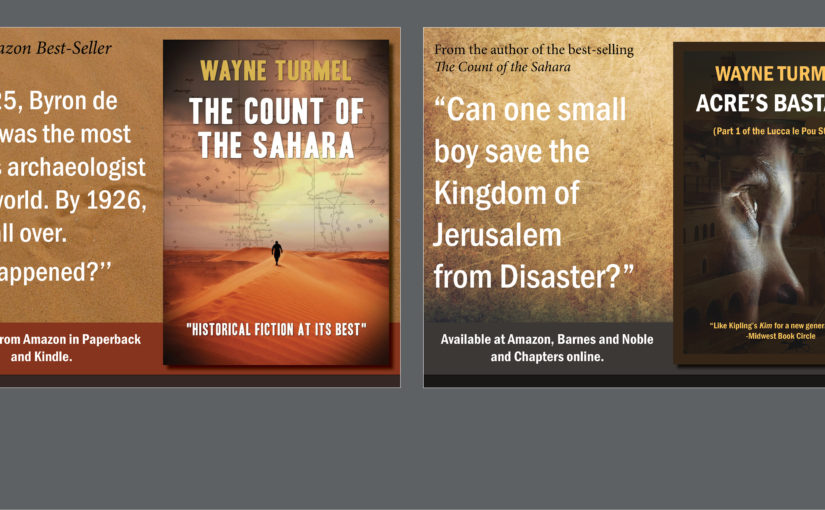
That’s a good point, Pam. Indie authors need reviews. The same is true of The Count of the Sahara and Acre’s Bastard. If you liked it, tell someone!
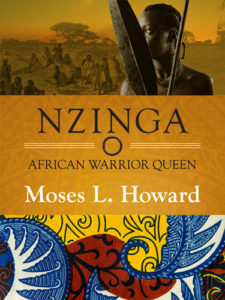
I will be the first to admit that when I think of “African history” my mind immediately goes to Victorian Englishmen in pith helmets. That, of course, is both wrong and stupid, but so much of real African history is only found in oral tradition. So I was absolutely delighted to stumble across a novel called “Nzinga- African Warrior Queen,” by Moses Howard. It’s a great read about a young woman in what’s now Angola, and her fight for her people and culture against the Portuguese in the early days of European exploration. It neatly fits two of the important tenets of this blog: 1) It’s hard to be a badass woman in a corset and 2) Swords are cooler than guns.
When I read about his own personal journey to writing the story I knew I needed to learn more.
What’s the Moses Howard story?
Dr Moses Howard, author of Nzinga: African Warrior Queen
I started out on a farm in Mississippi. With a biology degree in hand, I was in the first wave of the Teacher Education for East Africa project out of Columbia University in the 1960s, where I spent ten years training medical technologists and teachers in Uganda. Back in the States, I’ve been a biology teacher, assistant high school principal, community college dean, and counselor/mentor for students at risk. I began writing children’s chapter books while in Africa, and have been writing fiction for children and adults ever since.
What’s “Nzinga” about?
“Nzinga” is really about a child who at an early age learns to decipher her environment, understanding what she needs to survive. She treats her father, the king of Ndongo, as a beacon of light that she follows to know how to be in the world. As an adult, Nzinga masters the elements of her society and the ways of her enemies—and uses her enemies’ ways against them. She uses their animals, guns, language, and especially religion. But she achieves what she does through empathy and understanding.
What is it about that time period and character that appealed to you most?
I had a whole different idea about Africa until I learned about Nzinga. I had the idea that old-time African “chiefs” thought of Europeans as gods, that they’d fight for a little bit, then capitulate and become corrupted, selling their people as slaves. But that all came from a European outlook, with no understanding that tribes were as different from each other as French or Germans in language and culture. Competing tribes went to war with each other and sold their enemies defeated in war—the same as Europeans and Mediterranean cultures had done for centuries.
Nzinga’s story is attractive because she faced and overcame such overwhelming odds. It was unheard of for a woman in her culture to do what she did, with only her father as a model for leadership. She had a quick mind and mastered languages and advanced an enormous sense of justice. I felt compelled to learn how Nzinga did what she did, which took years of research.
What’s your favorite scene in the book?
My favorite scene is the one where Nzinga is in the greatest danger—when she goes to observe slaves being loaded on the ship. She witnesses scenes of horror, and I felt immense fear for her while writing it, because she could have been taken away as a slave. I carry a strong sense of that horror, of course. When I was a teacher in Uganda, I was walking with my students, and we passed some old women who were disturbed that I couldn’t speak with them (I wasn’t rude; I didn’t know the language). My students told them I came from the people who’d been captured and taken to America. One woman walked around me, examining me, and said, “I know this is true, because there’s a tree in my village where they used to tie them up, the people who were sold as slaves.”
We went to the woman’s village, and she showed us the tree. All that remained were flakes of rust issuing from a hole in the tree, which of course had grown in the hundreds of years since then. But I turned my back to the tree, and put up my hands to see how it would be—would I fit?—to be chained to that tree. The feel of that tree, and the old women’s words, have stayed with me for more than fifty years. (Editor’s note, if you read the book you have to read the epilogue where Dr Howard relates this story. It gave me chills- and you know what an unemotional grump I can be.)
How can we learn more about Nzinga and your other books?
Now that Acre’s Bastard is out in the world, we have two events coming up. Please join us for some fun, conversation and a chance to get your hands on a signed copy of my latest novel.
Sunday, February 26th 12-4 PM at Barnes and Noble in Downtown Naperville, IL I’ll be talking writing and reading historical fiction, then signing copies of Acre’s Bastard. B and N is anxious to support local writers, so if you’re a fan of historical fiction, or are thinking about writing it yourself, come on down. Bring your questions and book recommendations for the others. There’ll be lots of Q and A, as well as a chance to help convince Barnes and Noble that supporting local authors is good business.
I came across today’s author when I was searching for an agent. I found a very good story teller named EM Powell, and really enjoyed her first book. (As for the agent, I’m still looking, and yes that’s an obvious cry for help.) Her novel, The Fifth Knight, began life as a serial but then became one of three novels. This is her story, about her story…. you know what I mean.
E.M. Powell’s medieval thrillers THE FIFTH KNIGHT and THE BLOOD OF THE FIFTH KNIGHT have been #1 Amazon bestsellers and a Bild bestseller in Germany. Book #3 in the series, THE LORD OF IRELAND, was released in 2016. Born and raised in the Republic of Ireland into the family of Michael Collins (the legendary revolutionary and founder of the Irish Free State), she now lives in northwest England with her husband, daughter and a Facebook-friendly dog. She is also a contributing editor to International Thriller Writers The Big Thrill magazine, blogs for English Historical Fiction Authors and is the social media manager for the Historical Novel Society. Find out more by visiting www.empowell.com.
What’s “The Fifth Knight” and the series about?
THE FIFTH KNIGHT is the first of my Fifth Knight series of medieval thrillers. It’s my take on the infamous brutal murder of Archbishop Thomas Becket on the altar of Canterbury Cathedral on December 29 1170. The history with which many people is familiar is that long-standing disputes between Becket and his king and one-time friend, Henry II, had reached a critical point. Henry is said to have exploded in one of his typical rages, ending with the words: “He has…shamed my realm; the grief goes to my heart, and no-one has avenged me!” Unfortunately, a group of knights who were listening took him at his word. They set off for Canterbury to avenge their king with fatal results. In my book, I add a fictional fifth knight, Sir Benedict Palmer, to the group. And the reason they go to Canterbury is not to avenge Henry, but because they know that Becket has hidden a young nun in the walls of Canterbury Cathedral. They need to find her and the secret she holds.
Tell me about writing the book as a serial story first, then turning it into a novel. How did that impact how you put it all together?
My fictional story must have appealed to some people as it has sold more than 100,000 copies worldwide. Yet it had an unusual route to publication. My publishers are Thomas & Mercer, an Amazon imprint. THE FIFTH KNIGHT was first released in the US only as a Kindle Serial back in 2012. It was published in six episodes, with each episode being delivered to readers’ Kindles every two weeks. So I had to break the story up, making sure that each episode ended on a cliff-hanger and making sure that each one balanced out. Then would come the wait to see if readers liked the new instalment. As I say, it was unusual, to say the least!
Fortunately for me, readers loved it and it was released as a complete novel in 2013. I also followed it up with the next two Palmer books in the series. In THE BLOOD OF THE FIFTH KNIGHT, Palmer is called back to find out who’s trying to kill Henry’s mistress, the Fair Rosamund. In the third, THE LORD OF IRELAND, Palmer is sent by Henry to a warring Ireland with John, Henry’s youngest son and future Bad King John. No spoilers, but John being John, all does not go well. Neither of these two books were released as Kindle Serials. The Kindle Serial program has been discontinued but all the books that were released through it are still available as complete works.
What is it about that time period that intrigues you? I mean, I share your fascination but we’re not exactly the majority…
I think that the medieval period is one of the most interesting, exciting and downright bizarre historical periods of all. It isn’t the most popular for readers of historical fiction, but I think people are missing out. What other period gives you banquets that serve peacocks, breath-taking illuminated manuscripts, gatherings with the Devil, leech collectors and chainmail?
Right? I mean frickin’ leech collectors! But I digress. What’s your favorite scene in the book?
It’s no spoiler to say Becket’s murder. ‘Favorite’ isn’t maybe the right word but it was certainly the most challenging to write. We have eye-witness accounts from the time and it was truly horrible. Becket was utterly defenseless against the armed knights. Even though I had to write it in the context of a fictional story, I had to stay true to what we know to make it credible. I actually caught myself at one point wanting to rewrite it so he got away! But this book is speculative historical fiction, rather than true alternate history, so I had to do it. I can only hope that I gave Becket the proper respect to his memory and the terrible end he suffered.
How can people learn more about you and your exciting series?
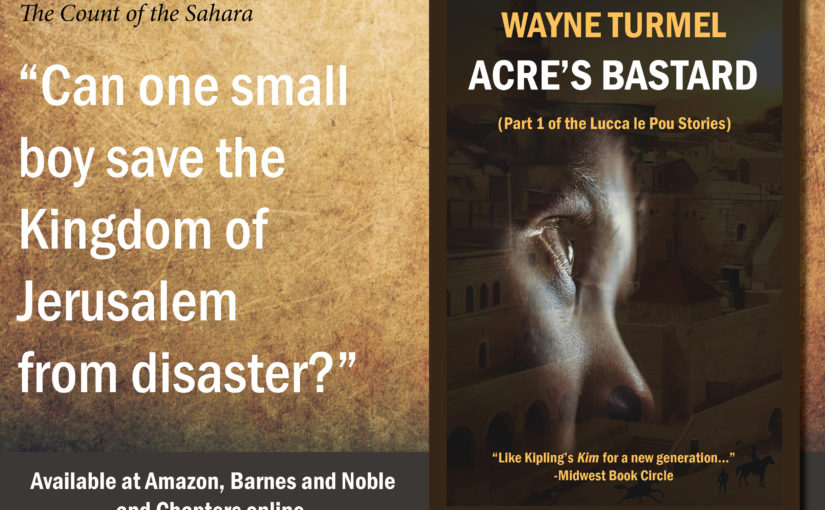
It’s January 17, 2016 so my newest historical fiction novel, Acre’s Bastard, is now available worldwide in paperback and ebook, wherever you buy such things.
I’m very grateful for the help I’ve received in advance of the launch from Naperville Writers Group, my trusted beta readers, and those who have read advance copies and actually liked the darned thing.
This book isn’t an easy sell, so any help I can get is appreciated. If you’d like to help, I can think of a couple of things:
Tell your friends. Tweetfacelinkblog to your heart’s content.
Leave a review, even a luke-warm one, on your favorite book site. The number of reviews counts almost as much as the rating in this crazy online world run by our robot overlords. Amazon, Goodreads, Facebook pages… you know the drill
Give me feedback. This is the first of at least 2 “Lucca Le Pou” stories to come. I had a boss once who told me, “we always reserve the right to get smarter.”
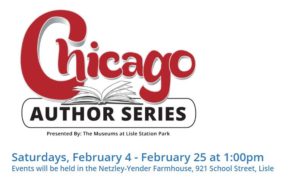
Come on out to an event. So far, I’ve got two events scheduled. The official book launch is February 11th, 1 PM at the Museums at Lisle Station. I will also be doing a presentation in early march at Barnes and Noble in Naperville, exact date TBD. Come on out, bring some friends and have some fun.
I am very excited about the launch of this story, and hope it receives the same warm reception that Count of the Sahara got. Oh, and sells a few copies.
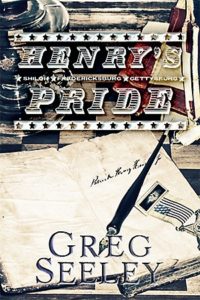
Lately, my email has been filled with authors who’ve written Civil War dramas (henceforth to be referred to as Civil War 1.0, because I’ve got a bad feeling about this.) I’m a bit ambivalent about the time period, maybe because I’m Canadian and don’t really empathize too much with the South on this one. (I’ve heard all the arguments. Bite me.) At any rate, many of the authors have deep family connections to the event. Such a writer is Greg Seeley, whose new novel, “Henry’s Pride,” is here for your consideration.
Greg Seeley was raised on a farm north of Afton, Iowa. He graduated from the University of Northern Iowa with a major in history and received his Master’s degree from the University of Iowa. He is a retired certified public accountant and lives in Overland Park, Kansas with his wife Carolyn, a retired math teacher. Henry’s Pride is Greg’s first novel. He is also the author of
a book verse entitled The Horse Lawyer and other Poems.
So what’s Henry’s Pride all about?
Henry’s Pride is a wide-sweeping novel of the Civil War told from the perspective of two families, one from Minnesota and the other from Georgia. Henry Hancock is a Minnesota tenant farmer who reluctantly but dutifully goes to war to save the Union. Darius Morgan, the son of a Georgia plantation owner eagerly enlists in the Confederate army to save what he considers to be his rightful legacy. Other characters, whose stories are interwoven include Hamilton Stark, the cowardly yet vicious overseer from the Morgan plantation and Adam Kendrick, a gentle but dutiful southern soldier, who must keep his anti-slavery sentiments hidden. Meet also Joshua Gibbons, a Union chaplain and Hosea Billings the vindictive captain of guards at a Federal prison camp.
The story is told through the usual means of narrative and dialogue but also through numerous letters written back and forth between the characters expressing their loneliness, fear, pride, and other emotions associated with what the title character calls “the nation’s nasty business”. The story also portrays the devastating effect of war on soldiers and families alike – wounds both physical and mental as the characters deal with battle injuries and with what is now call PTSD. There is Jonas Hancock, Henry’s brother, who is injured and mustered out early in the war but continuously deals with haunting memories. There is Henry himself, tormented by reminders of what he has had to see and do. Henry’s Pride is a war novel that, in sense, is also an anti-war novel. Characters on both sides examine themselves and must decide whether or not their respective country’s objectives are worth the sacrifices they and thousands of others are called upon to make. Henry’s Pride is not about generals and military strategy or troop movements. It’s about ordinary soldiers and families each trying to find their way through the “madness” that is the Civil War.
What inspired the story? Where’d your passion for the topic come from?
My great-grandfather, Ira Seeley, served with an Iowa regiment in the Civil War. When I was still in elementary school, my grandmother would sometimes bring out letters he had written home, show them to me, and read me some of them. After college, I took the same letters and carefully typed a transcript of each one exactly as written.
Many years later, after I retired as a CPA, I thought about trying to reconstruct all of the unsaved letters that my great-grandmother might have written to her soldier husband and mesh them with the transcribed letters. I soon determined the task to be nearly impossible given the time it would have taken for their letters to cross in the mail and the difficulty of determining which letters each would have received when writing to the other. At that point, I decided to write a novel of the period – a fictional account where I could weave into the story letters to and from my characters written in the style of the day.
What’s your favorite scene from the book?
I believe my favorite scene takes place after Henry Hancock has been mustered out of service and has returned home. The traumatized Henry, though of Methodist faith, seeks out a priest to take his confession and absolve him of the things he has had to do. The scene shows a certain depth of feeling shared even now by veterans of more recent wars. Though Henry was a hero of the Battle of Shiloh – even called ‘the Lion’ by his men, he is vulnerable. He is at the same time proud of his service to the country and guilt-ridden over the part he has played.
Contains information related to marketing campaigns of the user. These are shared with Google AdWords / Google Ads when the Google Ads and Google Analytics accounts are linked together.
90 days
__utma
ID used to identify users and sessions
2 years after last activity
__utmt
Used to monitor number of Google Analytics server requests
10 minutes
__utmb
Used to distinguish new sessions and visits. This cookie is set when the GA.js javascript library is loaded and there is no existing __utmb cookie. The cookie is updated every time data is sent to the Google Analytics server.
30 minutes after last activity
__utmc
Used only with old Urchin versions of Google Analytics and not with GA.js. Was used to distinguish between new sessions and visits at the end of a session.
End of session (browser)
__utmz
Contains information about the traffic source or campaign that directed user to the website. The cookie is set when the GA.js javascript is loaded and updated when data is sent to the Google Anaytics server
6 months after last activity
__utmv
Contains custom information set by the web developer via the _setCustomVar method in Google Analytics. This cookie is updated every time new data is sent to the Google Analytics server.
2 years after last activity
__utmx
Used to determine whether a user is included in an A / B or Multivariate test.
18 months
_ga
ID used to identify users
2 years
_gali
Used by Google Analytics to determine which links on a page are being clicked
30 seconds
_ga_
ID used to identify users
2 years
_gid
ID used to identify users for 24 hours after last activity
24 hours
_gat
Used to monitor number of Google Analytics server requests when using Google Tag Manager
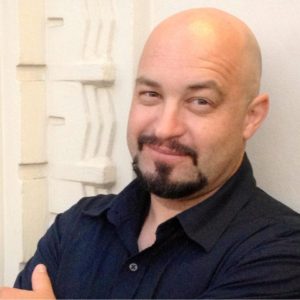 David J. West writes dark fantasy and weird westerns because the voices in his head won’t quiet until someone else can hear them. He is a great fan of sword & sorcery, ghosts and lost ruins, so of course he lives in Utah with his wife and children.
 wide chasm while pursued by bandits. I did base that on a real place in the San Rafael swell where a cowboy did leap the divide on a bet.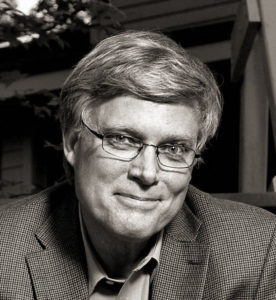

 When Butches Cry takes place in the middle of the twentieth century when a twist of nature creates an unusually high number of young lesbians on a Portuguese island in the Atlantic Ocean. Whilst this might sound exciting to some of the men reading this, it is not as amorous as it first sounds. If you’re looking for that sort of thing, maybe you should
  My life is a little more sedate than that of my characters.
 The novel begins in 1943. In the chaos of war, Charlotte is unable to find her aunt, and in desperation searches for a childhood friend, Edouard Bonhomme. He now leads a band of French Maquis—a subset of the Resistance. She embraces their mission . . . one of espionage, subterfuge, and guerilla warfare. Set on the French Riviera, this rag-tag team of spies sets out to defeat the Germans—focusing on the Gestapo.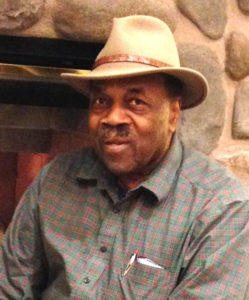
 What is it about that time period and character that appealed to you most?
 part of the Chicago Authors Series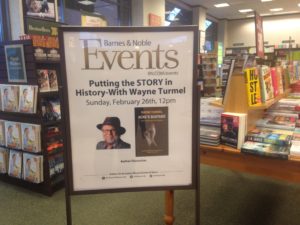
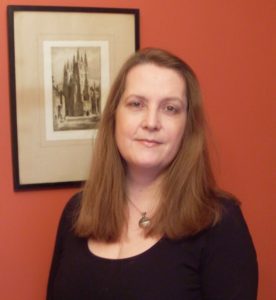 FIFTH KNIGHT have been #1 Amazon bestsellers and a Bild bestseller in Germany. Book #3 in the series, THE LORD OF IRELAND, was released in 2016. Born and raised in the Republic of Ireland into the family of Michael Collins (the legendary revolutionary and founder of the Irish Free State), she now lives in northwest England with her husband, daughter and a Facebook-friendly dog. She is also a contributing editor to International Thriller Writers The Big Thrill magazine, blogs for English Historical Fiction Authors and is the social media manager for the Historical Novel Society. Find out more by visiting
 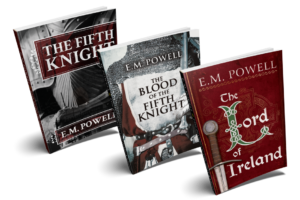 Tell me about writing the book as a serial story first, then turning it into a novel. How did that impact how you put it all together?
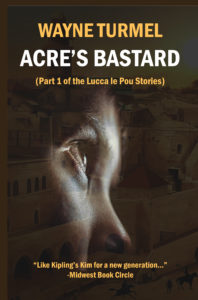 It’s January 17, 2016 so my newest historical fiction novel, Acre’s Bastard, is now available worldwide in paperback and ebook, wherever you buy such things.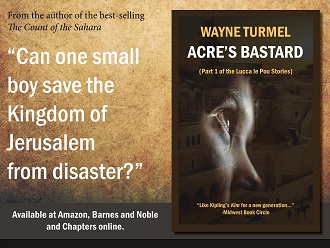
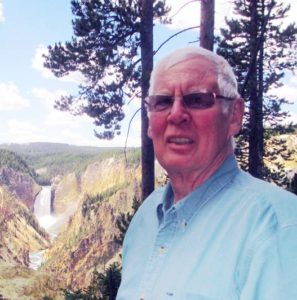 Greg Seeley was raised on a farm north of Afton, Iowa. He graduated from the University of Northern Iowa with a major in history and received his Master’s degree from the University of Iowa. He is a retired certified public accountant and lives in Overland Park, Kansas with his wife Carolyn, a retired math teacher.